Victoria Falls Photography - Guide | Mosi-oa-Tunya Field Notes
The Smoke That Thunders
A Preamble to the Botswana Wander
Straight from the arid silence of the Namibian desert, I found myself standing in the humid, visceral roar of Victoria Falls. To move from a land where water is a ghost to a place where it is a physical, thundering weight is a jarring but necessary recalibration of the senses. Known locally as Mosi-oa-Tunya—the smoke that thunders—it is a colossal reminder of the raw power of nature.

Standing at the edge of the world. The mist here is so thick it creates its own ecosystem, a rain forest in the middle of a plateau.
Before the real adventure into the heart of Botswana begins, this week was about shifting my artistic focus. Moving away from the stillness of abandoned rooms and retraining the eye to capture water, mist, and the lush, vibrant greens of Zimbabwe. It is a completely different set of physics at play—a world where the air itself carries the weight of the river.
1. The Physics of Motion: Long Exposure Water
Standing on a narrow platform overlooking the abyss [00:02:32], I was faced with a technical dilemma: how do you convey power without it becoming a cluttered mess? I settled on a six-stop ND filter. This allowed me to extend the shutter speed to roughly half a second [00:02:46]. For me, the magic of this technique isn't just about "blur"—it is about the juxtaposition between the ethereal veil of the falling water and the unflinching, dark basalt rock it carves away [00:03:56].
2. Visualizing in Black and White
Continuing the monochrome rituals I explored in Kolmanskop, I found that Victoria Falls is a perfect subject for high-contrast black and white [00:06:04]. When you remove the distraction of the greenery, the photo becomes a study of luminance. I experimented with extreme "letterbox" crops [00:06:10], cutting out the sky and the ground to leave only the abstract movement of the spray. It transforms a landmark into a piece of fine art [00:06:35].

By focusing on the luminance of the spray against the dark rock, the falls take on a sculptural, almost metallic quality.
3. The River Gaze: Wildlife in the Golden Hour
As the sun dipped toward the horizon, a slow cruise down the Zambezi offered a first taste of the wildlife wander. Wildlife photography requires a different kind of patience—one where you are a guest in someone else's rhythm [00:12:54]. Watching elephants kick up dust in the golden, backlit haze [00:14:18] is a reminder that photography is, at its core, the translation of a fleeting human experience into light.
4. Technical Resilience: The 12MP Sensor
I’ve spent quite a bit of time lately pushing my 12MP sensors to their absolute limit. When the elephants appeared, they were far off in the haze [00:14:12]. By using modern upscaling techniques during the edit [00:14:47], I was able to maintain the soul of the image even with a heavy crop. It proves that it’s not the pixel count that captures the feeling of the wild; it’s the timing and the light.
Gallery: Mosi-oa-Tunya
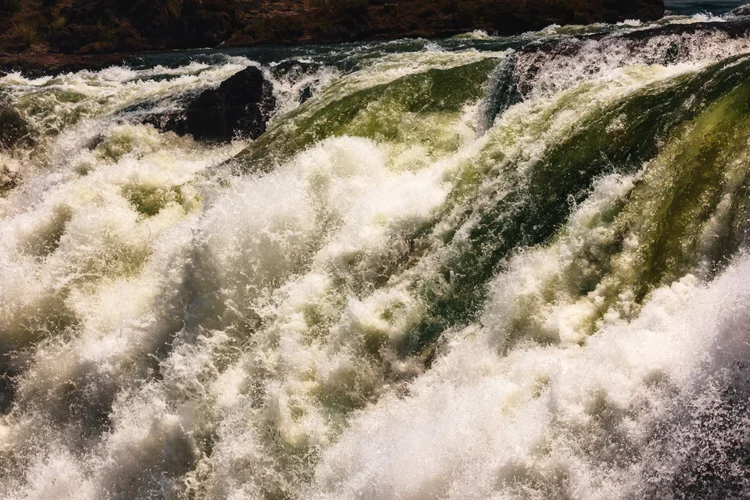
A study in the transition from arid silence to the life-giving thunder of the Zambezi, using a dynamic layout to respect each frame's original composition.




Wander Botswana with Me
This preamble at the falls is just the beginning. I am currently deep in the Okavango Delta, preparing for our next major workshop. If you want to join a future circle of photographers to learn how to see these landscapes in person, explore the details below.
EXPLORE PHOTOGRAPHY WORKSHOPS →Wander on, my friends. Cheers.
Follow the Botswana series on YouTube
