My Journey at Sandymount Strand
Learning Fine Art Photography
My journey at Sandymount Strand
Every photographer reaches a point where they want to push beyond the familiar. For me, that meant diving into fine art photography — a style I've admired for years but never had the courage to try. This is the story of my first serious attempt at Sandymount Strand in Dublin, the lessons I learned, and the images I created along the way.
Hello there folks, how is it going?
If you watched my New Year's best-of video, you might remember me mentioning that I really wanted to try my hand at fine art photography. I'm a big fan of Gary Gough's YouTube channel and the work he creates — his minimalist, atmospheric style has always appealed to me.
So, on a beautifully overcast day at Sandymount Strand in Dublin, I decided to take the plunge. The aim of the game was simple: try my best to replicate that style. Blend the horizon. Create clean, minimalist frames. See what happens.
Here's what I learned.
The Sandymount baths — my first attempt at fine art photography.
The First Attempt — Learning the Hard Way
I set up my camera, composed the shot, and took a long exposure. Even looking at the back of the camera, I was absolutely delighted with the results.
But when I got home and started processing, I realised I'd made a mistake. I took way too long of an exposure, which essentially eradicated any texture in the sky and the water. The image was clean, but it was too clean — just a white background with a subject on top.
As I said in the video: "It's just like a bit of graffiti wall on a white background that any Joe Bloggs could have really made."
But that's the point of learning. You try, you fail, you adjust, and you try again.
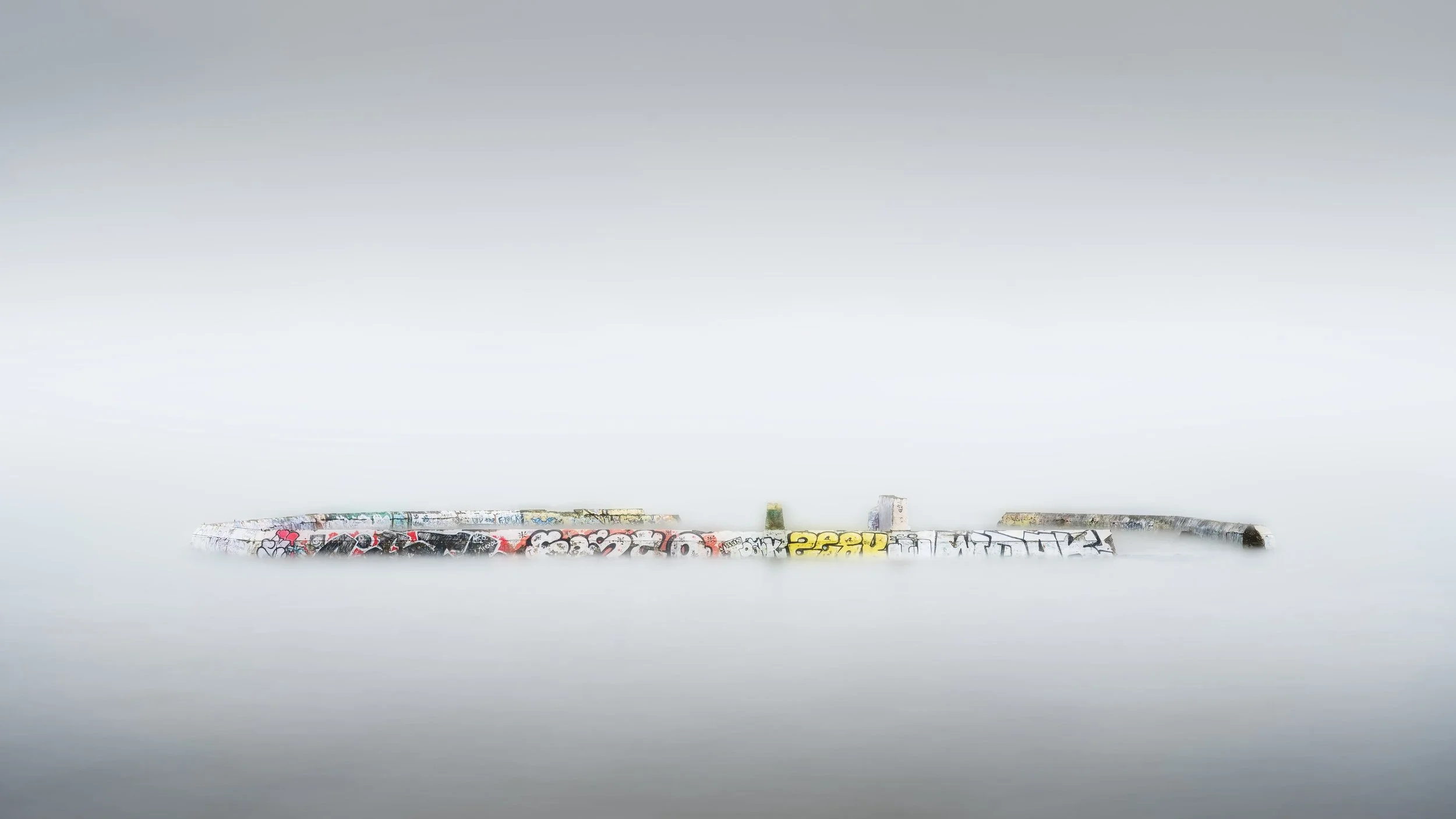
The first result — clean but lacking texture.
The Pigeon House Chimneys — An Iconic Dublin Scene
For my next shot, I literally just turned the camera. The iconic Pigeon House chimneys stood across the water — a very Dublin kind of scene.
This time, I took a longer exposure — 1 minute and 20 seconds — and I was really happy with the previews on the back of the camera. But again, in post-processing, I encountered the same issue. The image was too blown out, too white.
I took some liberties in Photoshop. I removed some land that you would have seen from the footage and added gradients at the top and bottom to darken the edges and focus attention on the subject. That pop of red in the chimneys really helps to punch out the main subject.
But still, I knew I could do better.
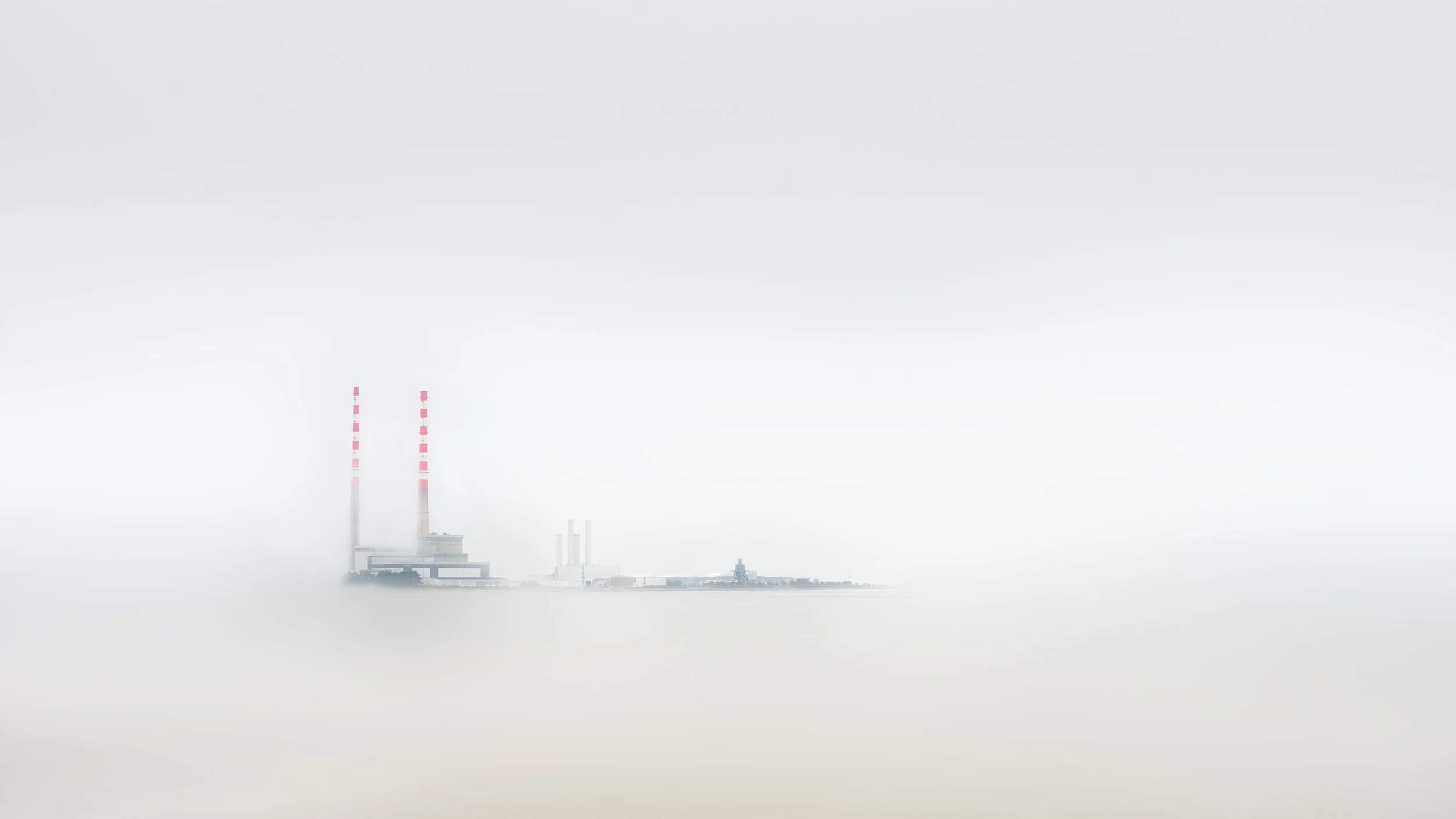
The Pigeon House chimneys — a Dublin icon.
Poolbeg Lighthouse — Embracing the Aesthetic
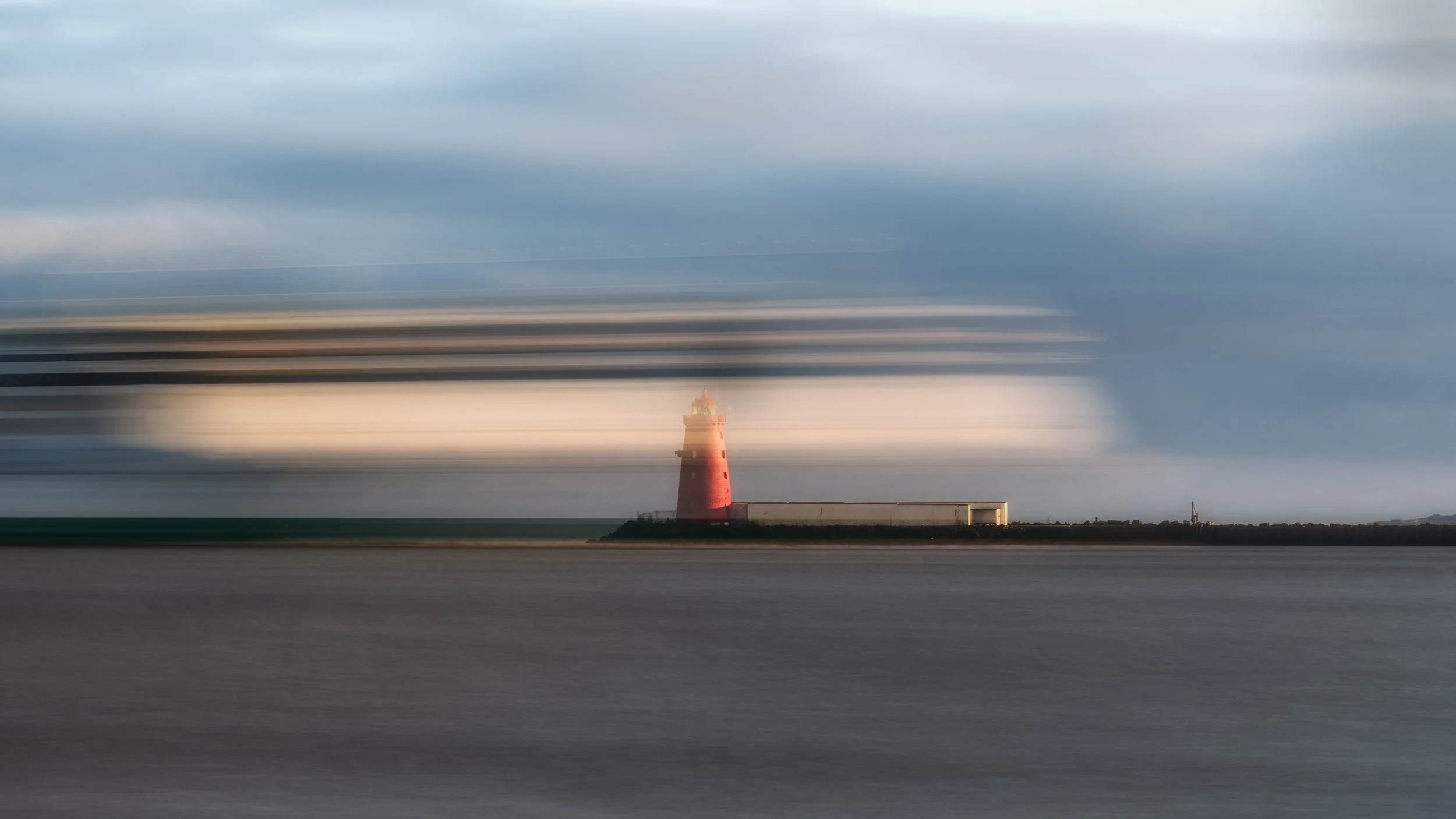
I didn't move for my next composition. I switched to my 100-400mm lens and looked all the way out at Poolbeg Lighthouse. The red of the lighthouse was popping against the dark, moody background.
I wasn't sure whether this image would fit into the fine art style of getting rid of the horizon, but I really loved the aesthetic of it. The long exposure, the contrast, the pop of red — it all worked.
I did try to remove the background and blend it, but the results just weren't good. So I decided to leave it as is. Sometimes, the best thing you can do is recognise when an image works on its own terms.

Poolbeg Lighthouse — moody, contrasted, and perfectly Dublin.
The Breakthrough — Finding the Right Balance
For my final image, I reverted back to the first composition, but this time I photographed it much wider. I wanted to place the Sandymount baths in nothing — a minimalist frame with just the subject and the sky.
This time, I got it right. The exposure was short enough to retain texture in the water and the sky. I purposely left the baths below the horizon line to make the transition easier in post-production.
The result was exactly what I was looking for. There's still texture. There's still a sense of place. It's not just a white background. And the dark clouds seem to point down towards the focus point of the image.
This, for me, was the culmination of all the learning over the last week.
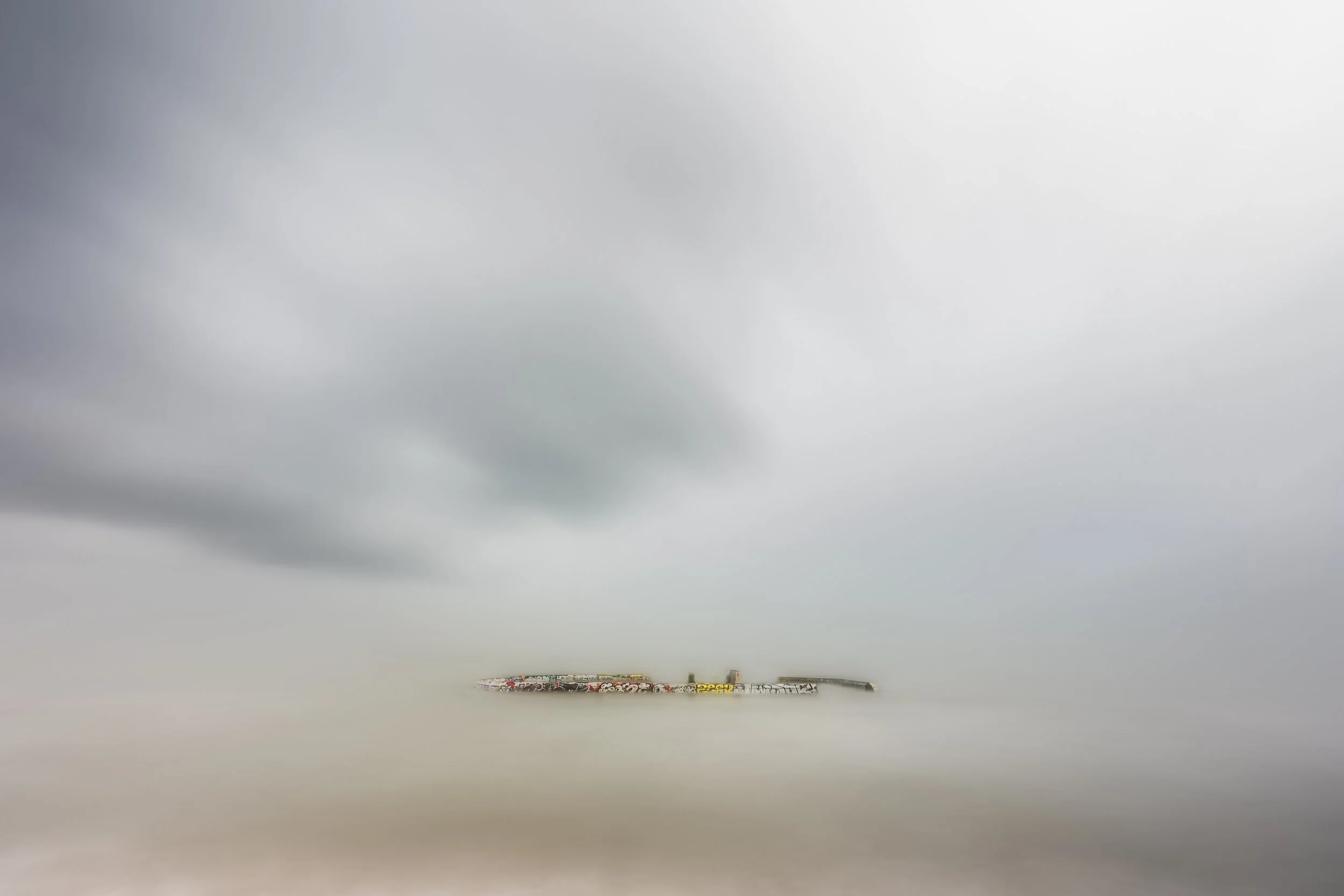
The breakthrough — texture, mood, and a sense of place.
The Bull Wall — A Last-Minute Surprise
We moved to the other side of the river, to the Bull Wall on the north side of Dublin. I found a composition I loved — a stairwell into the water where people swim.
I wasn't sure whether I could turn this into a fine art image. Getting rid of the city might be a bit too advanced for my Photoshop skills. But I loved the composition so much that I had to try.
After processing, I ended up with two versions — colour and black and white. I'd be curious to know which one you prefer. The black and white has its own appeal, but I think I'm leaning towards the colour version. There's something about the Dublin Harbour feel of it that I really love.
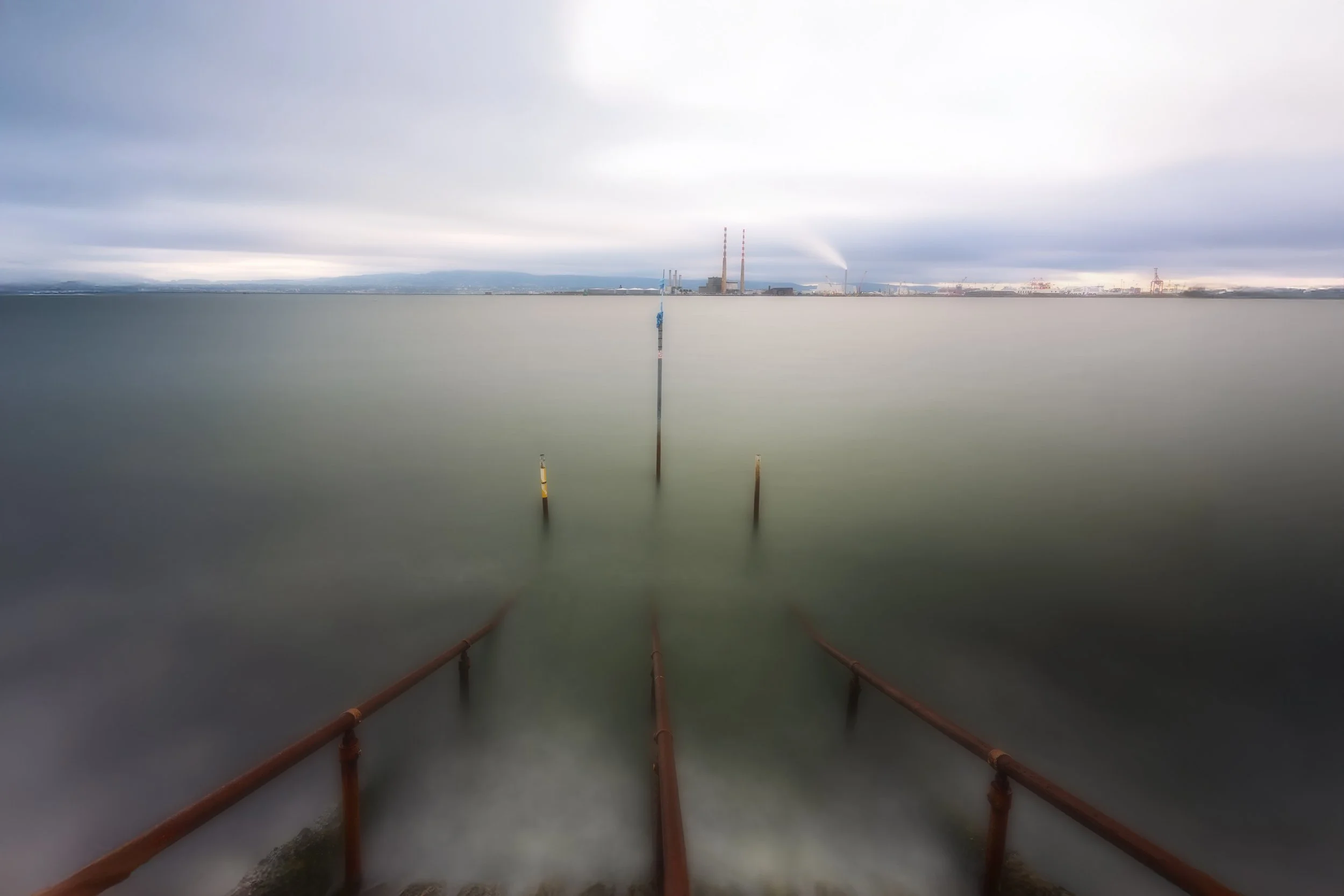
The Bull Wall — colour version.

The Bull Wall — black and white version.
The Bonus Image — A Culmination of Learning
There was one more image — a bonus that I wanted to include. This frame is actually from next week's video, but as I was editing it, I realised it was the culmination of all the skills I'd been learning.
For me, this image represents the end of a learning paragraph. I took some liberties in how the image came to be, but I really love the result. It's a nice way to end this chapter of seeking out fine art images.
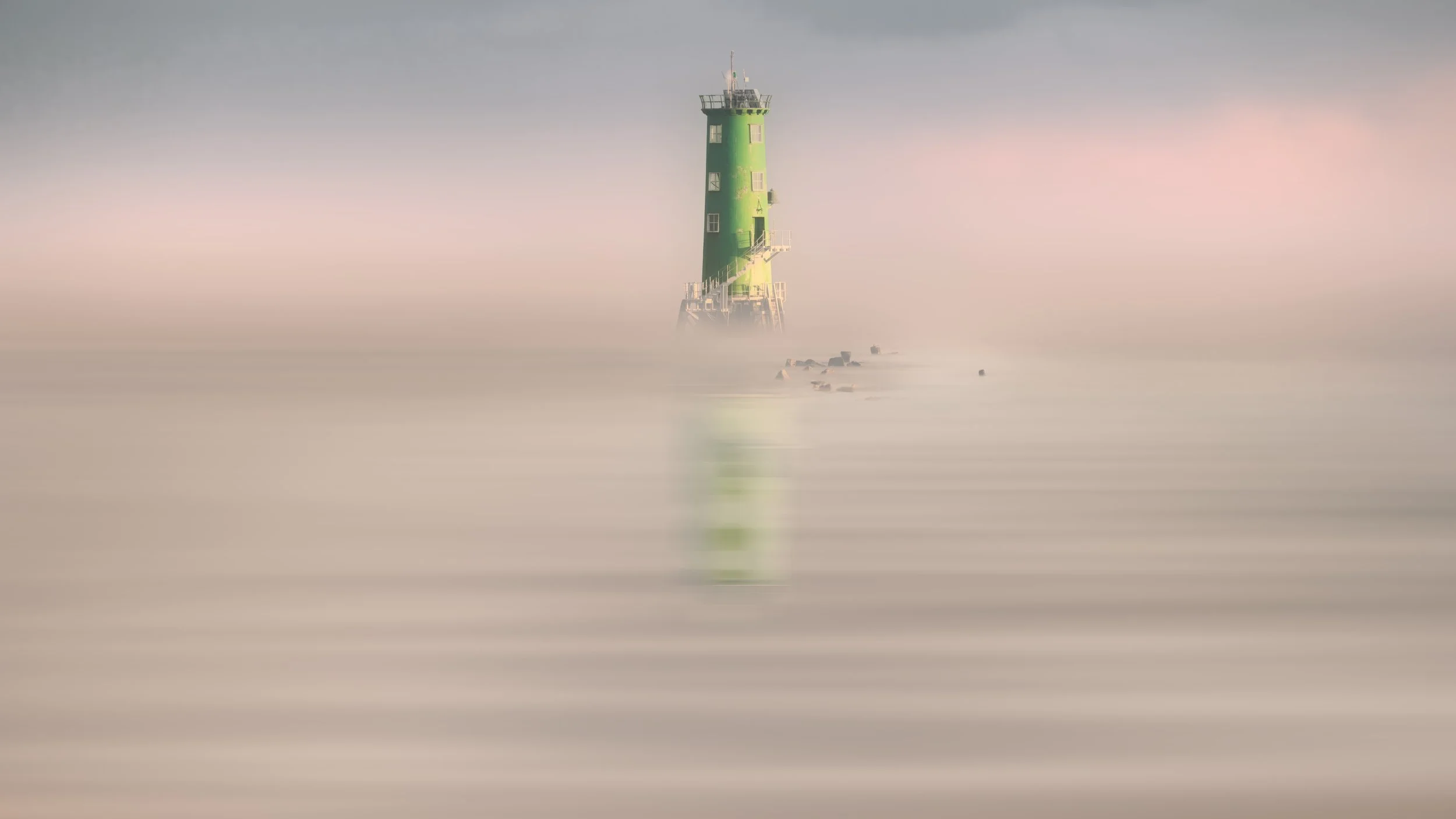
The bonus image — a culmination of all the lessons learned.
What I Learned
Exposure matters. Too long and you lose all texture. Too short and you lose the atmosphere. Finding the sweet spot is key.
Texture is important. A fine art image shouldn't just be a white background with a subject on top. It needs to have depth and interest.
Less is more. Removing the horizon and simplifying the frame can create a powerful image.
Post-processing is part of the process. Taking liberties in Photoshop is okay — it's part of creating the image you envisioned.
Keep learning. Every image teaches you something. The important thing is to keep trying.
Next Steps
This style of imagery is something I've been craving for a long time, but I was apprehensive about beginning the journey. What better way to start the new year and springtime than with a new genre of photography to add to the cap?
I'm really happy with how these images turned out, and I'm excited to continue learning and experimenting with fine art photography.
Ready to Try Fine Art Photography in Ireland?
If you're interested in learning new photography styles and exploring the beautiful locations of Ireland, I'd love to have you along on a workshop. Small groups, real locations, and a focus on the art of seeing.
Explore the Ireland Workshop →