A Guide to Blue Hour & Stillness
Photographing Reflections in Dublin
A guide to blue hour, stillness, and the art of seeing
Dublin is a city of reflections — if you know where to look. From the glassy waters of the Docklands at blue hour to the tidal pools of Sandymount Strand at sunrise, this guide shares practical tips for capturing stunning reflection photography. Field-tested advice from a night and a morning spent chasing stillness in the Irish capital.
There is something about reflections that I find deeply satisfying. The way a city doubles itself. The way a building's mirror image creates a sense of balance and stillness.
On two recent trips to Dublin, I set out to capture exactly that. One evening in the Docklands, chasing blue hour light and perfect reflections. One morning at Sandymount Strand, waiting for the tide and the sunrise to align.
Both sessions exceeded every expectation I had.
Here's what I learned.
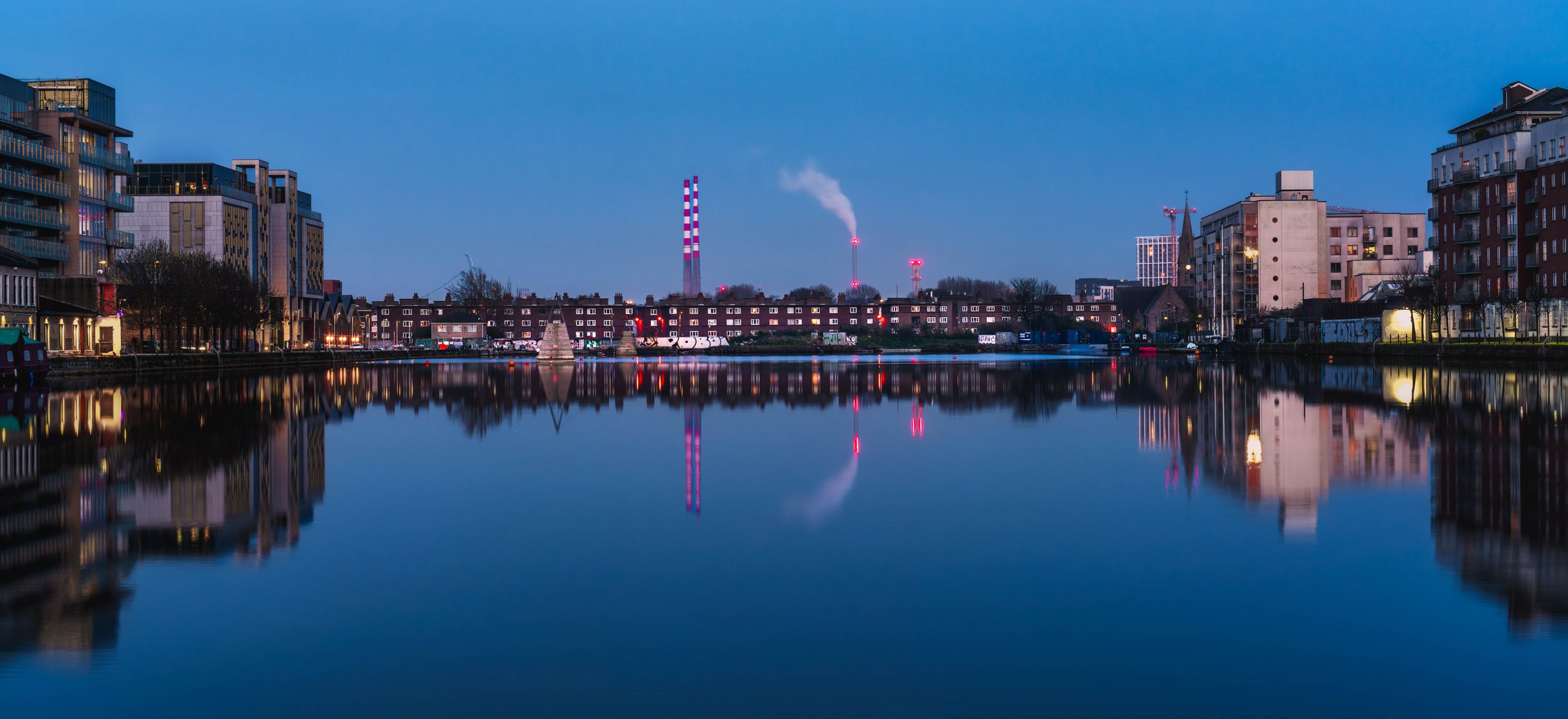
Dublin at blue hour — reflections on the River Liffey.
1. The Docklands at Blue Hour
The aim of the game was simple: get down to the Docklands, find some water, and hope for reflections. The evening was shaping up beautifully — the sky had colour, the wind was calm, and the water was still.
As I made my way down the River Liffey, I passed the Custom House and knew I had to stop. I've photographed that building many times in all different kinds of light, but never processed one in black and white before. This time, I did — and I absolutely love how it looks. It has this kind of archived, timeless feel to it.
But the real magic happened further down.
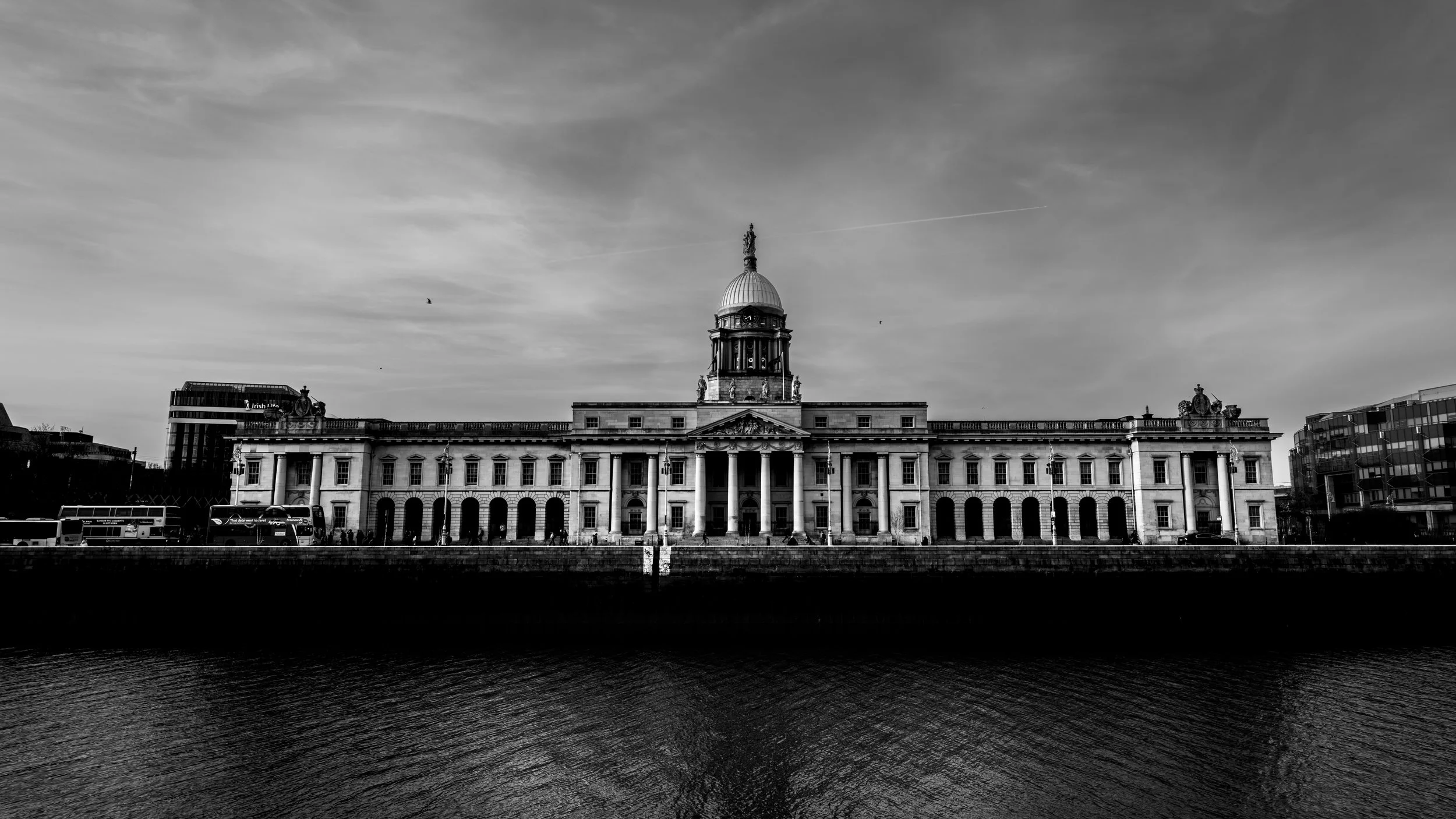
The Custom House in black and white — a timeless take on a Dublin landmark.
I found myself at a spot where the reflections were absolutely immaculate. It was exactly what I came to photograph. I set up the camera, composed the shot, and waited for the blue hour light to do its thing.
As the evening progressed, the light just got better and better. I shot wide, I shot tight, I played with different compositions. Every time I thought I'd captured the best image, another one came along and exceeded it.
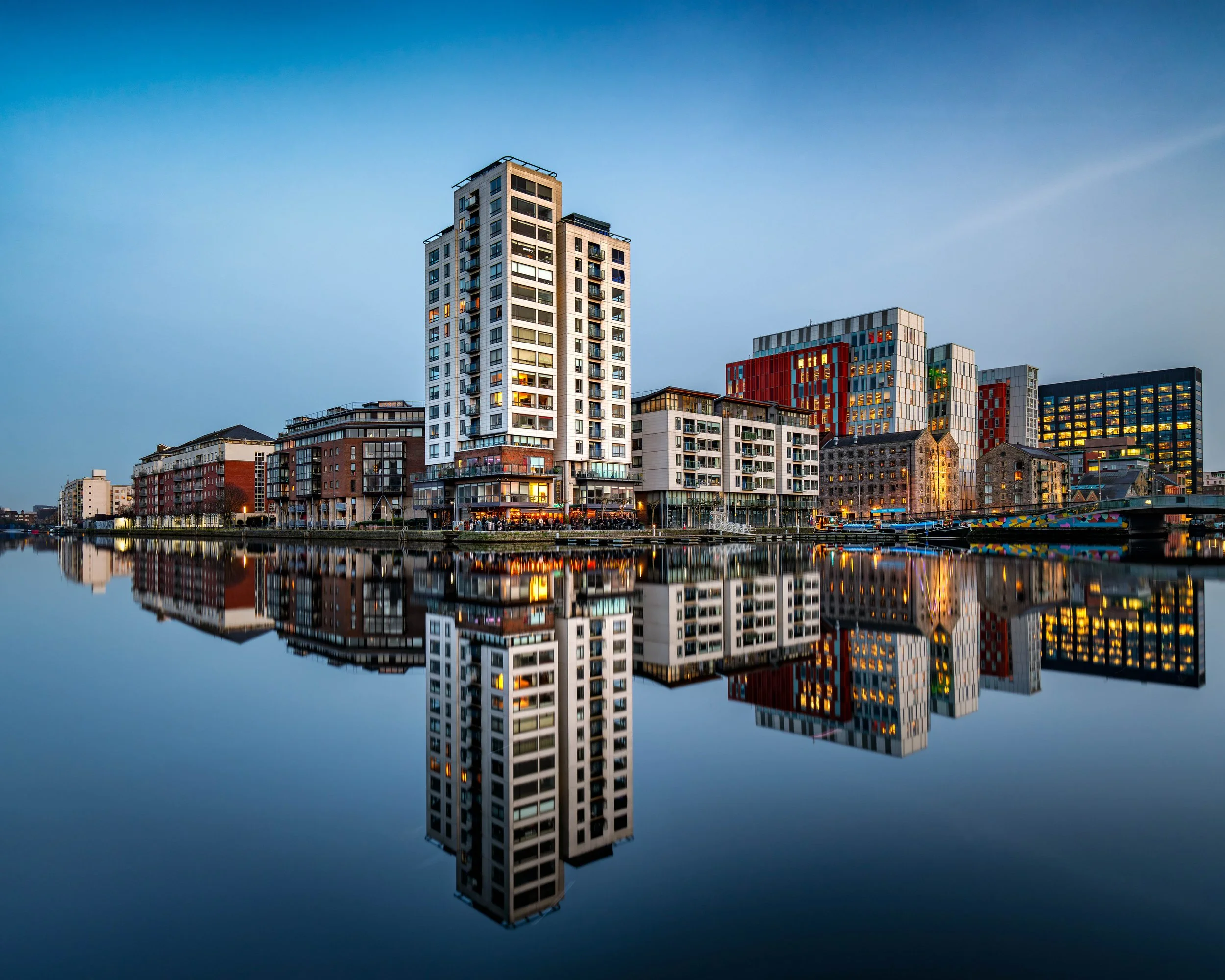
The Docklands at blue hour — perfect reflections, perfect light.
2. The Drama of the Reflection
One of the things I love about reflection photography is how it can transform a familiar scene into something new. The same building you've seen a hundred times becomes abstract, almost painterly, when mirrored in water.
I ended up taking a number of images that evening that genuinely surprised me. The colours, the composition, the way the buildings were doubled — it all came together so beautifully.
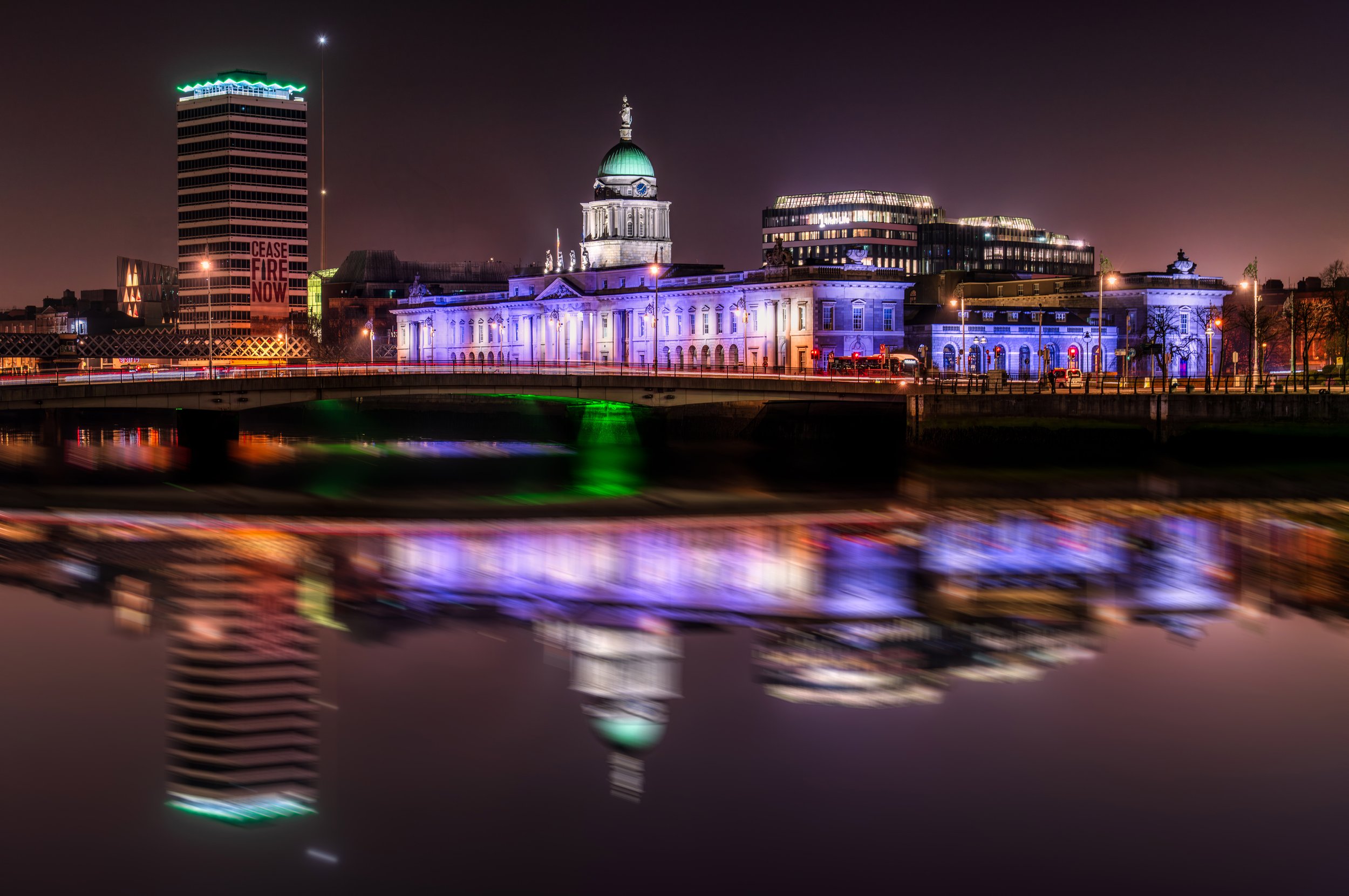
Architecture and reflection — a perfect match.
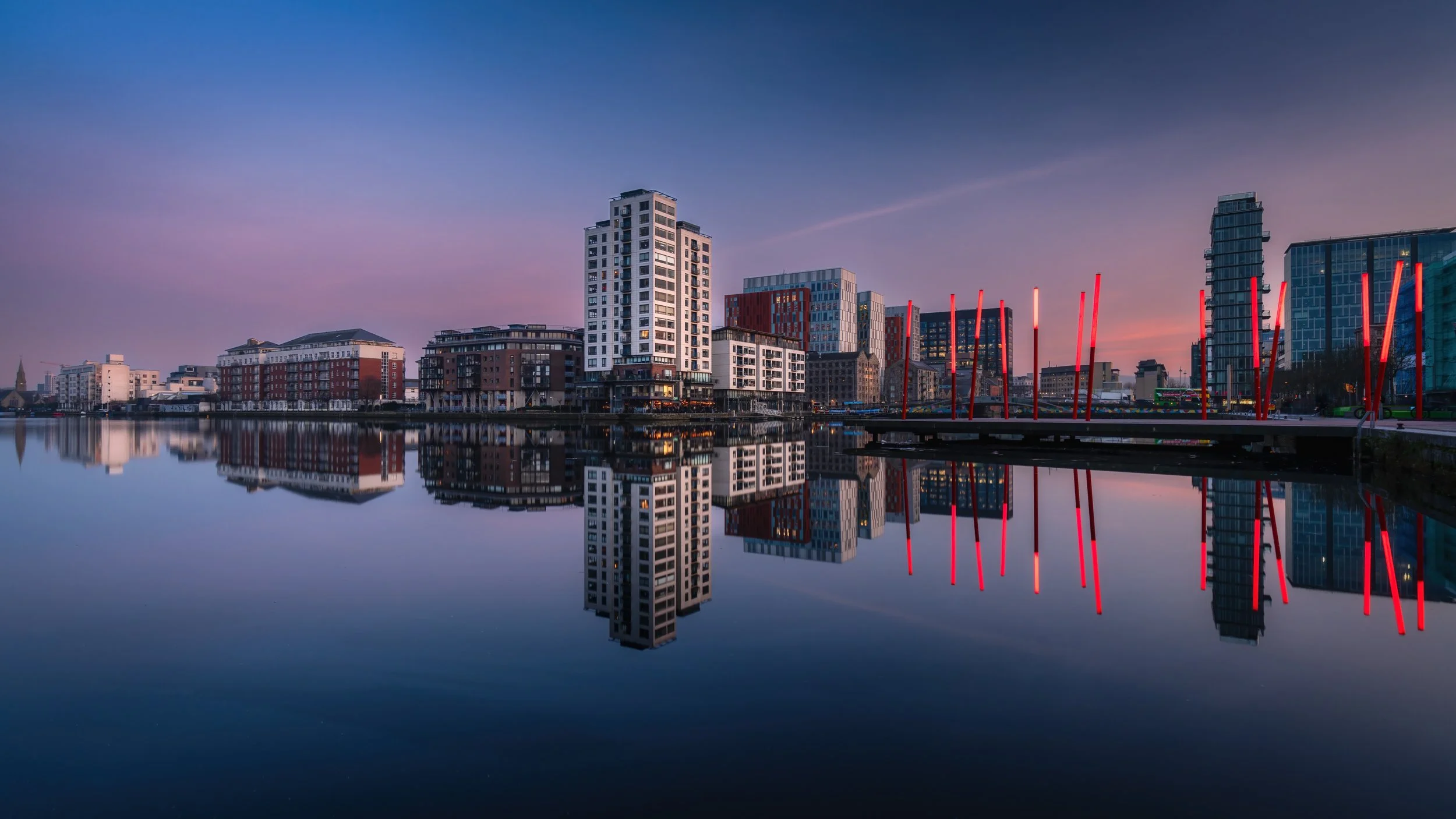
Abstract reflections — the city doubled.
3. The Ha'penny Bridge and the Convention Centre
As I wandered back towards the city centre, I stopped at the Ha'penny Bridge. The reflections there were just as beautiful — the lights of the city dancing on the water, the bridge itself creating a natural frame.
I also photographed the Convention Centre from a different angle than I had before. The lines, the contrast, the pop of colour — it all came together in a way that felt fresh and new.
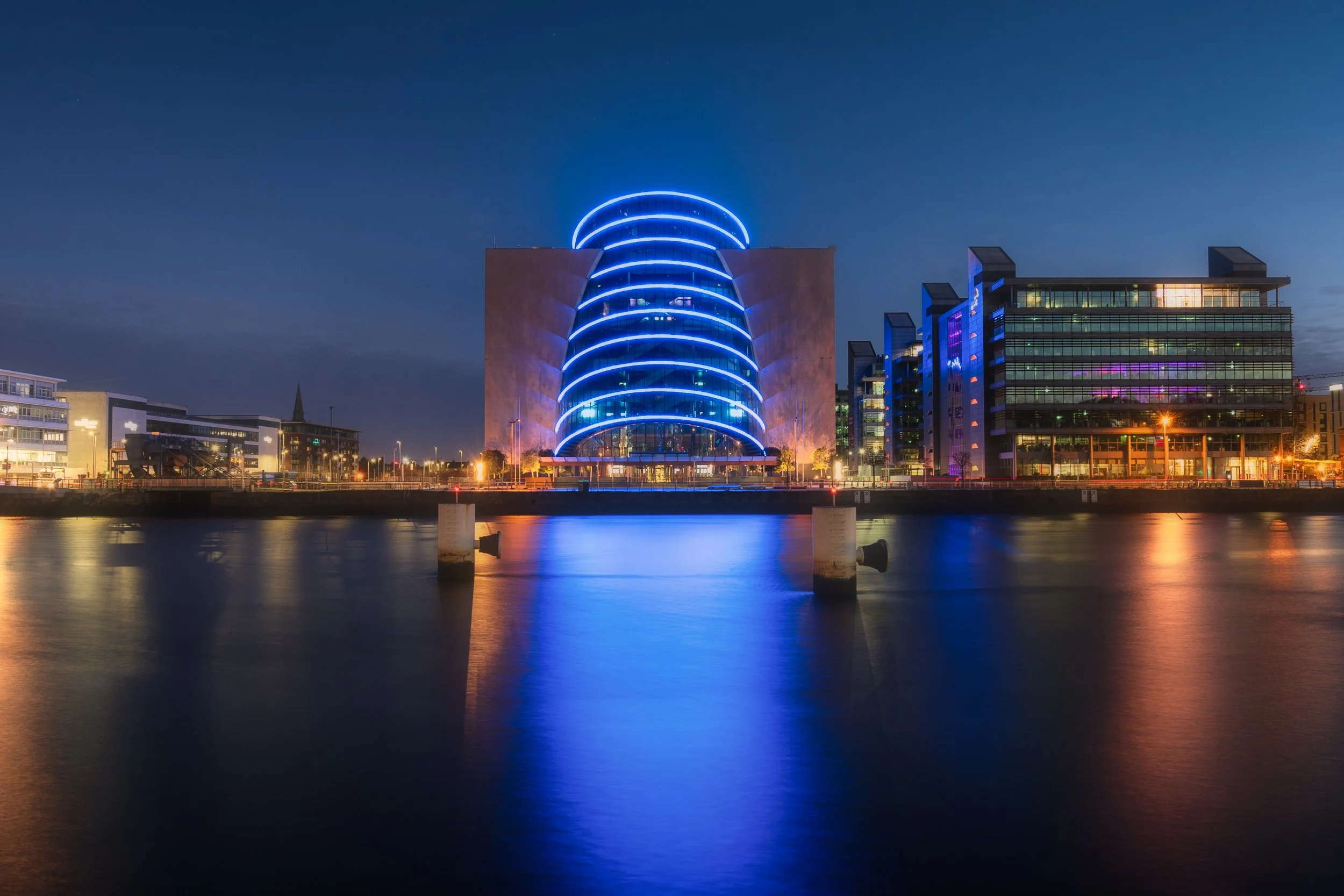
The Convention Centre — a modern Dublin landmark reflected in the Liffey.
4. Sandymount Strand at Sunrise
A few days later, I was back out — this time at sunrise. It was a cold morning, the tide was way out, and I just wanted to feel the warmth of a sunrise and see if any pictures happened.
The goal was simple: find some reflections of the Poolbeg Lighthouse. I took my shoes off, waded out into the shallow water, and waited.
It was one of those mornings where everything just came together. The light was soft, the water was still, and the reflections were absolutely perfect.
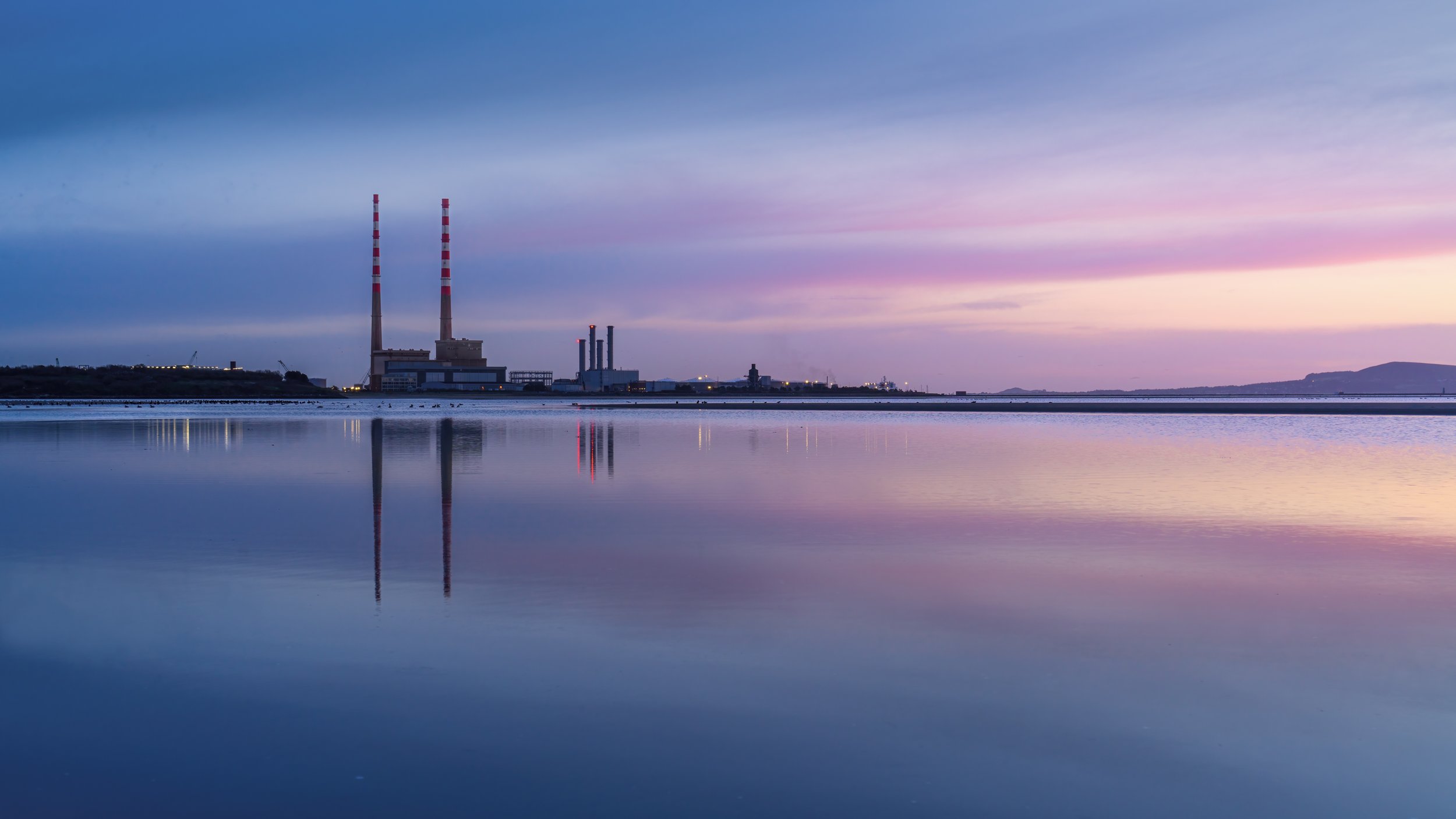
Poolbeg Lighthouse at sunrise — quiet, still, and perfect.
5. The Importance of Getting Low
One of the key lessons from the Sandymount shoot was the importance of getting low. When you're photographing reflections, the closer you are to the water's surface, the more the reflection lines up perfectly.
I hunkered down, composed my shots, and waited for the light to do its thing. The result was a series of images that I'm genuinely proud of — images that capture the quiet stillness of a Dublin morning.
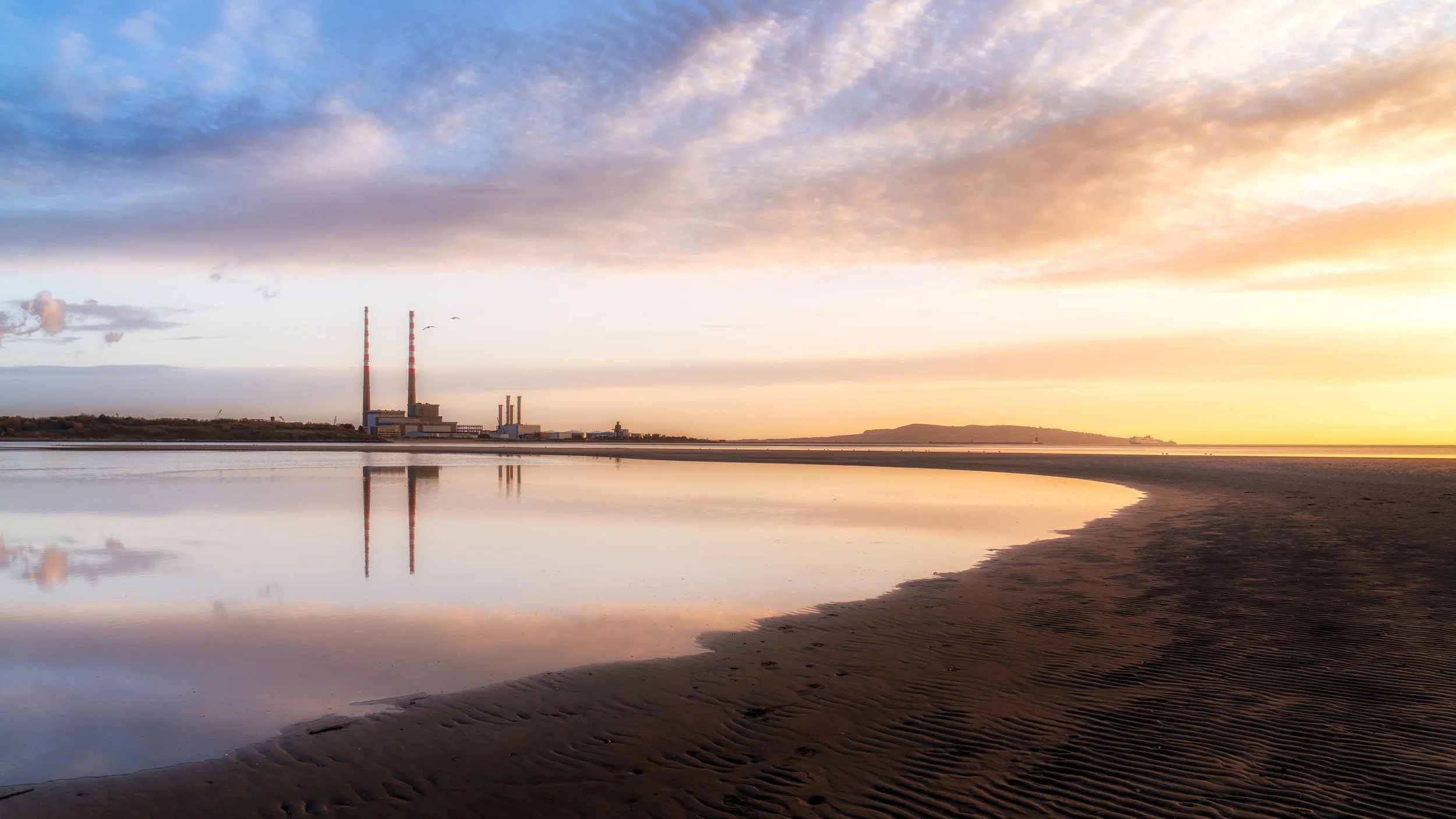
Getting low changes everything — perfect symmetry.
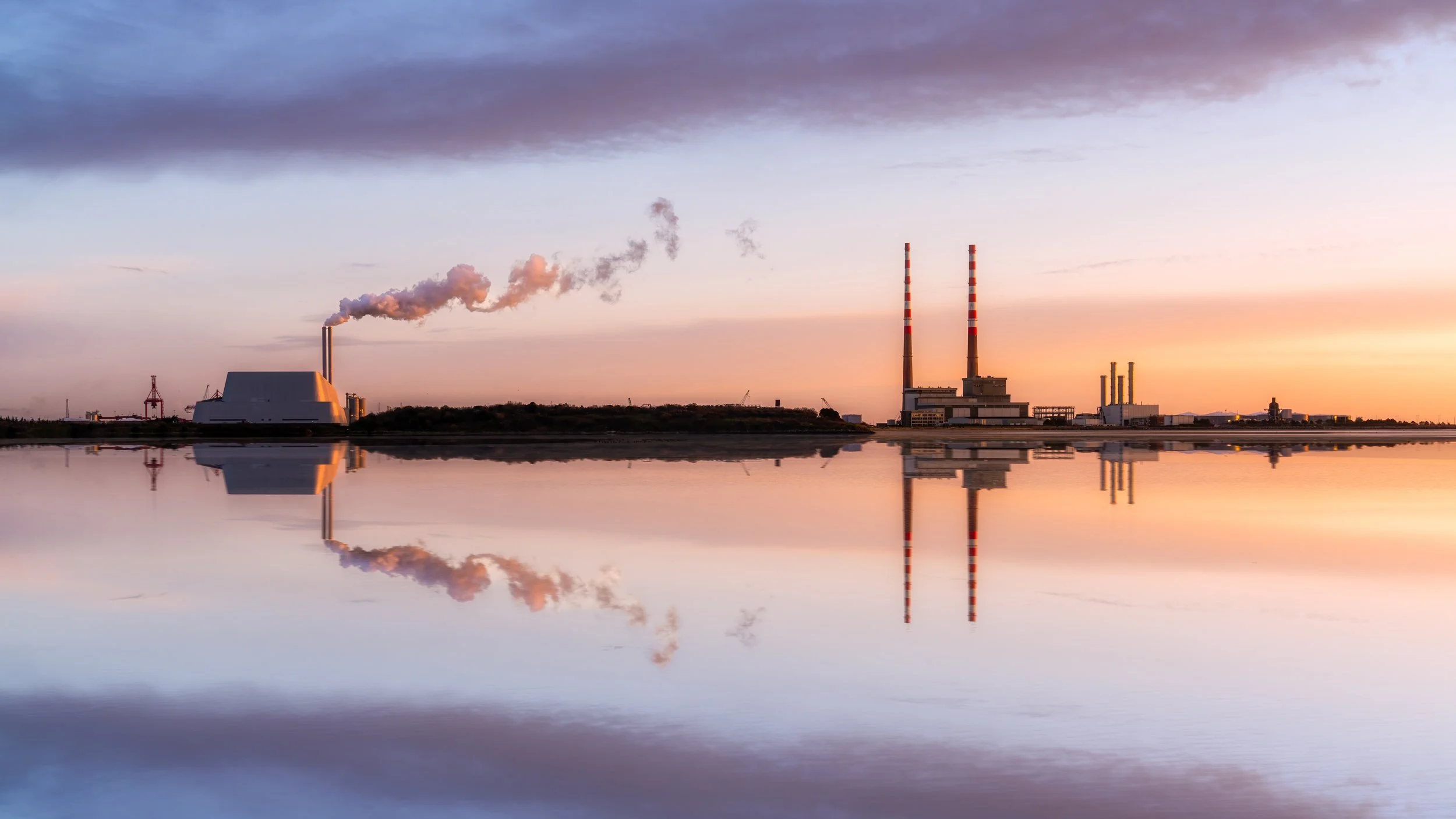
The details — light, water, and stillness.
6. When to Take Liberties in Post-Processing
I'll be honest with you — I took some liberties in Photoshop with some of these images. The reflections were clean, but they weren't clean enough. So I mirrored the top into the bottom, added a subtle motion blur, and created a perfect reflection.
Now, I know some photographers might feel a certain way about that. But here's my philosophy: it's my photograph, and I can do what I want with it. If the reflection is 90% there but that last 10% is ruined by a ripple or a sandbank, I'm not going to let that stop me from creating the image I envisioned.
The key is to be transparent about it. I'm always upfront when I've taken liberties in post-processing. There's no shame in it — it's part of the creative process.
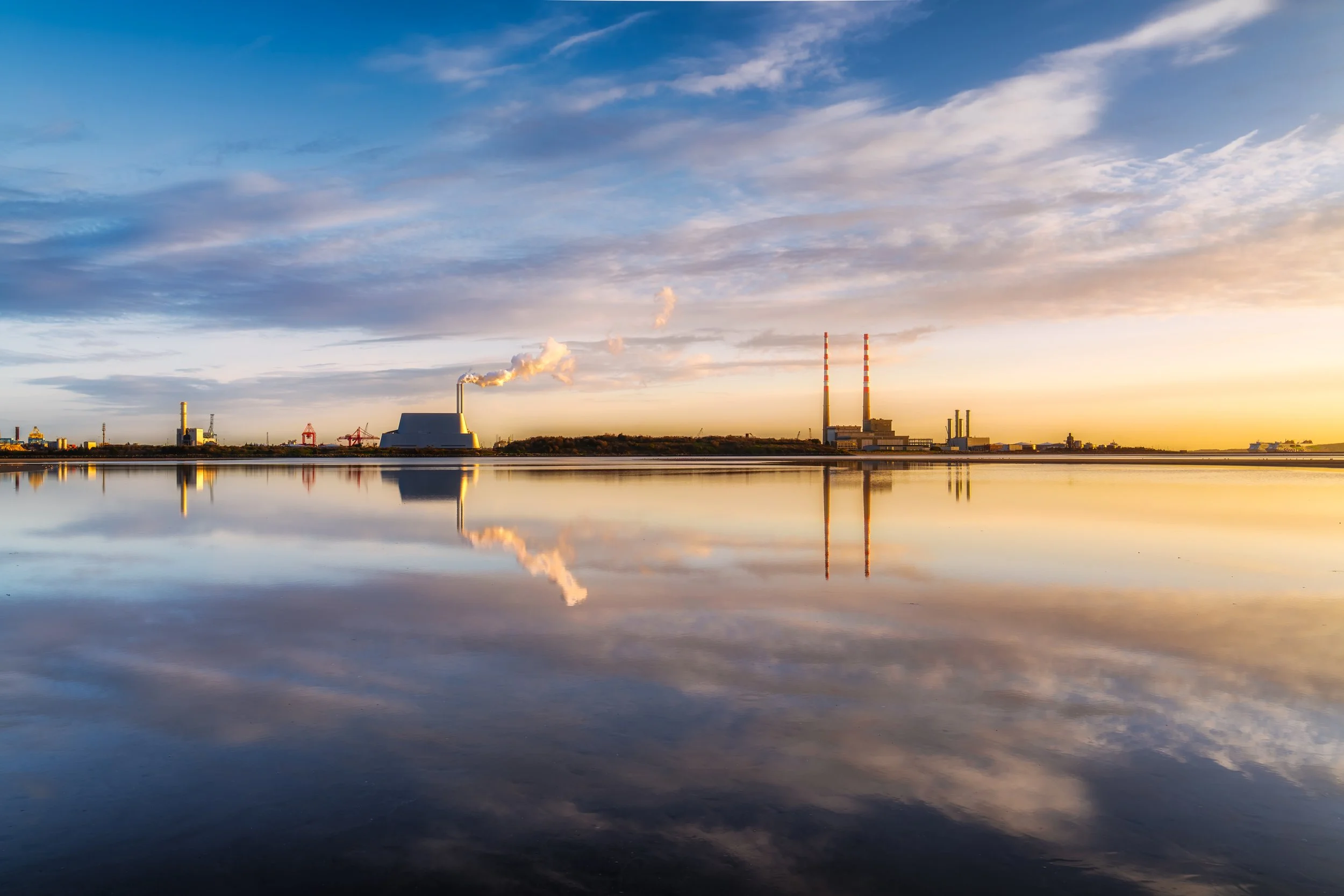
A perfect reflection — created by mirroring the top into the bottom.
7. Practical Tips for Reflection Photography
After two shoots focused entirely on reflections, here are the key lessons I took away:
Find Still Water. Reflections need stillness. Even a slight breeze can ruin a perfect reflection. On the evening shoot, the water was glassy. On the morning shoot, I had to wait for the wind to drop.
Get Low. The lower your camera is to the water's surface, the more the reflection will line up with the subject. Sometimes that means getting your feet wet.
Shoot During Blue Hour. The light at blue hour is soft and even, which makes for beautiful reflections. It's also when the artificial lights of the city start to come on, adding warmth to the scene.
Use a Polarizer. A circular polarizer can cut glare and help the reflection pop. I had mine on for most of the evening shoot.
Be Patient. The perfect reflection doesn't always happen instantly. Wait for the wind to drop, wait for the light to change, wait for the right moment.
Don't Be Afraid to Mirror. If the reflection is almost perfect but not quite, consider mirroring the top into the bottom. It's your art — you can do what you want with it.
📌 Quick Summary
- • Find still water for perfect reflections
- • Get low — closer to the water's surface
- • Shoot during blue hour for soft light
- • Use a polarizer to cut glare
- • Be patient — wait for the right moment
- • Don't be afraid to mirror in post
Inspired to Chase Reflections in Ireland?
Ireland is full of opportunities for reflection photography — from the glassy lakes of Killarney to the tidal pools of the Wild Atlantic Way. If you'd like to learn more about photographing Ireland's landscapes and light, I'd love to have you along on a workshop. Small groups, real locations, and a focus on the art of seeing.
Explore Ireland Workshops →