Top tips on photographing the night sky in Ireland
My Astrophotography Journey
From suburban Dublin to the Milky Way
For as long as I can remember, I've had an insatiable fascination with the night sky and the mysteries it holds. Then it happened — Star Trek came on the TV (T.N.G) and my tiny little mind was blown. No shame in it. I am a nerd. Always have been and proudly always will be. This post is a personal reflection on my journey into astrophotography — from suburban Dublin to Ireland's dark sky reserves, from my first lens to the night I finally captured the Milky Way. If you're planning your own astrophotography adventure, consider getting an eSIM from Airalo to stay connected without expensive roaming charges.
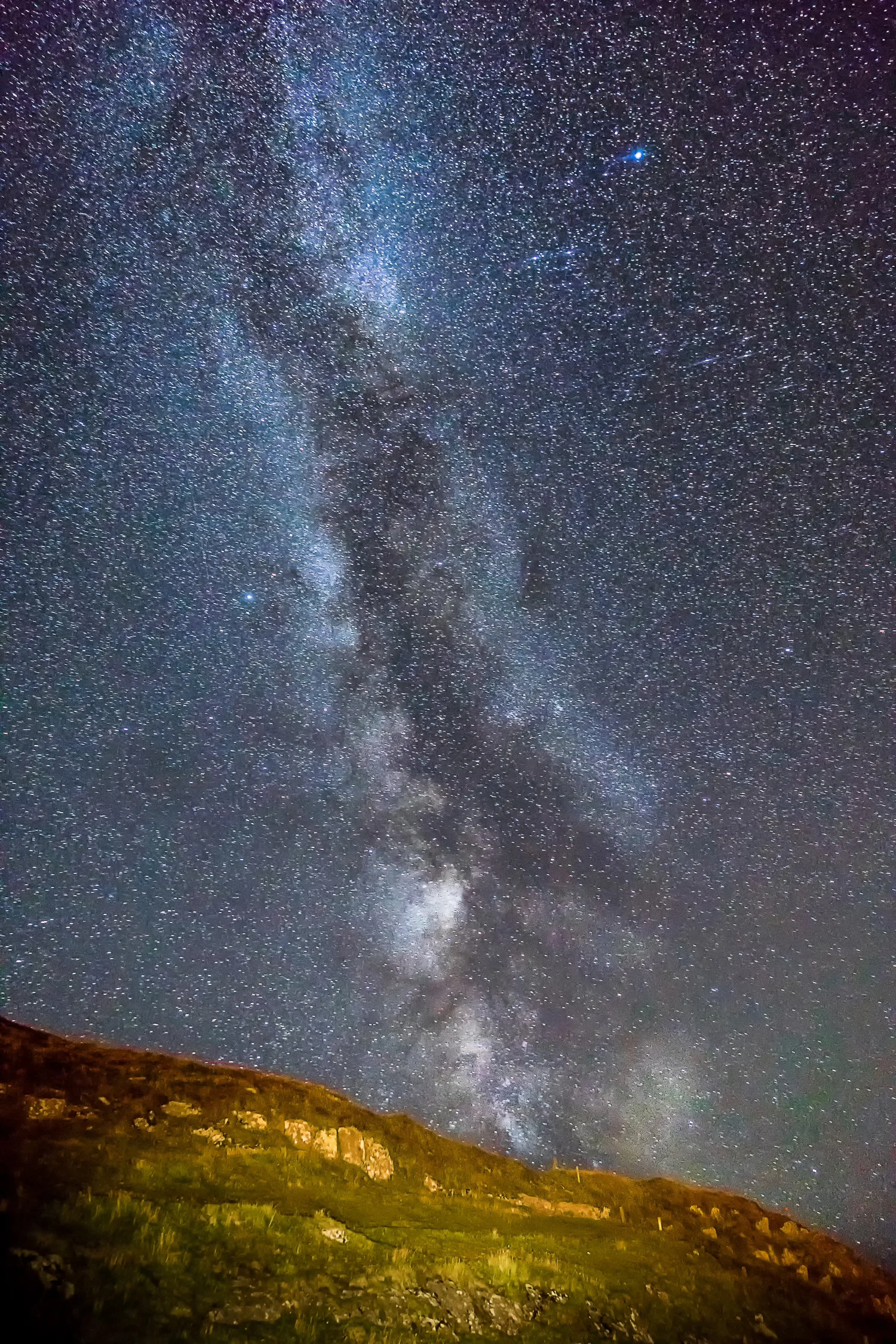
The Irish night sky — a view that never gets old.
The Irish night sky captured through astrophotography — a stunning view of the stars over Ireland.
The Beginning
For as long as I can remember I have always had an insatiable fascination with the night sky and the mysteries it held. Then it happened, Star Trek came on the T.V (T.N.G) and my tiny little mind was blown! No shame in it, I am a nerd. Always have been and proudly always will be.
This post will be focused on my experience so far of photographing the night sky and how much it has changed the way I view the sky and the type of photography I enjoy.
Growing up where I live, in a suburb of Dublin, there has always been pretty noticeable stars in the sky but the more the city grows, the more that orange glow has encroached on the sky. I have had to reach ever further into the Dublin/Wicklow mountains to get a good clear view. Even now though, there is still the faintest glow in the corner of my eye.
Dark Sky Reserve
While I was in full research mode of how one goes about capturing the night sky, I was surprised and oh so delighted to find out that about 4/5 hours drive from Dublin, there's a dark sky reserve in Co. Kerry, meaning that it offers some of the best stars in the sky with no light pollution. In fact, the whole west coast of Ireland is littered with such remote landscape that viewing the sky at night (when it's clear of course) is a joy to behold!
The first real attempt at taking images of the night sky was a couple of years ago when Orla and I had a camper van and we spent a couple of weeks in Co. Cork and Co. Kerry. I wanted to spend some time trying to take images of the stars. I only had my Sony a few weeks before we left but I was going armed with plenty of YouTube information swimming around my head.
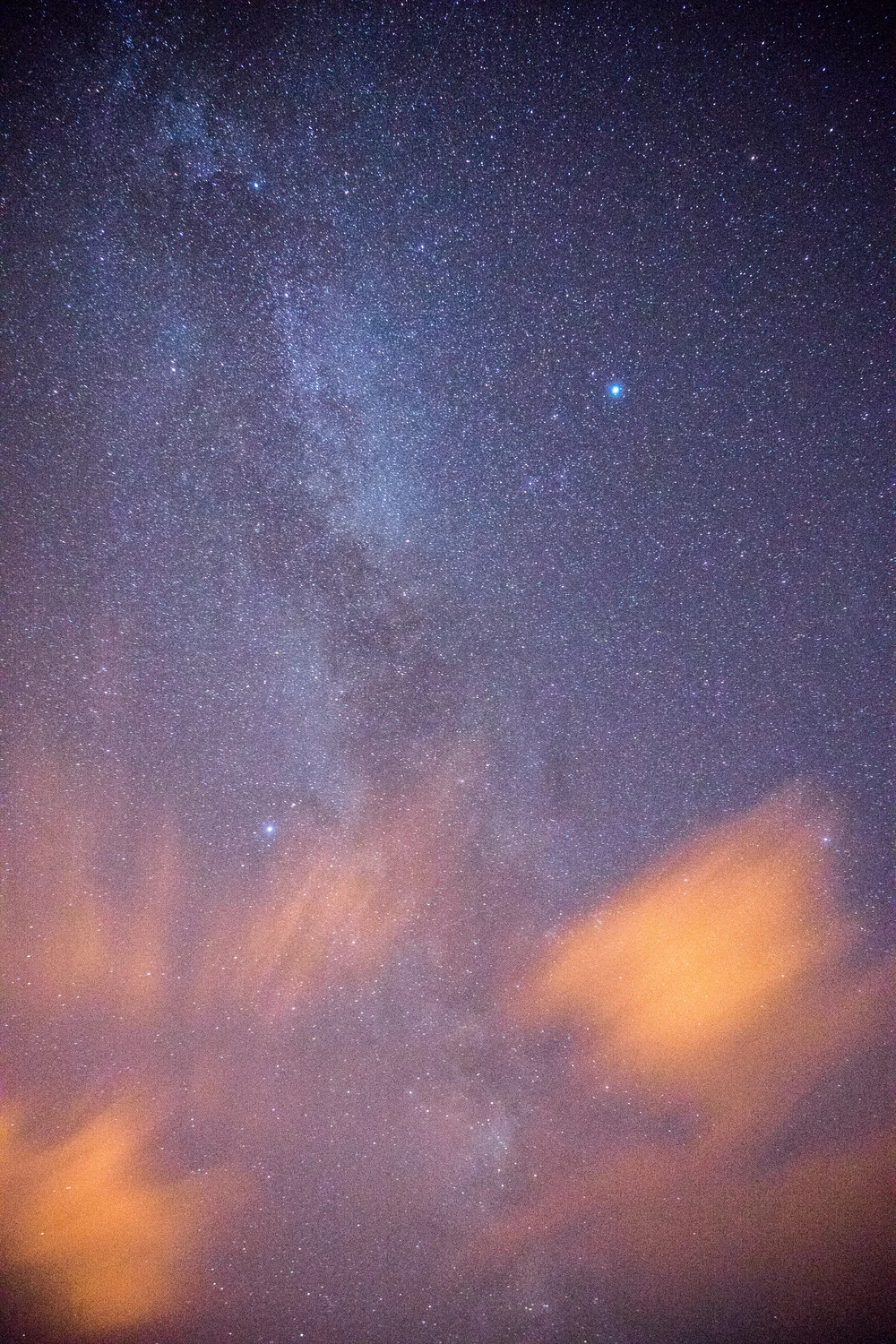
My first attempts at capturing the night sky.
Early astrophotography attempts in Ireland — learning to capture the night sky.
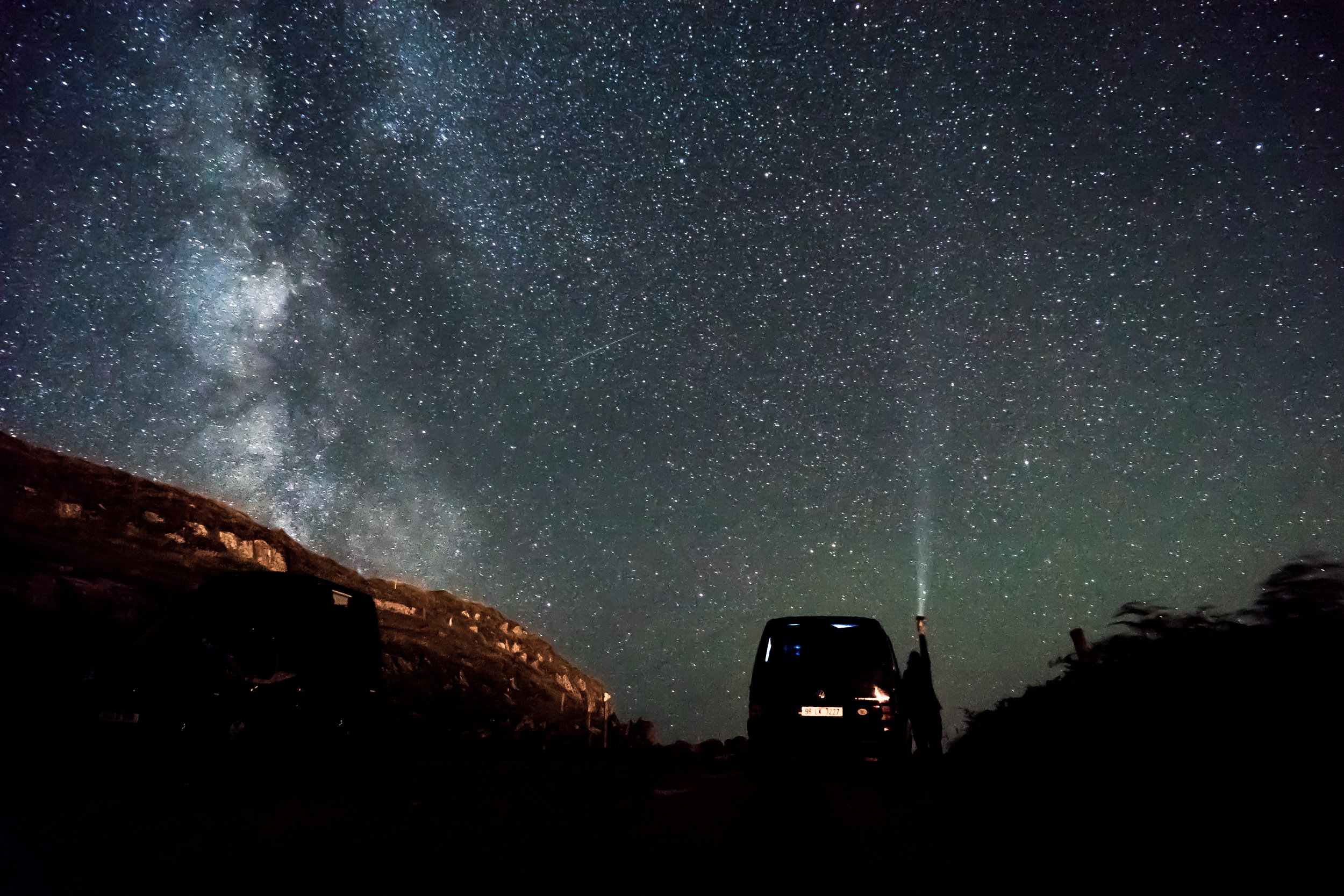
The stars over Ireland — a view worth chasing.
Stars over the Irish landscape — a clear night sky captured in County Kerry.
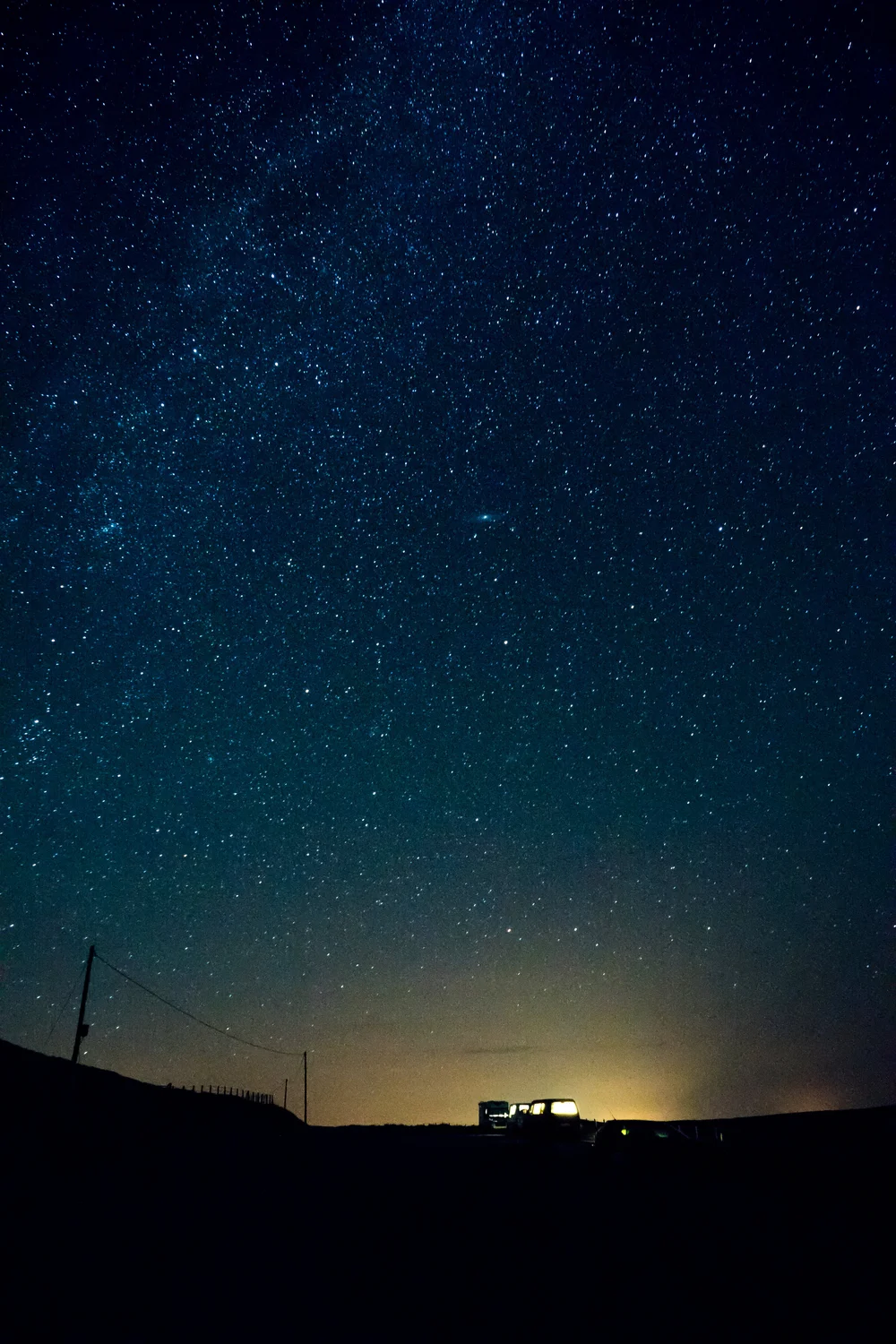
Glimpsing the Milky Way for the first time.
Glimpsing the Milky Way over Ireland — a milestone in my astrophotography journey.
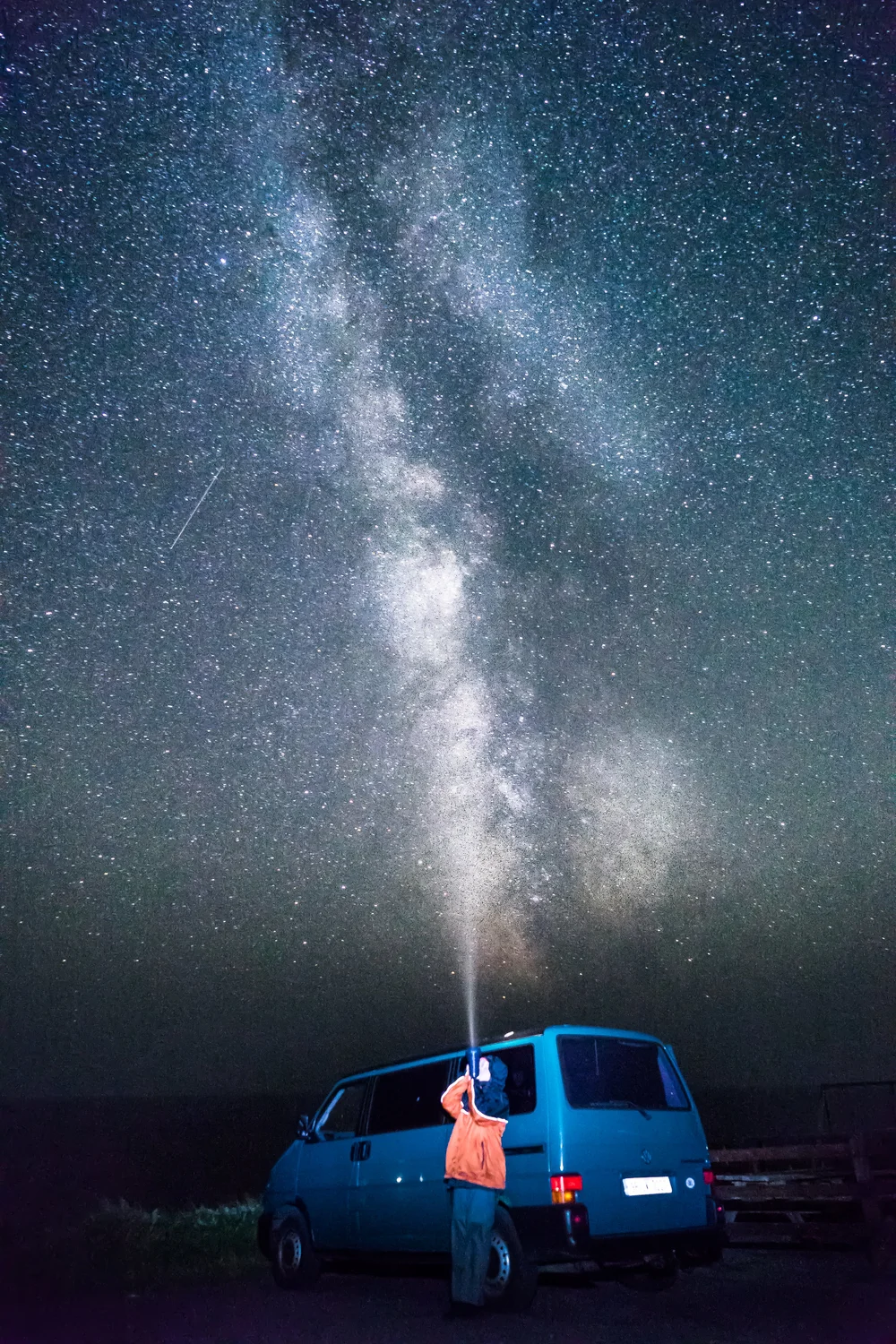
The Irish landscape under a canopy of stars.
The Irish landscape under a canopy of stars — astrophotography in Ireland's countryside.
I toyed with light painting and different exposure times. I felt a tad limited as the Sony 24-70mm f/4 I have is the F4 lens so I couldn't get wide shots that were less noisy. But in saying that, my head was spinning looking at the back of the camera thinking "I am actually seeing stars." I was delighted! Needless to say, any chance I got I was shooting well into the night over the two weeks.
There have been other trips where I took many different exposures and used the median stacking method in Photoshop. While indeed the noise was greatly reduced, I think at the time it was dark enough and the wind was so strong it was hard to get steady images. It was a great learning experience though and I learnt some great new Photoshop techniques.
Enter the Zeiss Batis 18mm f/2.8
Things changed recently when I got myself a new lens — the ZEISS Batis 18mm f/2.8.
When it arrived in the post I was thrilled and couldn't wait to test it out in the field. As part of the Loughcrew adventure that you might have read about, Orla and I went up the mighty Cairn during the night. When we saw the sky so clear I thought, "right, this time I am not going anywhere till I get at least a couple of nice shots."
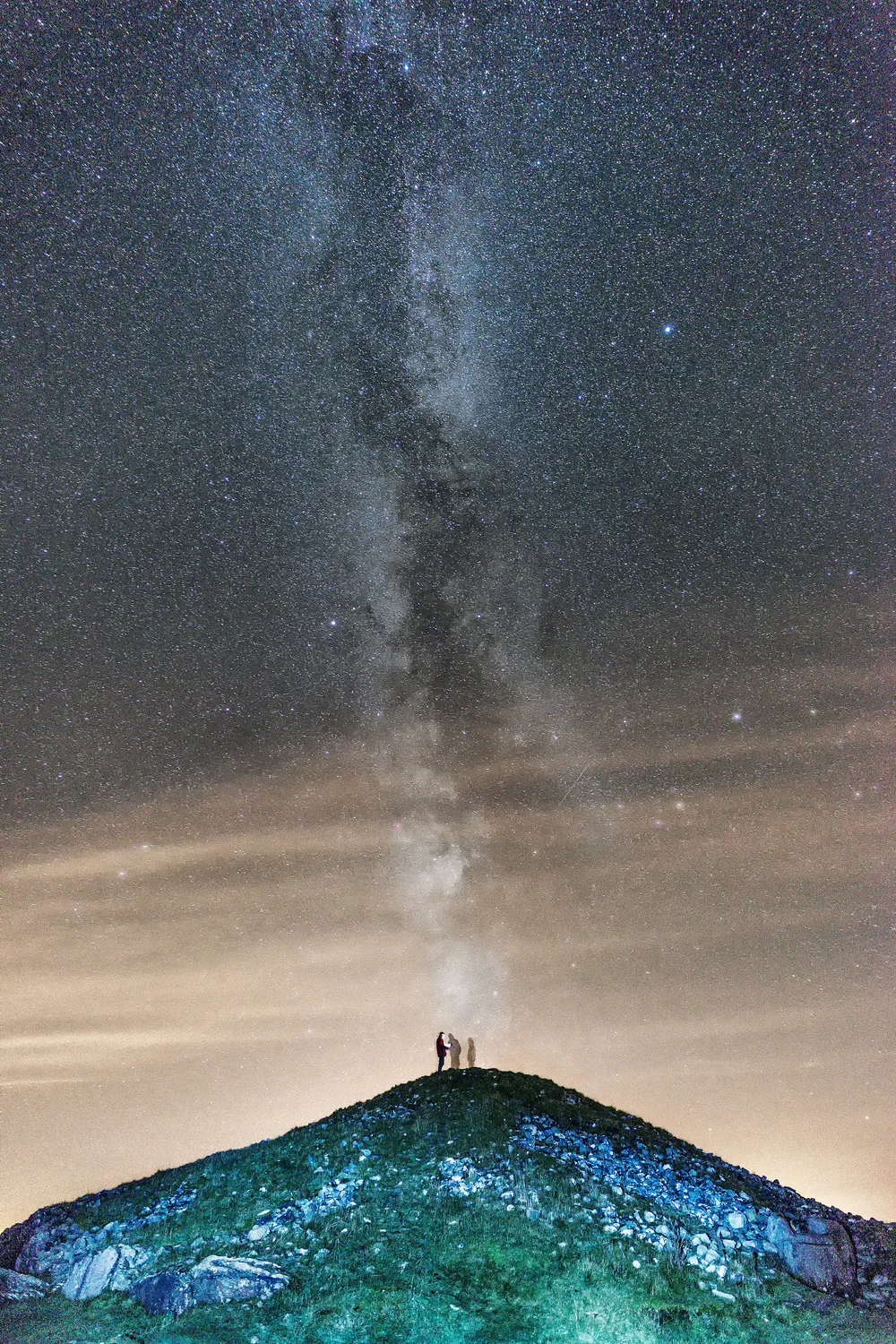
Under the Milky Way — Loughcrew at night.
The Milky Way captured over Loughcrew, Ireland — a night to remember with the Zeiss Batis 18mm.
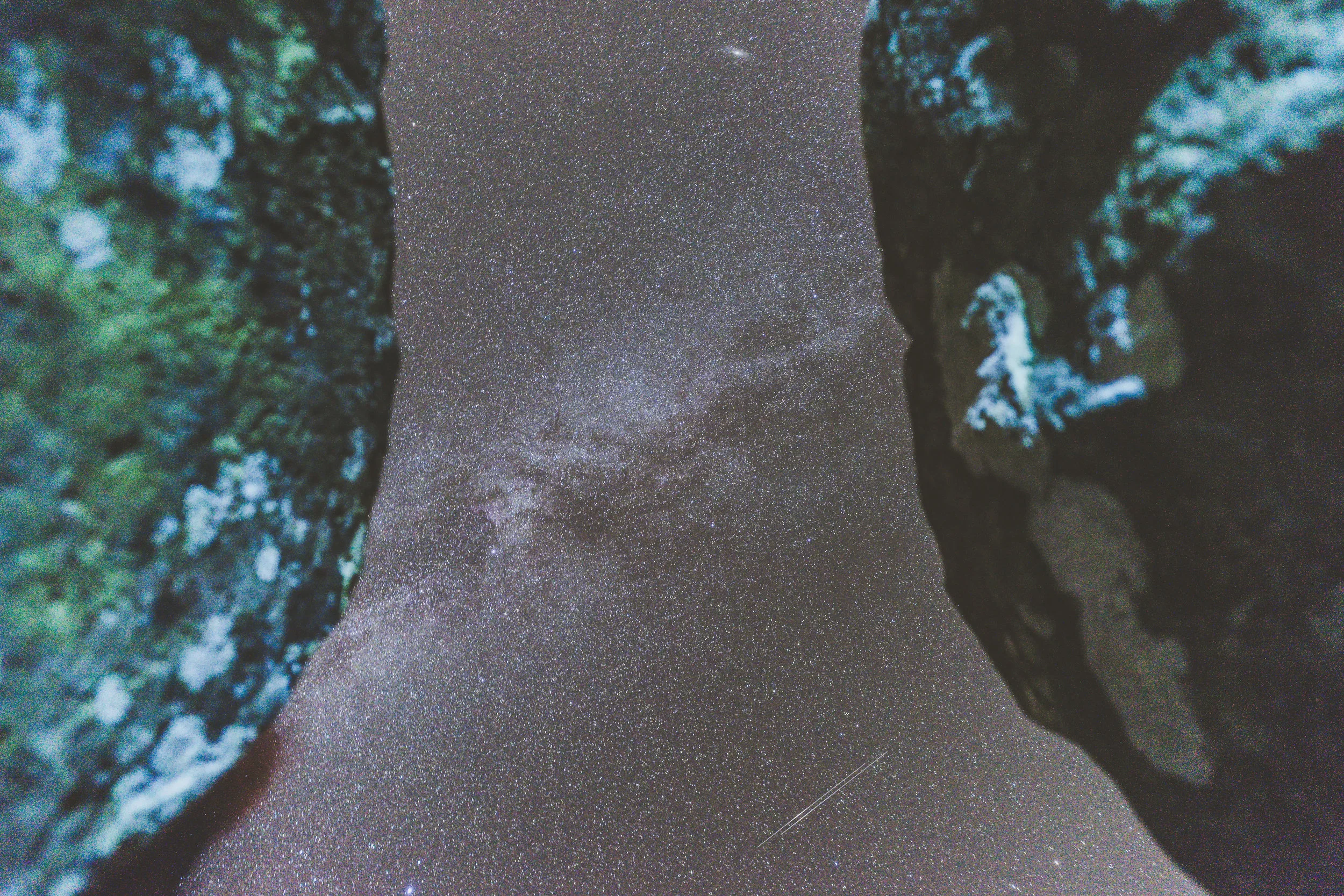
Looking up through ancient rocks — a night to remember.
Looking up through ancient rocks at Loughcrew — astrophotography framed by Ireland's heritage.
These are all single exposures. Again, I did try stacking many different exposures but it didn't seem to work for me, so I'll have to go back to the drawing board with that. I am super happy with the way these images turned out though.
What I've Learned
The experiences I have had so far shooting the night sky has been a journey, to say the least. I have learned so much about the constellations and using apps like PhotoPills and StarWalk has given me a great opportunity to learn even more — like when is the best time of night to shoot and compositionally giving me tools to plan ahead for the next star adventure.
What I've learned so far:
- Location matters: Getting away from light pollution is essential. Ireland's west coast and dark sky reserves are worth the drive.
- Gear matters — but not everything: A fast wide-angle lens (f/2.8 or faster) makes a huge difference. The Zeiss Batis 18mm f/2.8 was a game-changer.
- Preparation is everything: Apps like PhotoPills help you plan compositions and know exactly when the Milky Way will appear.
- Patience is essential: The weather doesn't always cooperate. But when it does, it's magic.
- Stacking helps: Median stacking in Photoshop reduces noise, but it requires stable conditions.
I am still learning and I look forward so much to the next opportunity to just see clear night skies and of course snap some images too. I am still in total awe of the night sky and seeing what people can capture is such great inspiration to go out and shoot.
Who knows, I might even capture a glimpse of the Enterprise up there. It'll have to have travelled back through a wormhole of some kind, maybe like the one from 'First Contact', who knows.
My Astrophotography Gear
- ZEISS Batis 18mm f/2.8 — My go-to astro lens. Sharp, fast, and reliable.
- 3 Legged Thing Winston Tripod — Stable and sturdy for long exposures.
- Sony 16-35mm f/4 — A versatile wide-angle for landscapes and astro.
- Headlamp with Red Light — Essential for preserving night vision while setting up.
Planning your own astrophotography adventure? Before you go, make sure you have comprehensive travel insurance for peace of mind. I use EKTA Travel Insurance for all my adventures — it's reliable, affordable, and covers the unexpected.
Inspired to Shoot the Night Sky?
Whether you're capturing the stars or chasing the golden light, the key to great photography is learning to see. Join me on a workshop and let's explore the art of photography together.
Explore Workshops →
