Note: This post contains affiliate links. By using affiliate links, I earn a small commission when you click through / buy a product, etc. Don't worry — you don't pay any extra. It's one of the ways I keep the proverbial lights on and create free content like this. Thanks for your support!
Lofoten in winter is a landscape photographer's dream. The snow‑capped peaks, the red rorbuer cabins, the Arctic light — it's a place that rewards the prepared photographer with images that feel almost otherworldly.
Over several trips, I've refined my list of the best places to shoot in the islands. Some are iconic — the ones you've seen a thousand times on Instagram. Others are slightly less visited but just as rewarding. Here are seven of my favourites, with practical tips on when to go, what to look for, and how to get the shot.
1. Hamnøy Bridge — The Classic Shot
The most iconic Lofoten image — red cabins, dramatic peak, and the bridge
This is the shot. The red rorbuer cabins hugging the shoreline, the jagged peak rising behind them, and the bridge itself as a leading line. It's popular for a reason. The key is timing — wait for that last sliver of light to catch the peak while the foreground cabins remain in shadow. Shooting from the bridge means being mindful of traffic and other photographers, but the payoff is worth it.
Pro tip: Use a long exposure (1‑2 seconds) to smooth the water and add movement to any clouds. A
KASE 10‑stop ND filter is your friend here.
Best time to shoot: Sunset — the golden light hits the peak from behind. Also works for aurora if the sky is clear.
Get the KASE ND Filter Kit →
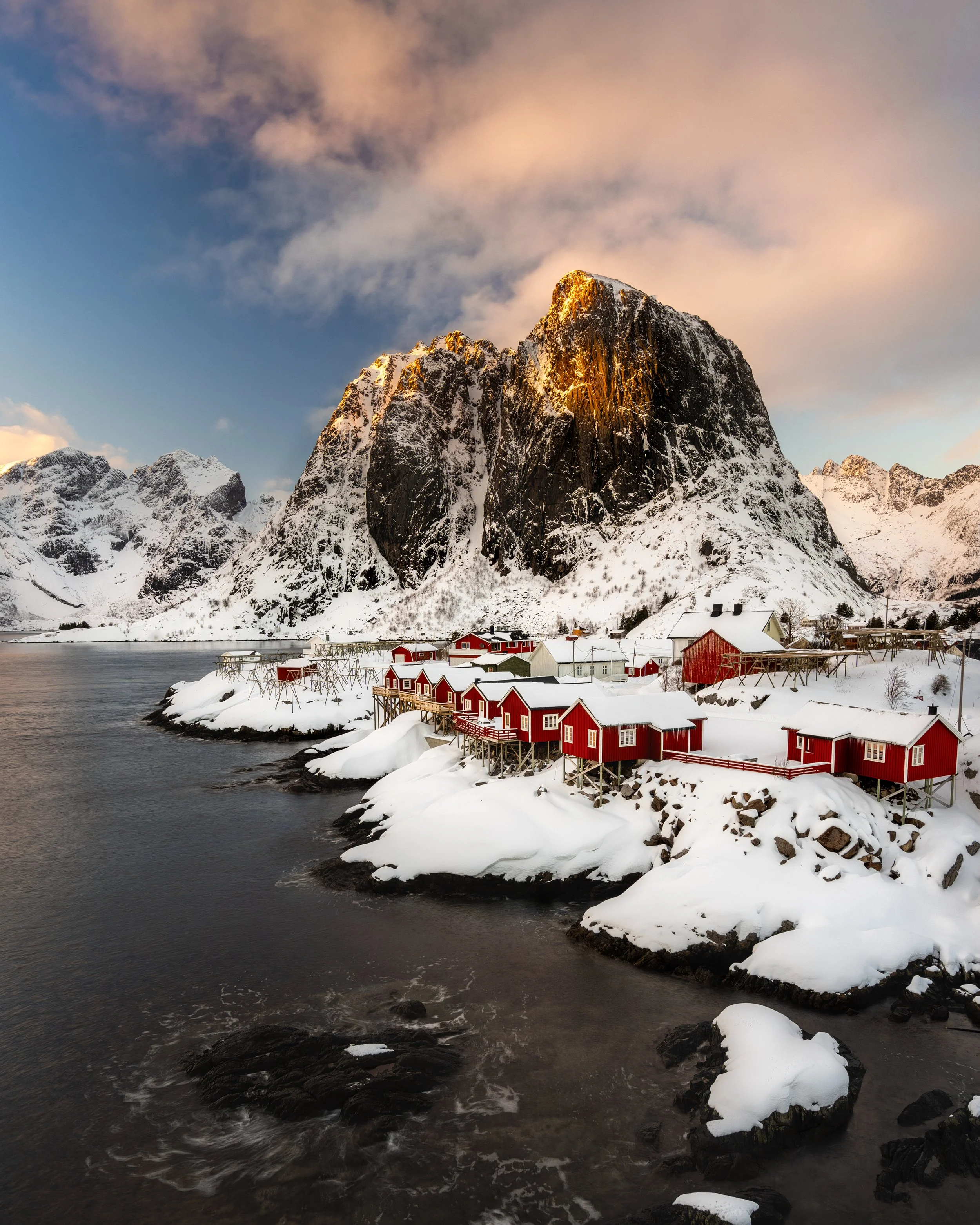
Hamnøy Bridge at sunset — the light catching the peak makes this one of the most rewarding shots in Lofoten.
2. Sakrisøy — The Yellow House & Mountain
The yellow cabin framed against the spiky mountain backdrop
This is the Instagram scene — and it's popular for a reason. The yellow rorbuer stands out beautifully against the dark, jagged mountain behind it. The main challenge is the crowds. Tourists in yellow hats and blue jackets will wander into your frame, so patience is key. Wait for a gap, or use a longer exposure to blur people out if they're moving through the scene.
Pro tip: Shoot with a telephoto lens (70‑200mm or 100‑400mm) to compress the scene and make the mountain feel even more dramatic. The
Sony 100‑400mm is what I use for this.
Best time to shoot: Early morning or late afternoon — the low light makes the yellow pop against the cool mountain tones.
View the Sony 100‑400mm →
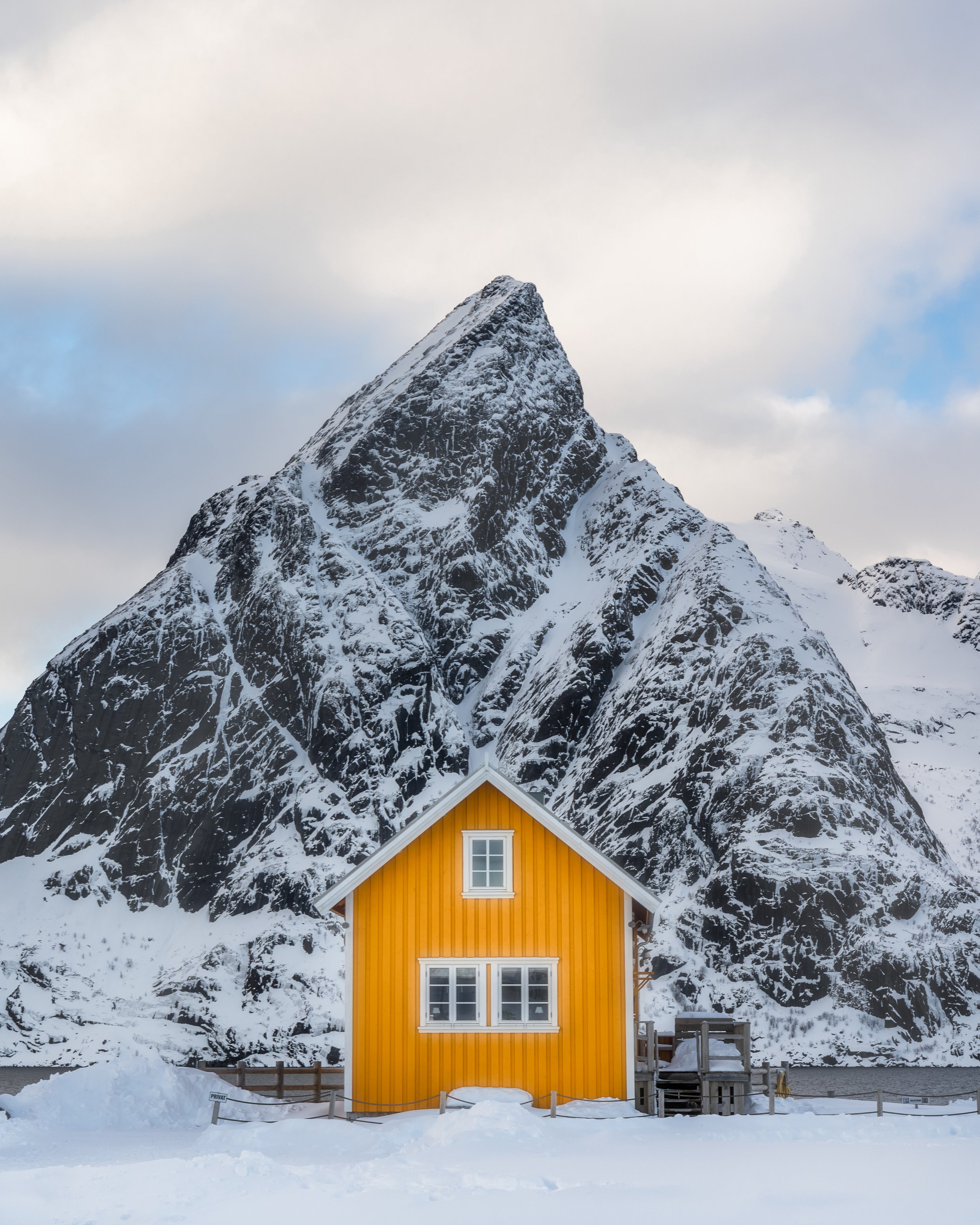
The yellow cabin at Sakrisøy — one of the most Instagram‑famous spots in Lofoten, for good reason.
3. Reine — Reflections & Sweeping Vistas
The postcard shot — sweeping views across the water to Reine village
The view from the bridge looking across the water to Reine is one of the most photographed scenes in Norway — and for good reason. The "crescent moon" shape of the shoreline, the red cabins, and the mighty peaks all come together in perfect harmony. The challenge is width — 16mm often isn't wide enough to capture the full curve of the water's edge, so a panoramic stitch is often the best approach.
Pro tip: Shoot a panoramic sequence (3‑5 frames) and stitch them together in post. Use a
sturdy tripod to keep everything aligned.
Best time to shoot: Early morning for reflections in the still water, or sunset for warm light on the peaks.
Get the 3 Legged Thing Tripod →
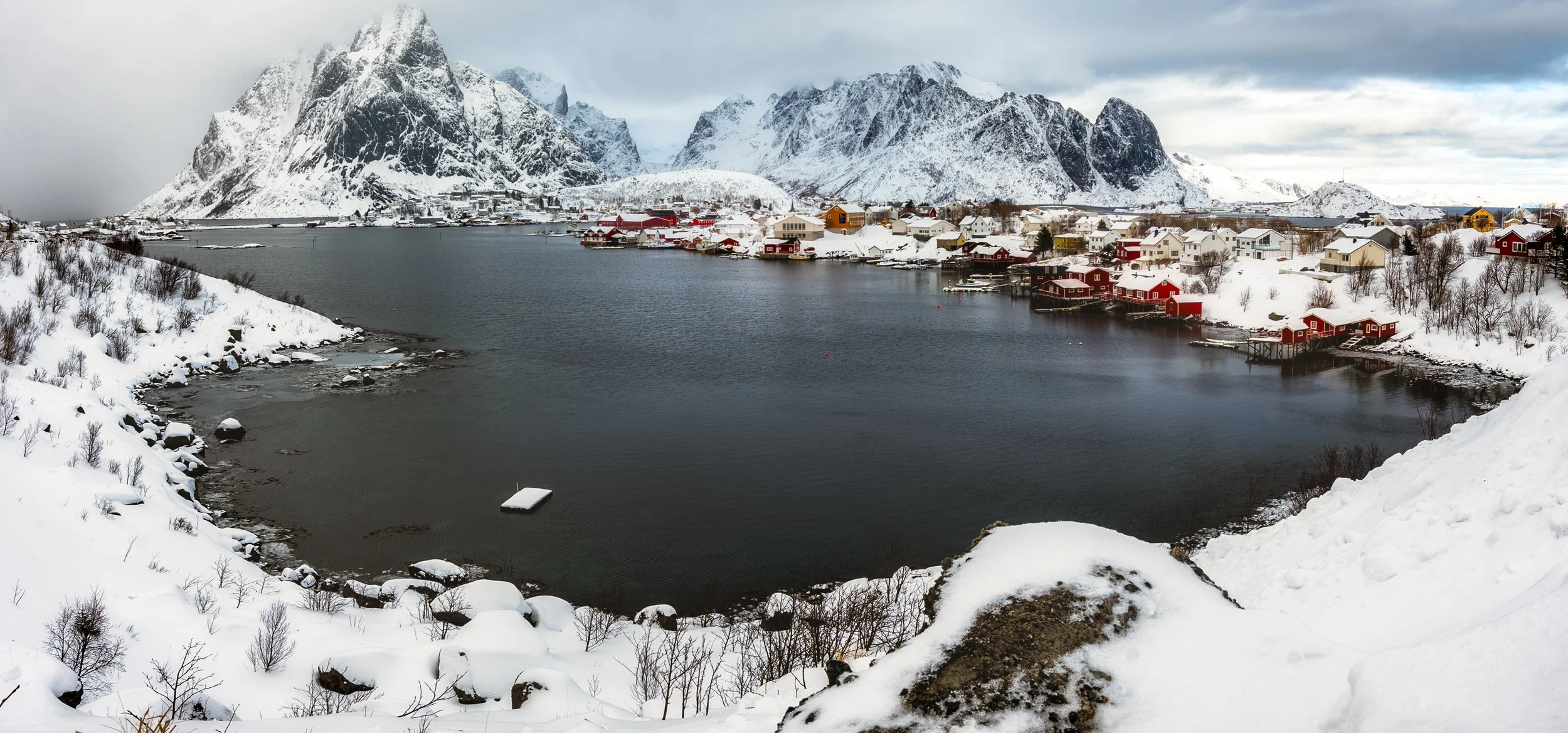
The sweeping view of Reine — a classic Lofoten panorama that never gets old.
4. Uttakleiv Strand — Motion in the Water
The "Dragon's Eye" — dramatic rocks, crashing waves, and a colossal mountain backdrop
This beach is one of Lofoten's most dramatic locations. The rocks create natural leading lines, the waves crash against the shore, and the mountain rises steeply behind it all. The key here is to get low — right down to the water's edge — and use a slow shutter speed to turn the crashing waves into silky motion that draws the eye through the frame.
Best time to shoot: Sunset — when the light hits the mountain and the waves catch the golden glow. Also a fantastic aurora location.
Explore the KASE Filter System →
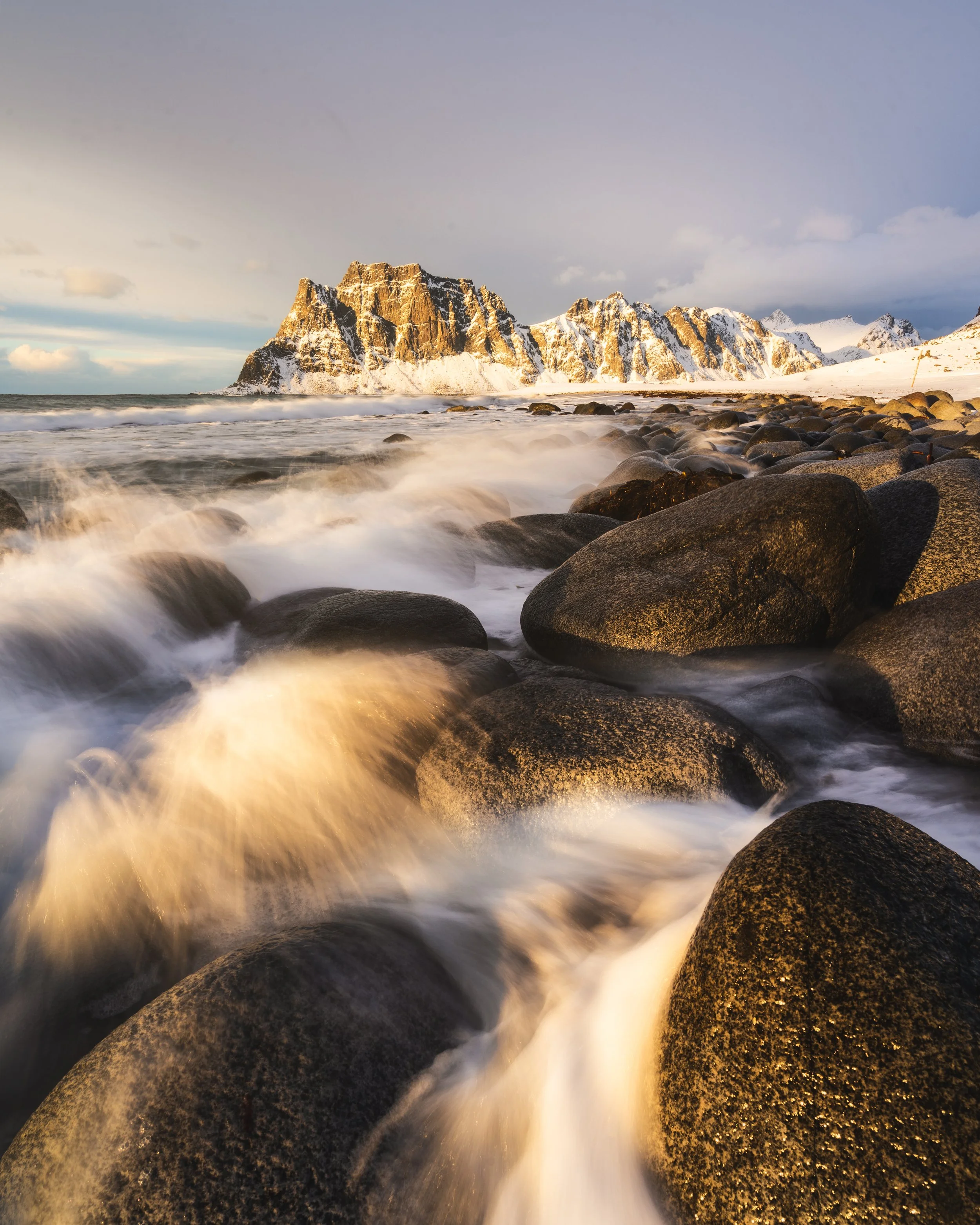
Uttakleiv at sunset — the rocks, the waves, and the mountain all come together in perfect harmony.
5. Skagsanden — Reflections & Northern Lights
Black and white sands, reflections, and a moody sky
Skagsanden is versatile. The beach features striking black and white sand patterns that create incredible foregrounds. When the tide is right, the wet sand reflects the mountains and sky — making it one of the best locations in Lofoten for both sunrise/sunset and aurora photography. The reflections add an extra layer of depth to your compositions.
Pro tip: Look for puddles and wet patches of sand to capture perfect reflections. A
circular polariser helps cut through glare and enhance the reflections.
Best time to shoot: Sunrise for calm reflections, or aurora nights for dancing lights reflecting in the wet sand.
View the KASE Polariser →
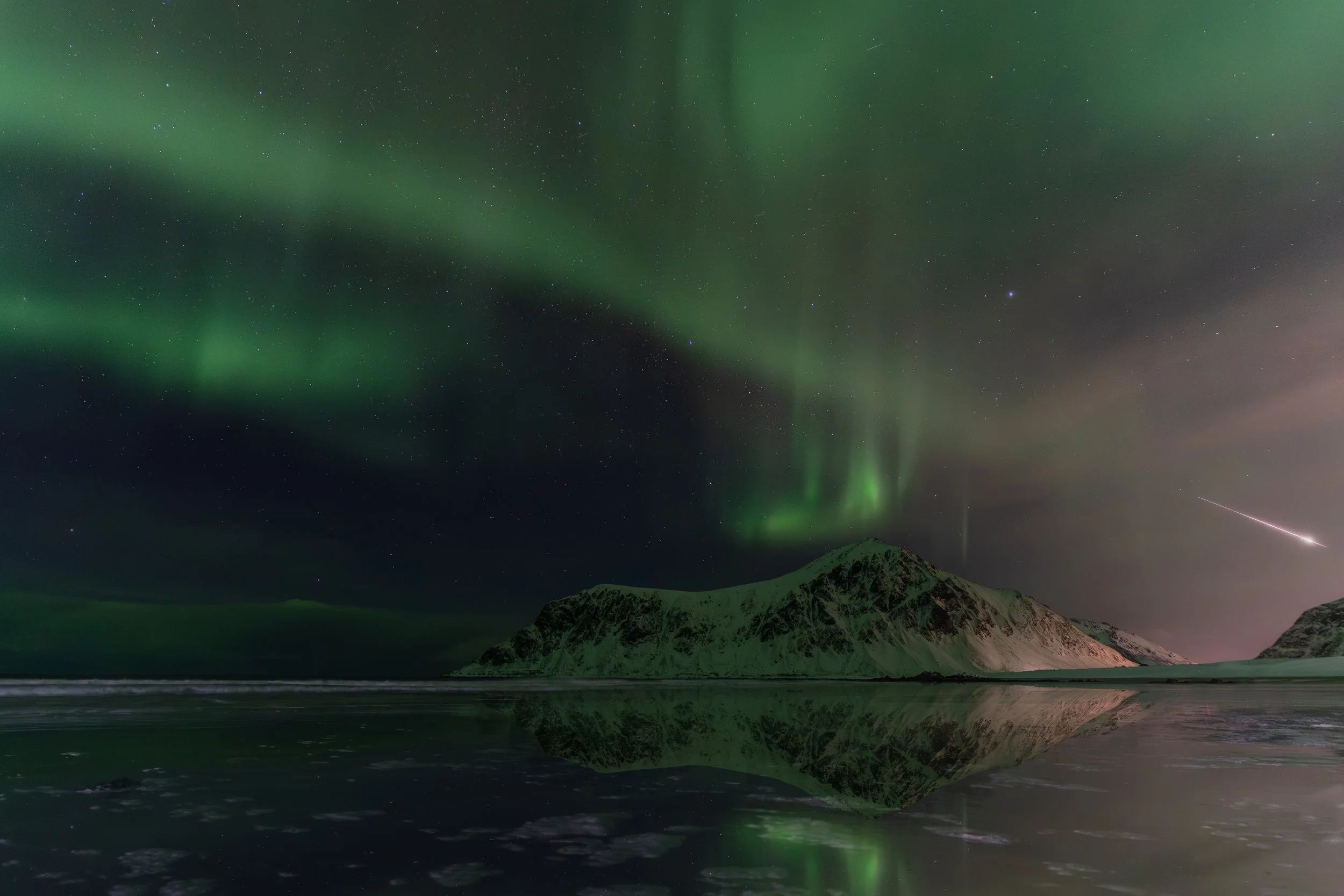
Skagsanden's black and white sands — a perfect canvas for reflections and Northern Lights.
6. Nusfjord — Classic Red Houses
One of Norway's best‑preserved fishing villages — red rorbuer against a snowy backdrop
Nusfjord is pure charm. The red rorbuer cabins cling to the shoreline, the mountains rise steeply behind, and the whole village feels frozen in time. It works beautifully in both winter and summer. In winter, the contrast between the red huts, the white snow, and the dark mountains is simply stunning.
Pro tip: Midday can work surprisingly well here with a long exposure to add drama to the clouds. Use a
10‑stop ND filter to smooth the water and sky.
Best time to shoot: Sunrise or late afternoon when the low light warms the red cabins. Also works beautifully in overcast conditions for moody images.
Shop KASE ND Filters →
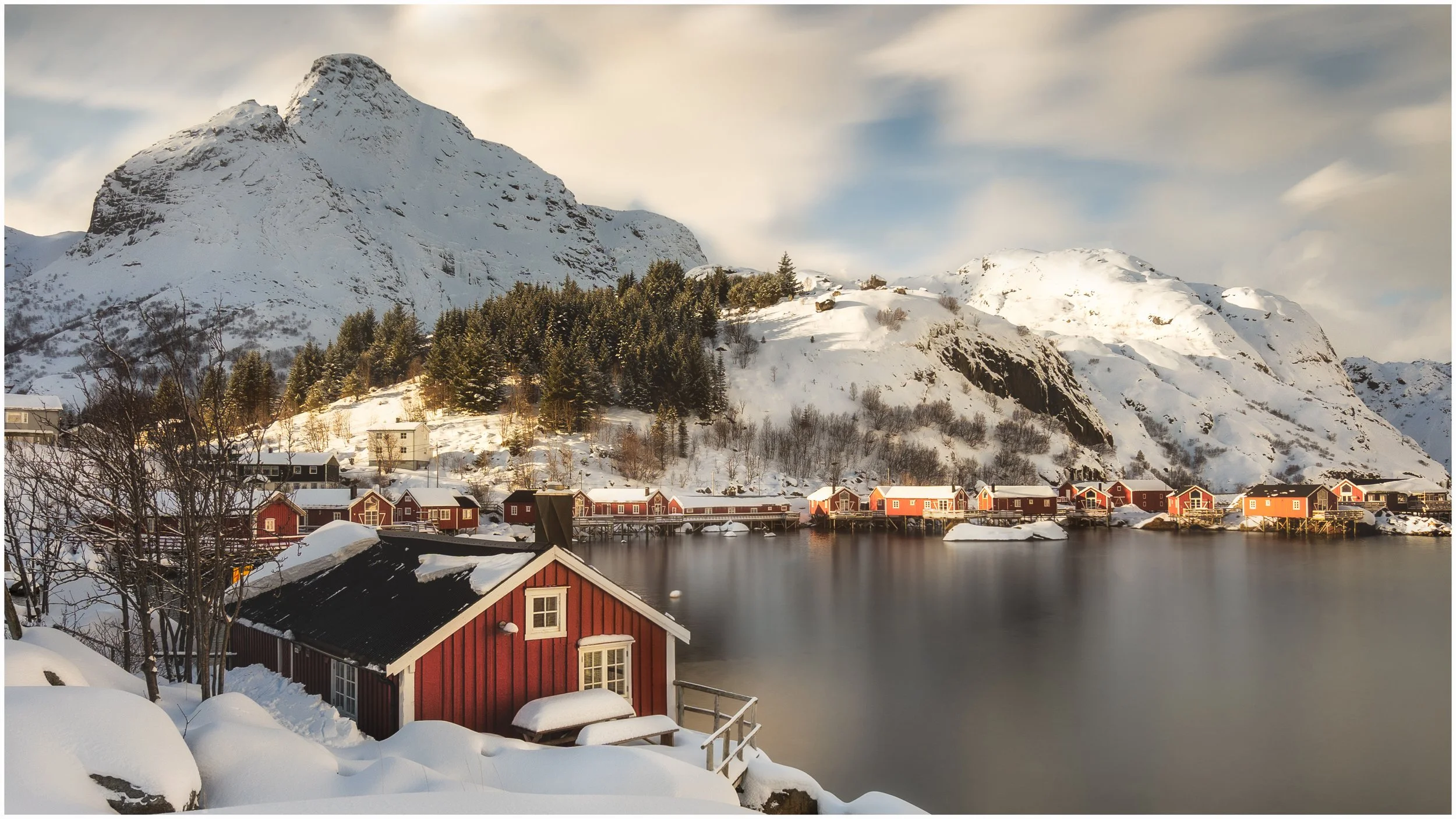
Nusfjord — a fishing village frozen in time, with red rorbuer contrasting against the snow.
7. Ramberg Beach — Red Hut with Mountain Background
The red hut framed against the towering mountain backdrop
Ramberg Beach offers one of the most beautifully composed scenes in Lofoten — a single red rorbuer (or small hut) set against the sweeping curve of the beach and the dramatic mountain behind. It's a location that rewards both wide and telephoto approaches. The simplicity of the composition is what makes it so powerful.
Pro tip: Try both a wide‑angle (16‑35mm) to capture the full sweep of the beach, and a telephoto (70‑200mm or 100‑400mm) to compress the scene and make the mountain loom larger. The
Sony 100‑400mm is perfect for the compressed version.
Best time to shoot: Golden hour — when the low light illuminates the red hut and the mountain catches the warmth.
View the Sony 100‑400mm →
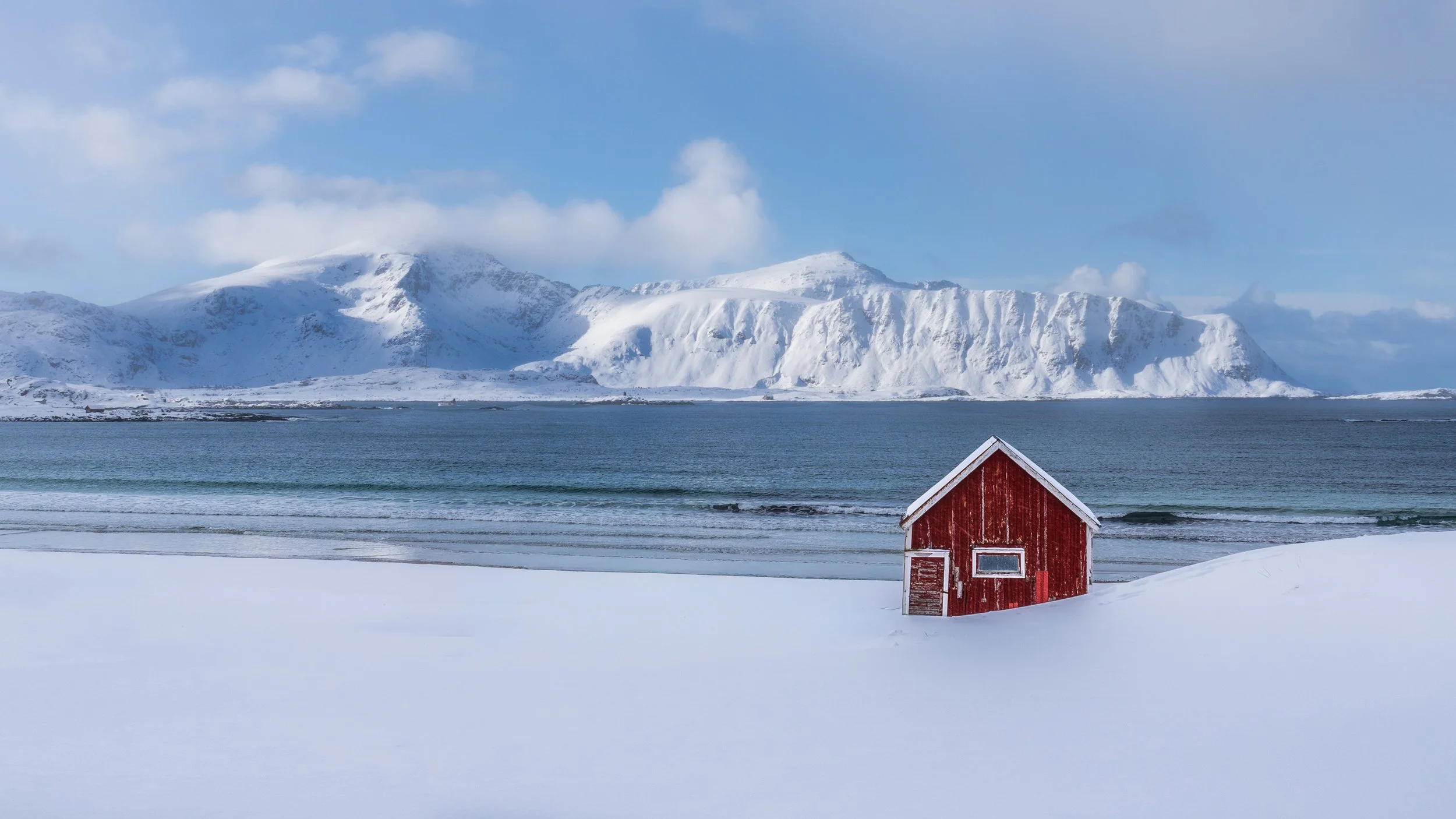
Ramberg Beach — a simple composition that packs a punch, with the red hut against the mountain.
Quick Reference — 7 Locations at a Glance
| Location |
Best For |
Best Time |
Key Gear |
| Hamnøy Bridge |
Iconic cabins + mountain |
Sunset |
ND filter, tripod |
| Sakrisøy |
Yellow house + mountain |
Early morning / late afternoon |
Telephoto lens |
| Reine |
Sweeping vistas, reflections |
Sunrise / sunset |
Wide‑angle, panoramic technique |
| Uttakleiv Strand |
Rocks, waves, motion |
Sunset / aurora |
ND filter, tripod, low angle |
| Skagsanden |
Reflections, aurora |
Sunrise / aurora nights |
Polariser, wide‑angle |
| Nusfjord |
Red cabins, snowy backdrop |
Sunrise / overcast days |
ND filter, tripod |
| Ramberg |
Red hut + mountain |
Golden hour |
Wide + telephoto |
Final Tips for Shooting Lofoten
1. Respect the traffic. Locations like Hamnøy and Sakrisøy are busy. Be mindful of locals and other photographers. Park considerately and don't block the narrow roads.
2. Be patient. The light in Lofoten moves fast. Wait for it. Sometimes that extra 20 minutes yields the best shot of the day.
3. Dress for the cold. March temperatures can be brutal. Good gloves (like the OTEX Outdoors gloves — don't forget them like I did!) and a warm beanie are essential.
4. Bring spare batteries. Cold drains them fast. Keep them in your inside jacket pocket to keep them warm. (Sony NPFZ100 batteries are what I use.)
5. Use a sturdy tripod. Long exposures are a staple of Lofoten photography. A carbon fibre tripod like the 3 Legged Thing Winston 2.0 is worth its weight in gold.
6. Shoot beyond the icons. The famous spots are famous for a reason — but don't be afraid to explore. Some of the best images come from unexpected places along the roadside.
🌍 Join the Lofoten Photography Workshop
Experience the Arctic light, chase the Northern Lights, and photograph one of the world's most dramatic landscapes. Small groups, expert tuition, and the trip of a lifetime.
Join the Waiting List →
Take it easy, everyone. Cheers.
