What to Pack for Arctic Photography
Essential Winter Photography Gear for Lofoten
What to Pack for Arctic Photography in Norway
Photographing Lofoten in winter is one of the most rewarding experiences a landscape photographer can have. But it's also one of the most demanding — on you, and on your gear. Here's everything I pack for a winter photography workshop in the Arctic.
Lofoten in March is spectacular. The snow-capped peaks, the red rorbuer cabins, the ethereal Northern Lights — it's a photographer's dream. But it's also bitterly cold. And if you're not prepared, the cold can ruin your day, your gear, and your images.
Over the years, I've refined my kit for Arctic conditions. I've learned the hard way what works and what doesn't. In this post, I'll share the gear I rely on — from camera bodies and lenses to the small accessories that make all the difference when your fingers are numb and the wind is howling.
If you're planning a trip to Lofoten — or anywhere cold — this should give you a solid starting point.
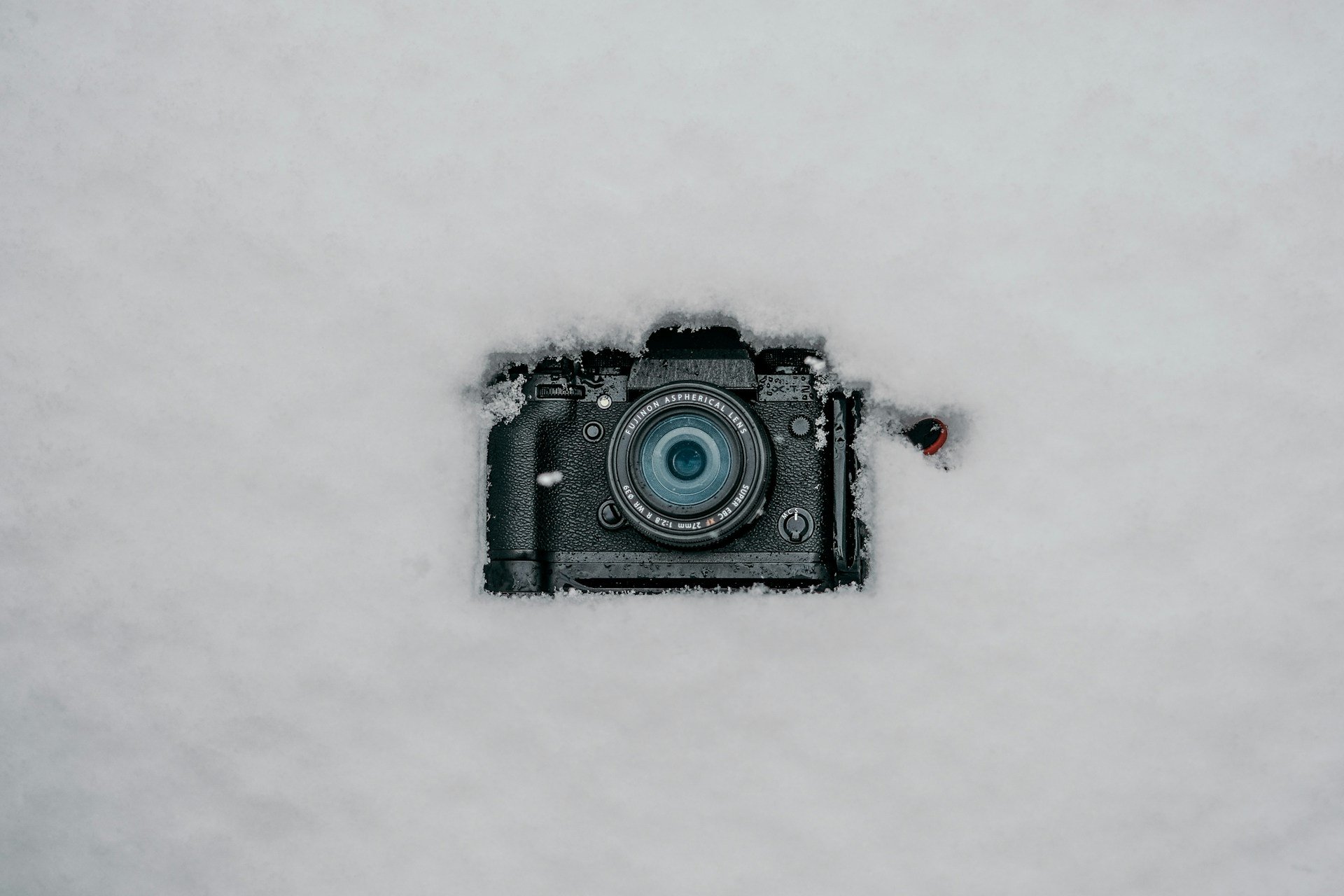
1. The Camera — Sony A7R V
Sony A7R V
The A7R V is my go-to for Lofoten. The 61-megapixel sensor gives me incredible resolution for cropping into distant mountain scenes, and the dynamic range is exceptional — crucial when you're shooting high-contrast winter landscapes with snow and shadow. The in-body stabilisation is a lifesaver when you're handholding in the cold, and the autofocus handles moving subjects beautifully.
View on Amazon →I've been using the Sony system for a few years now, and the A7R V is my favourite body for landscape work. The resolution is overkill for most applications, but when you're shooting Lofoten's vast scenes and want to crop in on a distant peak, those extra megapixels are invaluable.
2. Wide-Angle Lens — Sony 16-35mm f/4
Sony 16-35mm f/4
This lens is permanently attached to my camera in Lofoten. The 16mm end is wide enough to capture the vastness of the Arctic landscapes, while 35mm gives you a more standard field of view for composed scenes. The f/4 aperture is plenty for landscape work — you'll be shooting at f/8-f/11 most of the time anyway. It's sharp, lightweight, and weather-sealed.
View on Amazon →In the Lofoten videos, you'll see me shooting at 16mm a lot. The wide-angle perspective lets you get low to the foreground — rocks, ice, snow patterns — while keeping the mountains in the frame. It's the perfect lens for the "foreground + background" compositions that Lofoten is famous for.
3. Telephoto Lens — Sony 100-400mm f/4.5-5.6 GM
Sony 100-400mm f/4.5-5.6 GM
I used this lens like a sniper scope in Lofoten. The 100-400mm is essential for isolating distant peaks, compressing layers, and capturing intimate details in the landscape. In the video, you'll see me using it to punch into mountain details that would be tiny in a wide-angle shot. I also turn on crop sensor mode to get up to about 500mm.
View on Amazon →The compression effect from shooting at 400mm makes the mountains look absolutely massive. In Lofoten, where the mountains rise straight out of the sea, this lens is perfect for layering shots — small red cabins in the foreground, huge peaks in the background.
4. Tripod — 3 Legged Thing Pro Range 2.0 Winston 2.0 Kit
3 Legged Thing Pro Range 2.0 Winston 2.0 Kit
A sturdy tripod is non-negotiable in Lofoten. You cannot photograph the Northern Lights without one. You cannot shoot long exposures of moving water without one. The Winston 2.0 is carbon fibre — lightweight enough to carry, strong enough to hold your gear steady in the wind. The twist locks are reliable even with cold, numb fingers.
View on Amazon →I've used this tripod in all kinds of conditions — including a freezing beach in Lofoten with the wind howling. It's rock-solid. The carbon fibre construction is worth every penny when you're hiking over snow and ice.
5. Filters — KASE Revolution Plus Master Filter Kit
KASE Revolution Plus Master Filter Kit
I use KASE filters extensively in Lofoten. The 10-stop neutral density filter is essential for dragging out clouds and smoothing water — I used it for the two-minute exposures in the video. The magnetic system is fast and easy to swap, even when your fingers are cold. This kit includes the polariser (below) and multiple ND strengths.
View on Amazon →When the light is harsh and you want to add drama to the sky, a long exposure with a 10-stop ND filter transforms the scene. The water becomes smooth, the clouds stretch across the frame, and the image takes on a painterly quality. I used this technique heavily in Lofoten.
6. Circular Polariser — KASE Polariser
KASE Circular Polariser
A polariser is essential in snowy conditions. It cuts through the glare on snow and ice, adds contrast to clouds, and makes the colours in the landscape pop. It's especially useful in Lofoten, where the low Arctic light creates challenging reflections off the water and snow.
View on Amazon →7. Spare Batteries — Sony NPFZ100.CE Z Series
Sony NPFZ100.CE Z Series Batteries
Cold weather drains batteries faster than you can imagine. I always carry at least three fully charged batteries for a day in Lofoten. I keep them in my inside jacket pocket to keep them warm — a cold battery will drain rapidly, but a warm one will give you much more life.
View on Amazon →In the video, I mentioned that my hands were numb and I was struggling with the buttons. The same applies to batteries — if you have a spare in your pocket, it stays warm and ready to go. Swap them out and you'll have power when you need it.
8. Camera Bag — Shimoda Action X25 V2
Shimoda Action X25 V2
This bag is perfect for Arctic conditions. It's weather-sealed, comfortable to carry, and has ample room for all the gear listed above. The side access lets you grab your camera quickly, and the large top compartment is ideal for storing gloves, hats, and extra layers. The internal dividers keep everything protected.
View on Amazon →9. Lens Cleaning Kit — VSGO All-in-One
VSGO All-in-One Camera Cleaning Kit
Snow and moisture get everywhere in Lofoten. I carry a small lens cleaning kit at all times. The VSGO kit includes a blower, lens pen, and microfibre cloths — everything you need to keep your gear clean and your images sharp. You'll be surprised how often you need it.
View on Amazon →10. Head Torch — Black Diamond Storm 500-R
Black Diamond Storm 500-R Headlamp
You will need a head torch in Lofoten. Early morning starts, aurora nights, and setting up in the dark — you need your hands free to operate your camera. The Black Diamond Storm is bright, weather-resistant, and has a red-light mode to preserve your night vision when you're out shooting the aurora.
View on Amazon →11. OTEX Outdoors — Gloves and Beanie
OTEX Outdoors Gloves & Beanie
In the Lofoten video, I said: "It's so cold that I left my gloves back at the lodge. Pro tip — bring your gloves." Don't make the same mistake. OTEX Outdoors makes excellent cold-weather gear. Their gloves allow you to operate camera buttons without exposing your fingers to the cold, and their beanie is warm enough for Arctic conditions. I recommend both.
Explore OTEX Outdoors →I cannot overstate how important good gloves are in Lofoten. I forgot mine — once — and I regretted it instantly. Your fingers go numb, you can't operate the camera, and you'll end up inside before the light gets good. A good pair of photography gloves is worth the investment.
Final Thoughts
Photographing Lofoten in winter is challenging. The cold, the wind, the unpredictable weather — it pushes you and your gear to the limit. But the rewards are extraordinary.
The key is preparation. Pack the right gear, test it before you go, and know how to use it in freezing conditions. The gear list above is what I've refined over several trips. It works for me, and I hope it gives you a solid starting point for your own Arctic adventure.
If you're planning a trip to Lofoten, or anywhere cold, take this list and adapt it to your needs. And for goodness sake — don't forget your gloves.
If you found this gear guide useful, check out the Lofoten video series for a real-world look at how this gear performs in the field.
🌍 Join the Lofoten Photography Workshop
Experience the Arctic light, chase the Northern Lights, and photograph one of the world's most dramatic landscapes. Small groups, expert tuition, and the trip of a lifetime.
Join the Waiting List →