Photographing Japan in Autumn
10 Essential Tips for Photographing Japan's Autumn Colours
Chasing Koyo — practical lessons from my time in Japan
Looking for practical tips to photograph Japan's spectacular autumn colours? This guide shares 10 hard-won lessons from my time chasing Koyo through Nikko, Yamanochi, and beyond — from mastering polarizers to beating the crowds at the Shinkyō Bridge. Whether you're planning a trip or just want to improve your autumn photography, these field-tested tips will help you capture the season's magic. If you're travelling to Japan, consider getting an eSIM from Airalo to stay connected without expensive roaming charges.
Let us be honest for a second: any time you Google "autumn in Japan" you are blasted with these perfect hyper-saturated images of fiery red maples framing immaculate temples. It is a landscape photographer's dream, affectionately known over there as Koyo season.
When you actually get your boots on the ground, reality likes to throw a few problems in the works. You deal with mountain weather, crowds of tourists sharing your exact footprint, and lighting conditions that will make you want to pack your gear away.
Having spent weeks dragging my camera bag through places like the trails of Nikko and up into the mist of the Yamanochi mountains, I learned pretty quickly what actually works when you are trying to photograph this spectacular Koyo season. If you are planning a trip over to Japan or just want to make the most of the autumn colour wherever you are, here are 10 practical, no-nonsense tips from my own notebooks.

Japan's autumn colours are a photographer's dream — but they come with challenges.
1. Master the Polarizer — Cut the Glare
If there is one bit of glass you absolutely cannot leave at home, it is a Circular Polarizer. Autumn leaves in Japan, after a bit of morning mist or rain, get highly reflective. That glossy sheen bounces light back into your lens and completely kills the natural saturation of the leaf. By giving your polarizer a twist, you cut right through that surface glare and suddenly those dull, washed-out crimsons and golds just instantly pop in camera.

A polarizer cuts through the glare and brings out the natural saturation.
2. Do Not Fear the Days
It is a mistake to think you need bright, punchy sunshine to get great landscapes. In fact, harsh midday sun is usually your enemy in the forest; it creates brutal, dark shadows and blown-out highlights that make everything look chaotic. When the clouds roll in and things get flat, that is your cue to start shooting. A gray sky acts as a beautiful softbox, giving you perfectly even light that lets the delicate textures and deep colours of the maples truly shine.
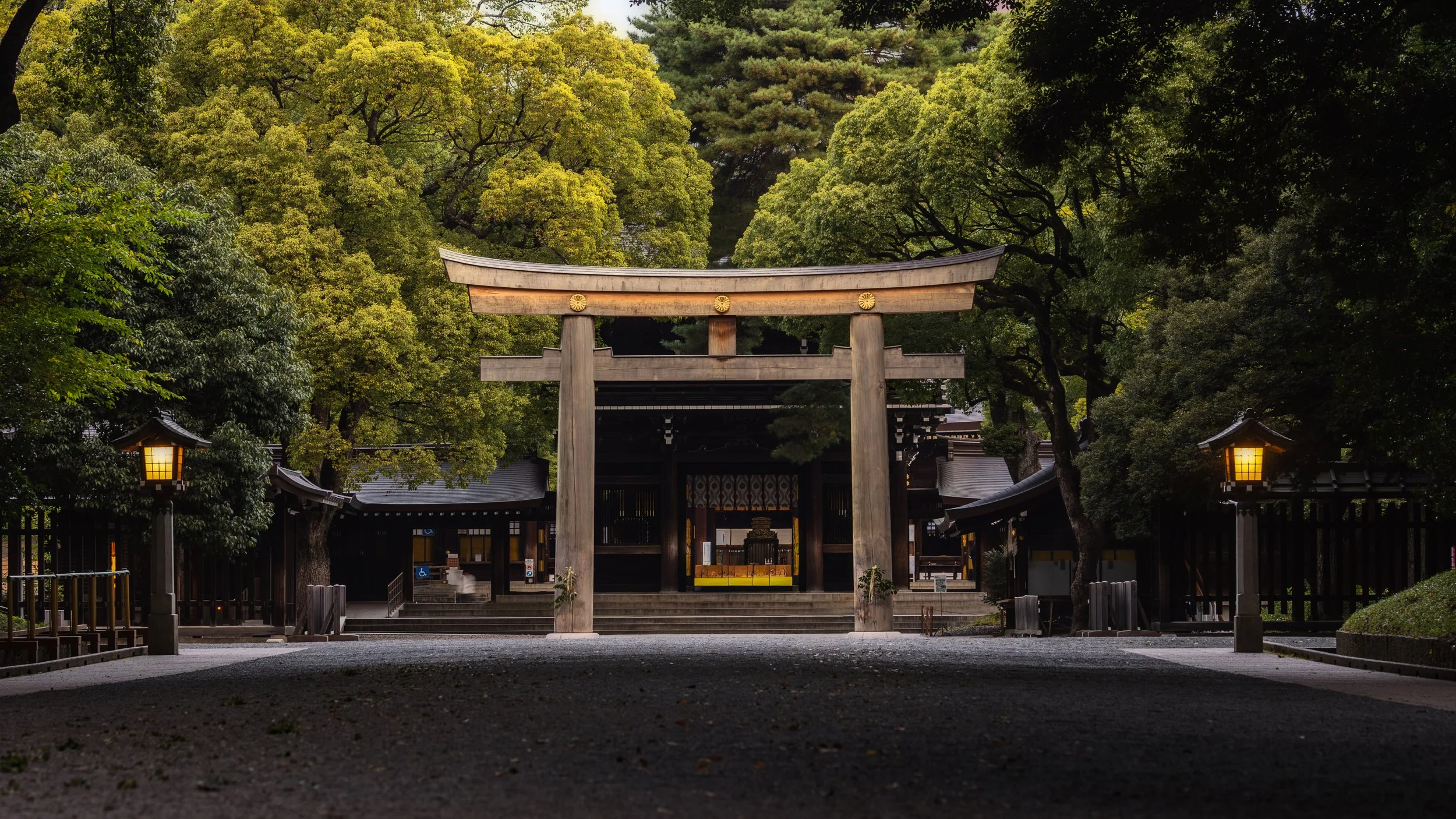
Overcast days act as a natural softbox — perfect for capturing delicate autumn textures.
3. Learn "The Pivot" When Things Go Wrong
If you follow my vlogs, you know I am a believer in the art of the pivot. You might wake up at 5:00 AM, climb up to a vista, and find the entire valley completely socked in by fog. Instead of throwing a tantrum and walking away, change your perspective. Look down. Look for the micro-landscapes — a vibrant red leaf resting on a wet mossy stone lantern. Sometimes the backup shot tells a better story than the grand vista anyway.
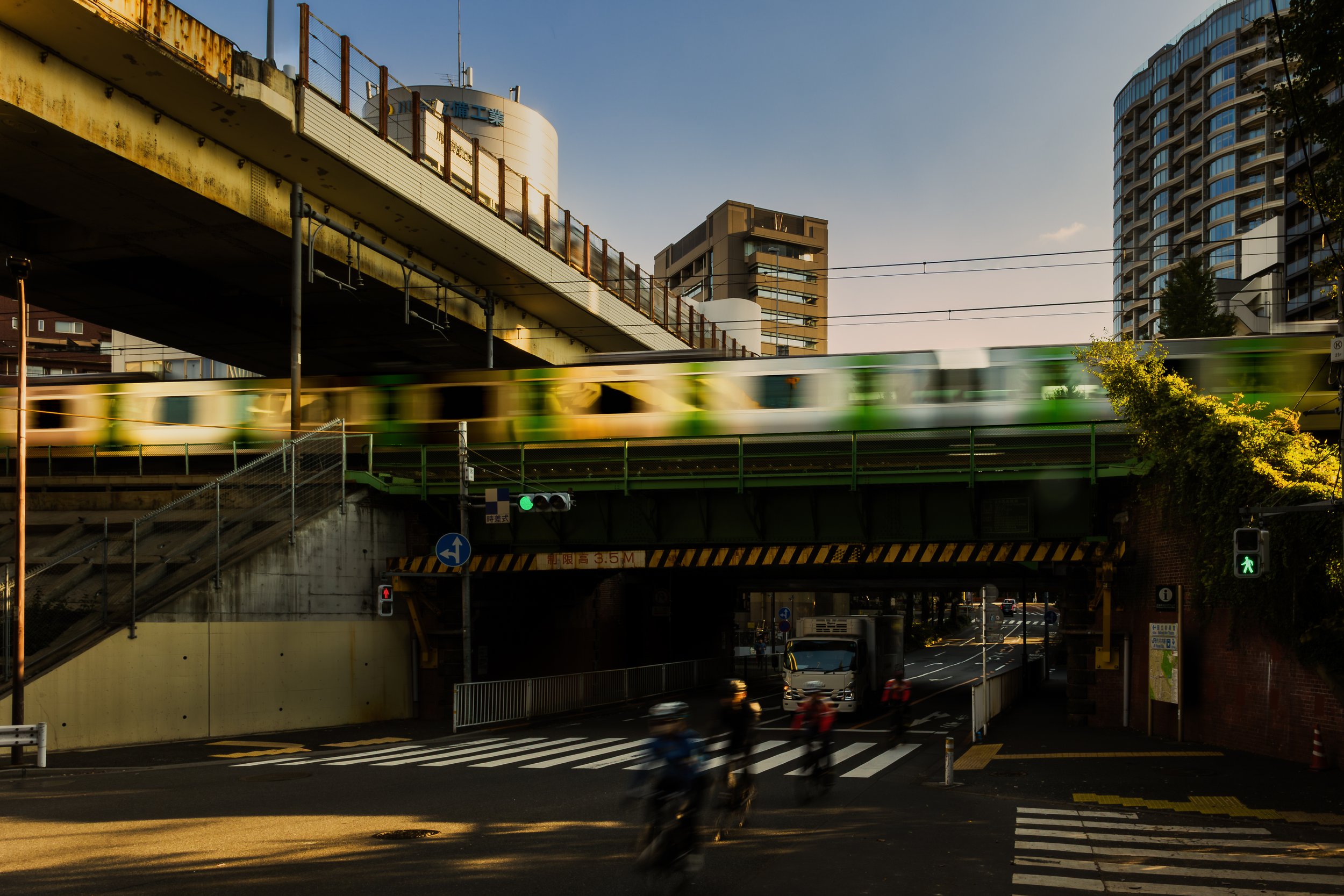
Sometimes the best shots are the ones you find when the grand vista doesn't work out.
4. Ditch the Wide Angle and Compress the Perspective
When you are surrounded by miles of autumn colour, the temptation is to slap on a wide-angle lens and try to cram the world into one frame. Usually, this just ends up looking messy. Try switching over to a telephoto lens — something like a 70-200mm or even a 100-400mm. Zooming in allows you to isolate a single stunning tree against a dark forest background, or compress the layers of the landscape to make the colours look incredibly dense and imposing.

A telephoto lens compresses the layers, making the autumn colours look incredibly dense.
5. Watch Your White Balance (Do Not Trust Auto)
Your camera's brain is naturally wired to try and "correct" colours. On a day or during the blue hour just after sunset, your Auto White Balance will often look at a beautiful warm canopy of orange leaves and try to cool the whole image down, turning your shot muddy. Do not be afraid to take control. Switch your camera over to the 'Cloudy' preset or dial in your Kelvin manually to make sure those rich, fiery autumn tones stay exactly as warm as you remember them.

Take control of your white balance — auto often cools down those warm autumn tones.
6. Hunt For Reflected Colour
Japan is absolutely covered in streams, temple ponds, and rivers. Instead of always shooting the trees directly, keep an eye on the water. Look for dark patches of a pond where the overhead canopy reflects down into it. Capturing the mirror image of a red maple on the water's surface — maybe with a couple of fallen leaves floating by — is a great way to create a clean, minimalist composition.
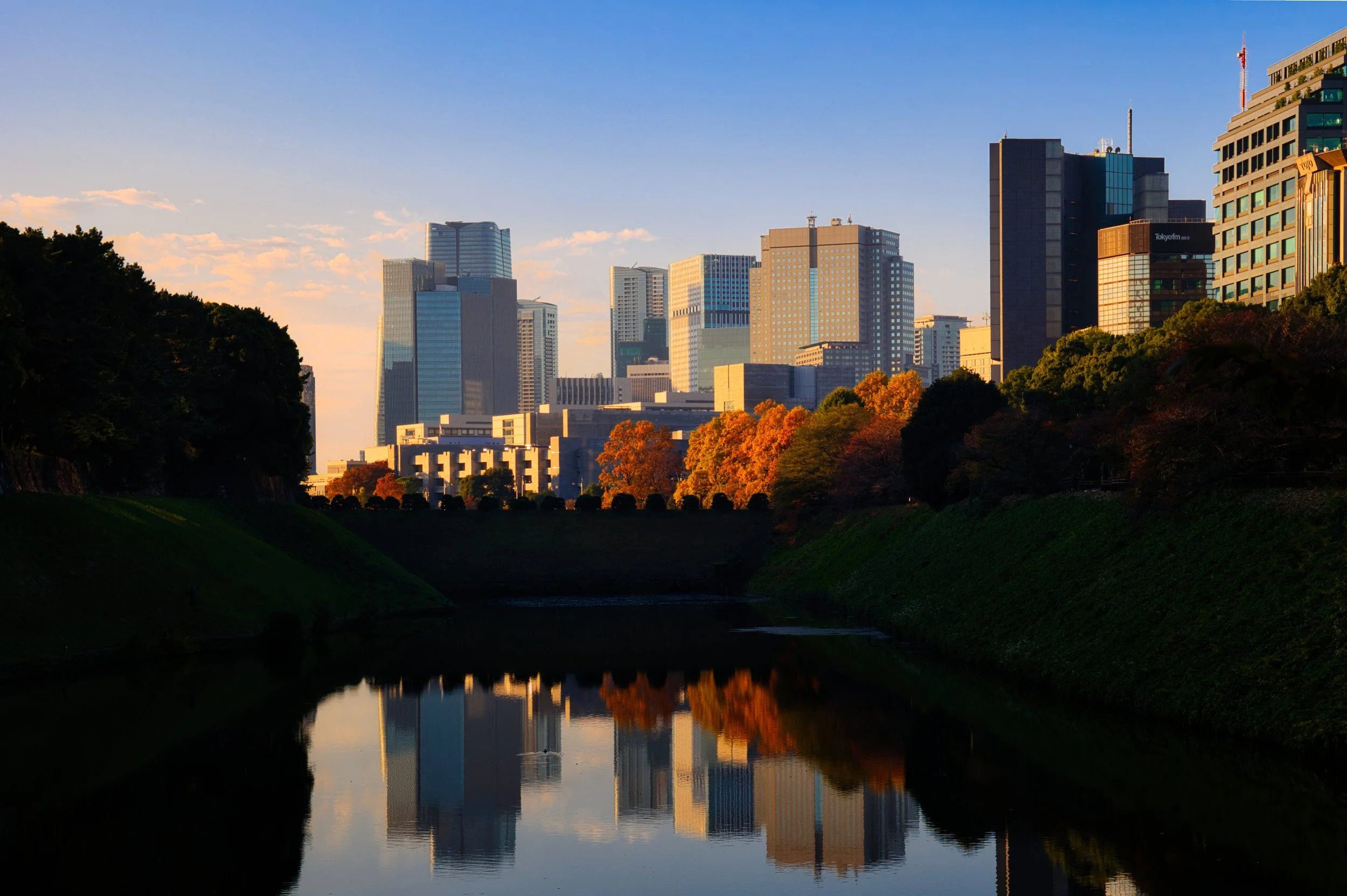
Look for reflections in ponds and streams — they make for clean, minimalist compositions.
7. Pair the Foliage with Traditional Scale
An autumn forest could be anywhere in the world — whether that is Canada, Europe, or Ireland. To make your images uniquely "Japan," you want to look for context. Look for the contrast of red maples framing the dark, weathered wood of an Edo-era building, or look through the trees to find a distant temple rooftop cutting through the canopy. It gives the viewer a sense of place and scale that a simple shot of branches just cannot match.

Pair autumn colours with traditional architecture to give your images a sense of place.
8. Beating the Crowds at the Shinkyō Bridge
If you head down to Nikko, you are probably looking to get a frame of the Shinkyō Bridge — the famous vermilion wooden structure spanning the rushing river, surrounded by autumn gorge foliage. It is a bucket-list shot for a reason, which means it gets absolutely swamped with people. My advice is to get there at the crack of dawn before the tour buses arrive. Use a density filter if you want to smooth out the water underneath and take your time to let the morning light hit the gorge.

The Shinkyō Bridge is a bucket-list shot — arrive at dawn to beat the crowds.
9. Look at the Forest Floor
We spend so much time looking up at the trees that we completely forget to check what is happening at our feet. The forest floors in Japan, around the old temple gardens, become covered in these intricate carpets of fallen foliage. Look for downward abstract compositions — a red maple leaf that has fallen perfectly onto a bed of deep green moss gives you an incredible natural colour contrast that is pure simplicity.
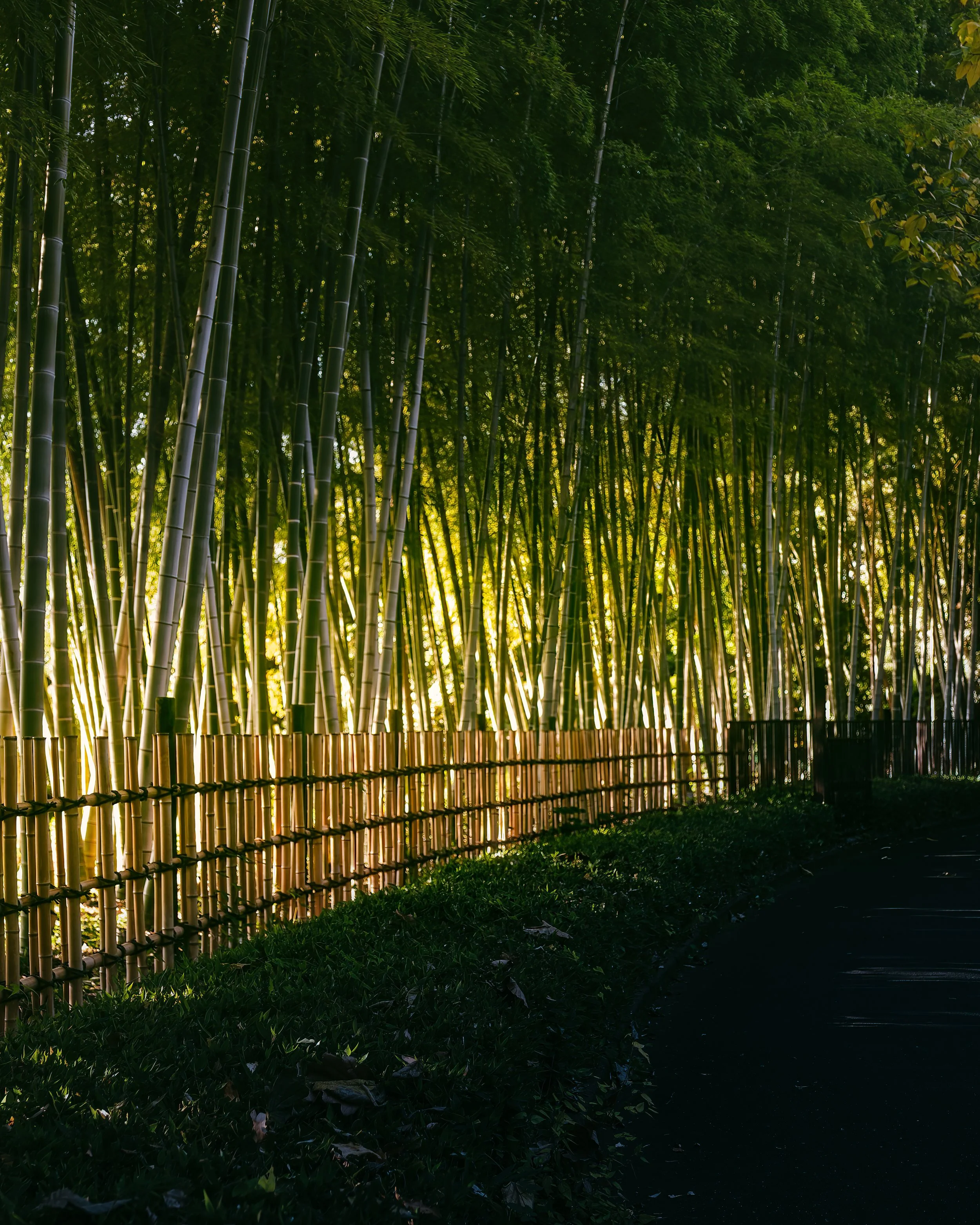
Don't forget to look down — the forest floor offers incredible abstract compositions.
10. The Ultimate Secret: Give Yourself Time to Linger
The mistake I see photographers making when they visit Japan is trying to sprint through a massive, frantic checklist of locations. They spend more time on trains and buses than they do actually looking at the landscape. The best atmospheric conditions happen when you slow down and stick to one area for a few days. Let the weather do the moving while you stay put, brew a coffee, and wait for the light to do something interesting.
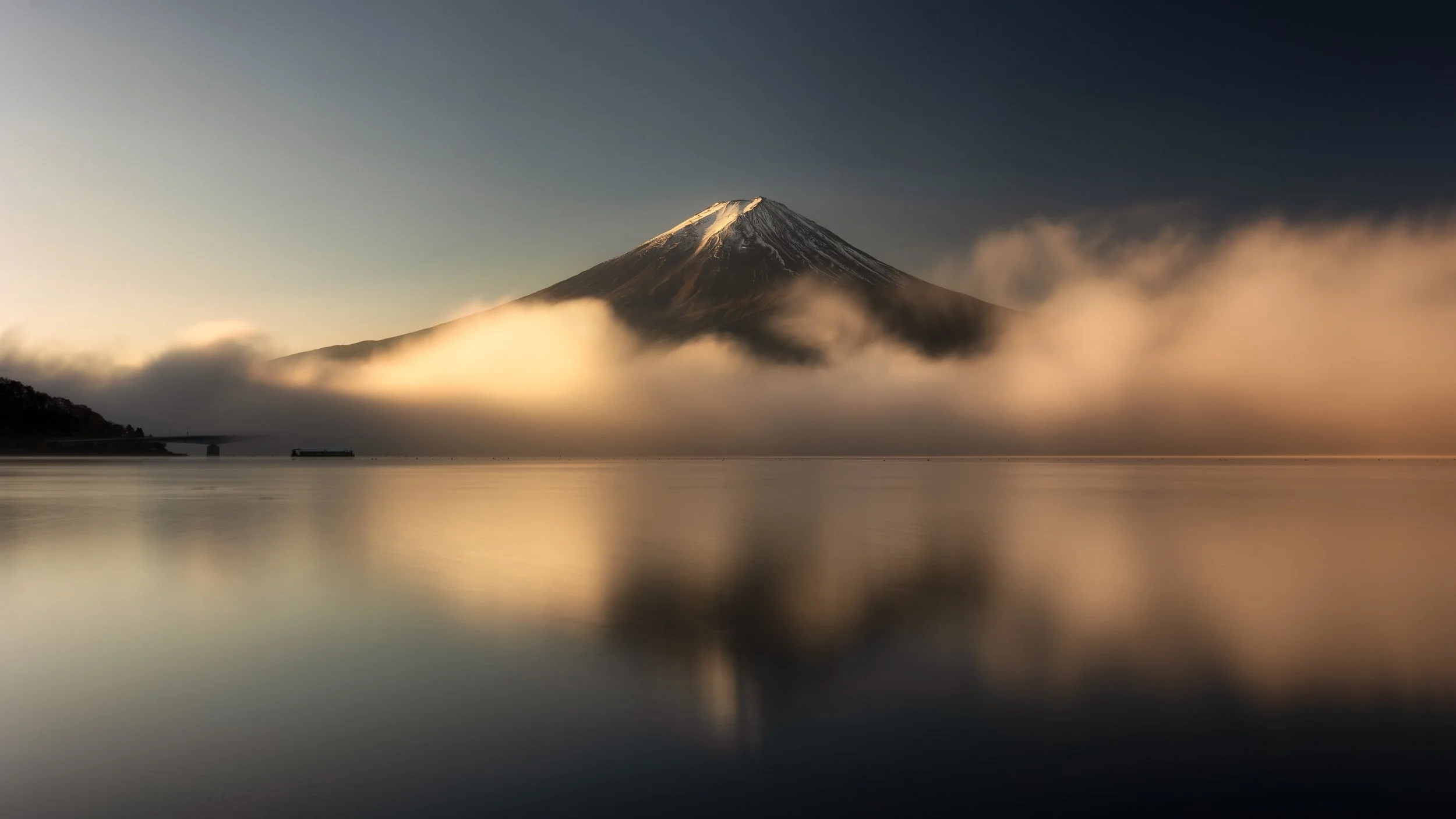
Slow down, linger in one area, and wait for the light to do something special.
📌 Quick Summary
- Use a polarizer to cut glare
- Shoot on cloudy days
- Learn to pivot when conditions change
- Use a telephoto for compression
- Take control of white balance
- Look for reflections in water
- Include traditional elements for context
- Arrive at dawn for iconic spots
- Don't forget the forest floor
- Slow down and linger in one area
Photographing a place like Japan is an adventure best shared with a group of people who speak the exact same creative language. If you fancy moving past the tourist tracks, learning how to slow down your compositions, and exploring a custom-built itinerary designed entirely around the best light, I would love to have you along.
Planning your own trip? Before you go, make sure you have comprehensive travel insurance for peace of mind. I use EKTA Travel Insurance for all my adventures — it's reliable, affordable, and covers the unexpected.
Want to Chase the Autumn Colours With Me?
I've opened up dates for my Japan workshop — a small-group expedition designed entirely around the best light. We'll dive into the culture, the incredible food, and of course, find the quiet corners for minimalist photography.
Explore Japan Workshops →