Photographing Historic Japan
Narai-juku & Gokayama
A Practical Guide to Capturing Edo-Period Streets and Thatched Villages
Looking to photograph Japan's historic post towns and mountain villages without the tourist crowds? This guide covers practical tips for capturing Narai-juku's Edo-period streets and the thatched villages of Gokayama — from using telephoto compression to finding the small details that tell a story. Whether you're planning a trip or just want to improve your travel photography, these field-tested tips will help you bring these timeless places to life. If you're travelling to Japan, consider getting an eSIM from Airalo to stay connected without expensive roaming charges.
If you want to get away from the bright lights of Tokyo and find a place where time really does seem to have stopped a long time ago, you need to go to the mountains.
When I took my group to Japan last year, we wanted to see more than just the usual tourist spots. We wanted to see the buildings from the Edo period. So we went to Narai-juku, an old post town on the Nakasendo highway, and then to the mountains of Gokayama to see the thatched roof villages of Ainokura and Suganuma.
These places are great for photographers because they have a lot of atmosphere — but they're not easy to photograph without making them look like ordinary tourist photos. I took my camera and a group of photographers to these towns and villages, and here are some things I learned about how to take good pictures.
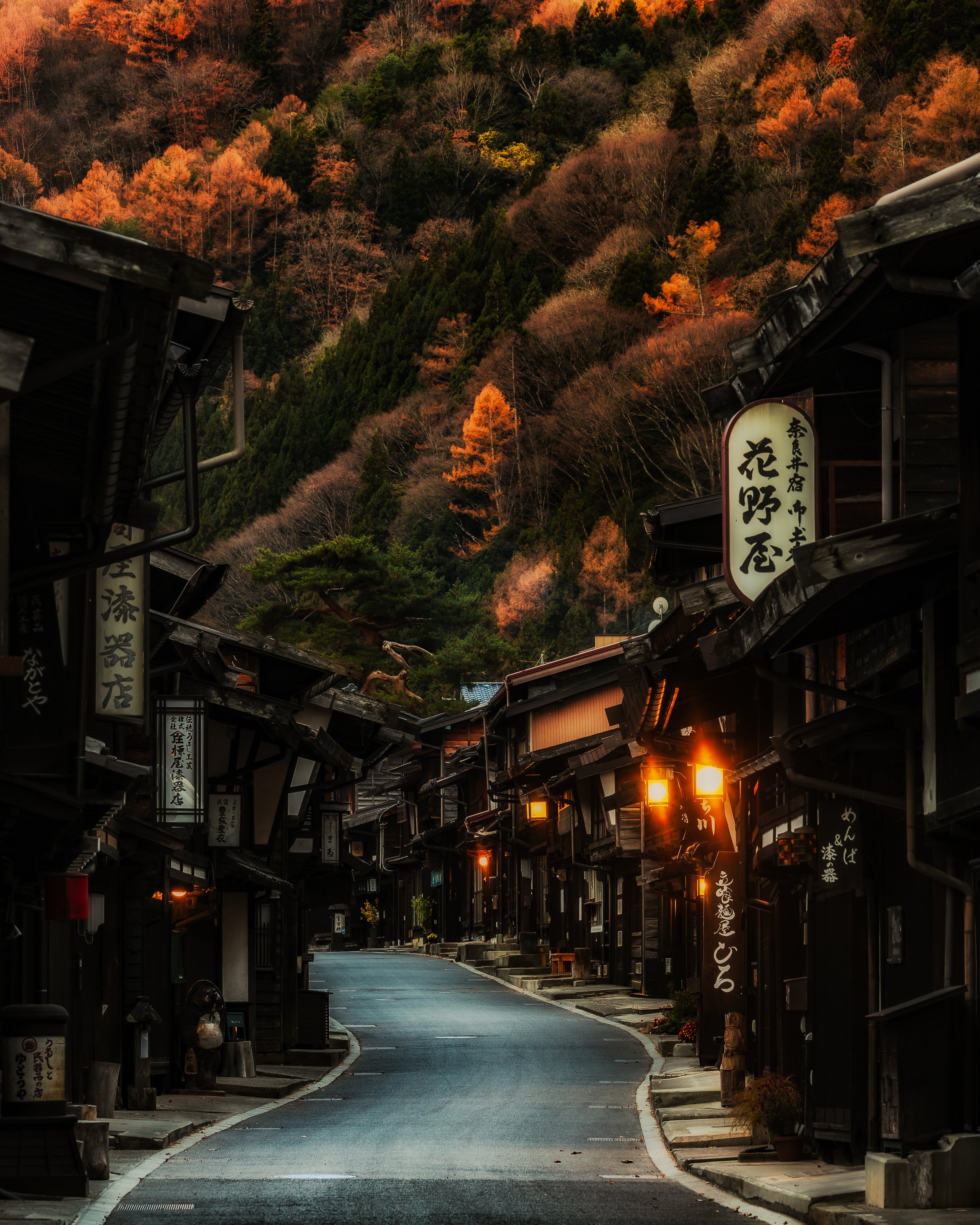
Narai-juku's preserved Edo-period street — a kilometre of history.
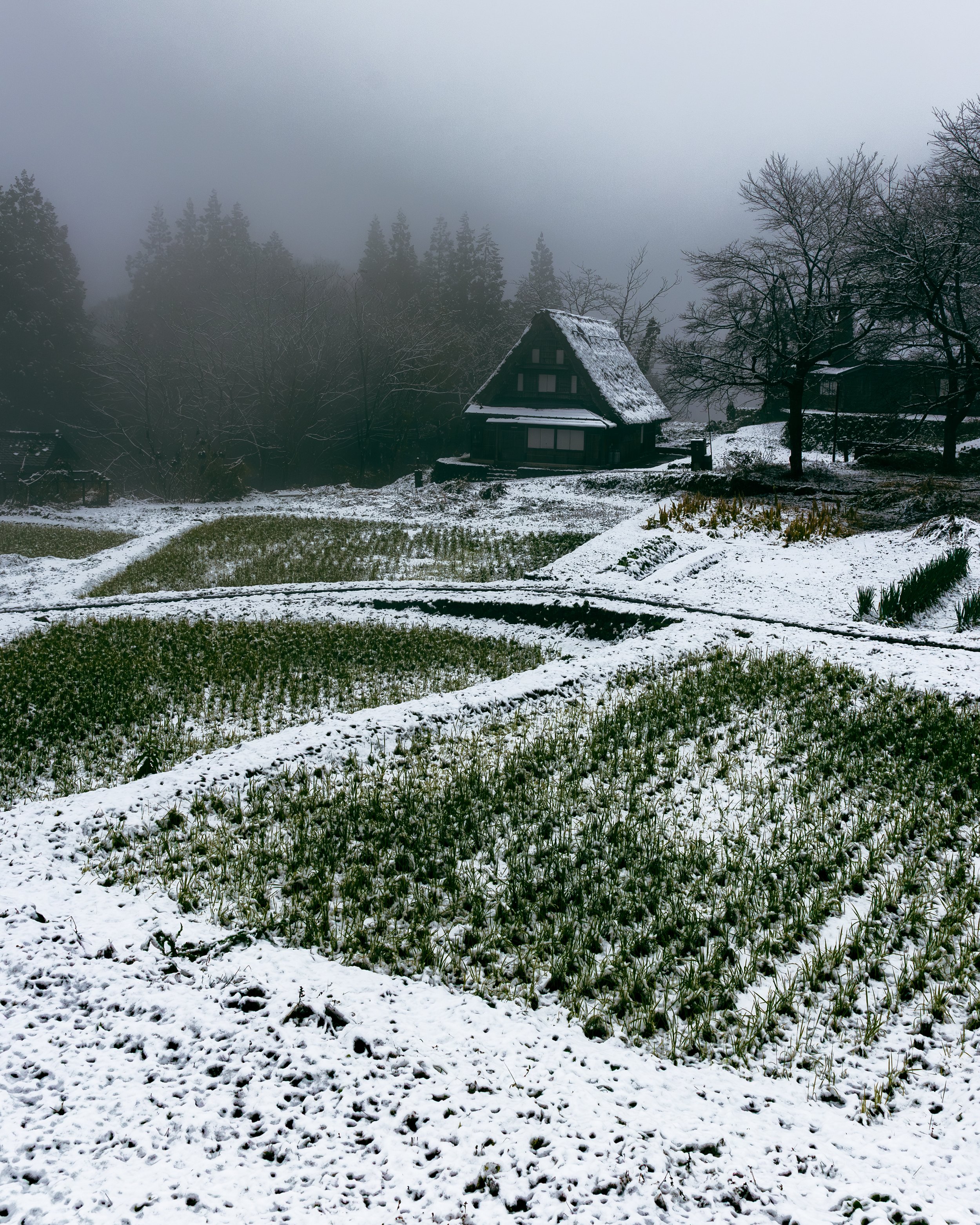
The thatched farmhouses of Gokayama — mountain villages frozen in time.
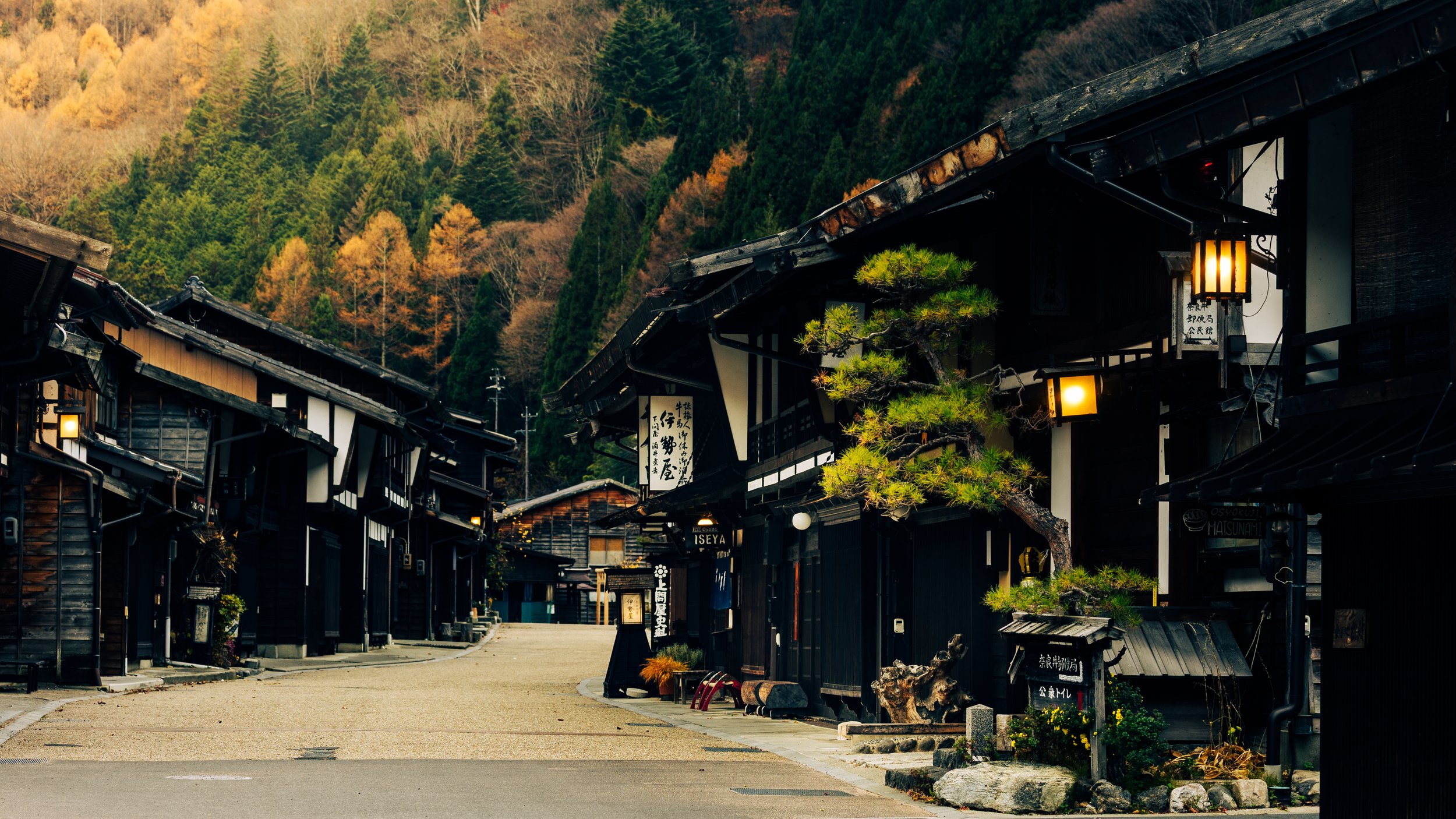
Telephoto compression — stacking the buildings to show the scale of Narai-juku.
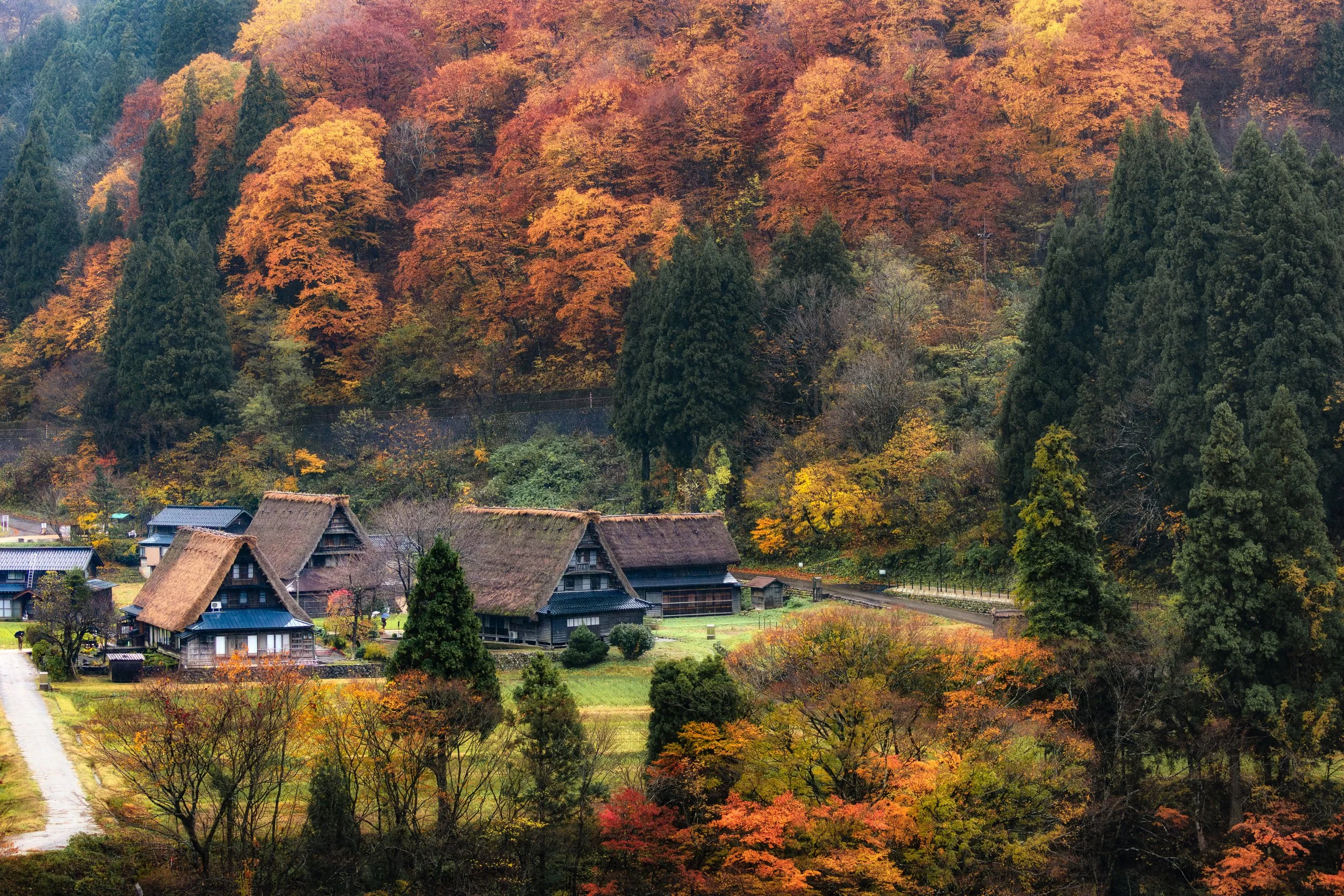
Rainy weather in Gokayama — soft light and rich colours.
1. Making the Streets of Narai-juku Look Special
Location: Narai-juku, Kiso Valley
Narai-juku is called "Narai of a Thousand Houses" because it's the largest and best-preserved post town in the Kiso Valley. The old wooden buildings go on for over a kilometre, with mountains behind them.
To make this street look really special, don't use a wide-angle lens. Try using a telephoto lens like a 70-200mm or a 100-400mm. This will compress the perspective, making the buildings look like they're stacked on top of each other and the old road look really impressive.
2. Getting Rid of Modern Things in Your Photos
Location: Narai-juku & Suganuma
Even though places like Narai-juku and Suganuma are really well-preserved, you will still see things like bright jackets, cars and delivery vans. These things can ruin the feel of the place.
If you are taking a picture of a building and there is a bright backpack in the way, it will not look good. You need to be patient and wait for the right moment to take your picture. Sometimes that means waiting a few minutes for a group to pass. Sometimes it means coming back at a quieter time of day.

Patience pays off — wait for the right moment to clear the distractions.

Suganuma — the smaller of Gokayama's thatched villages.
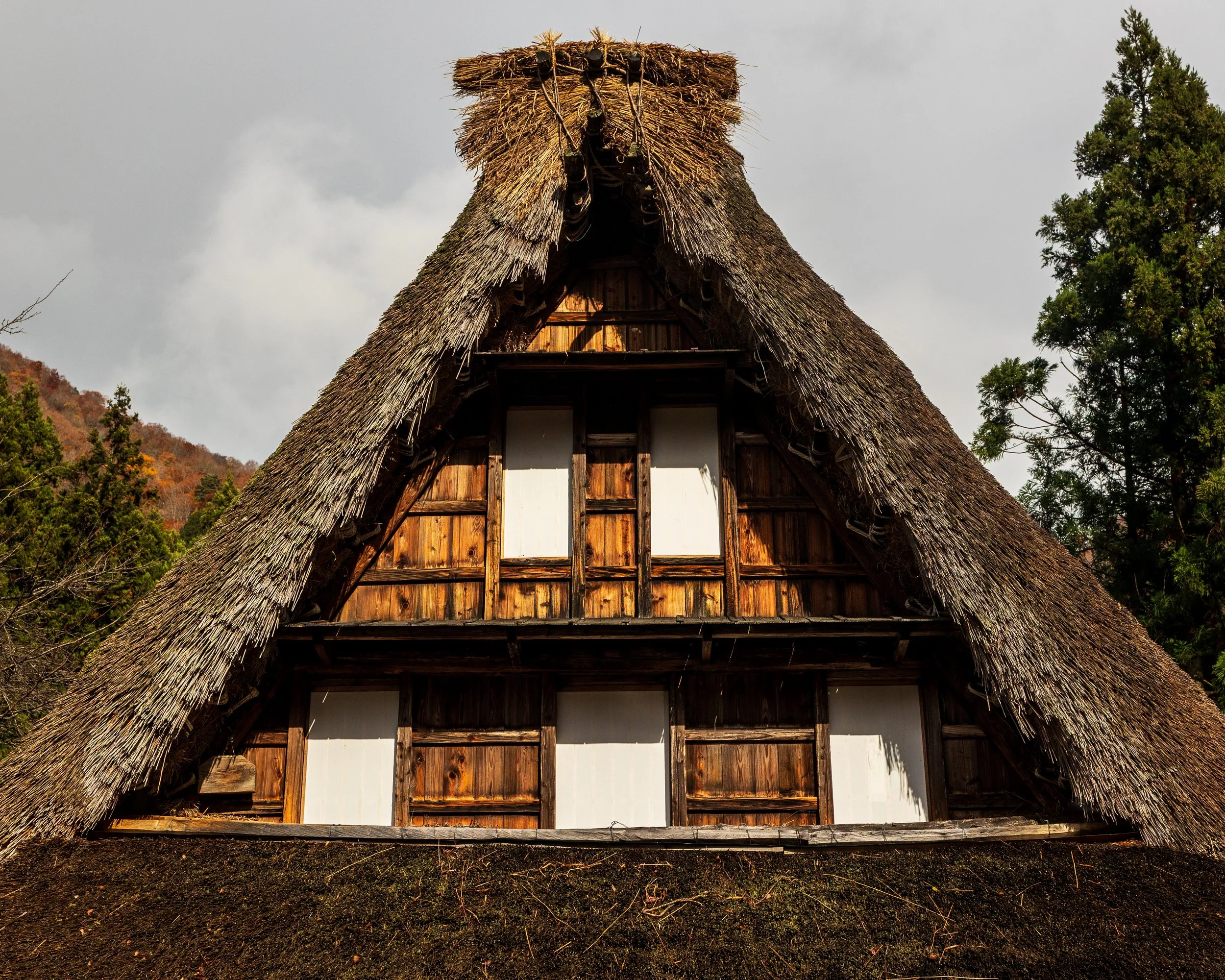
The texture of the thatch — a story in every strand.
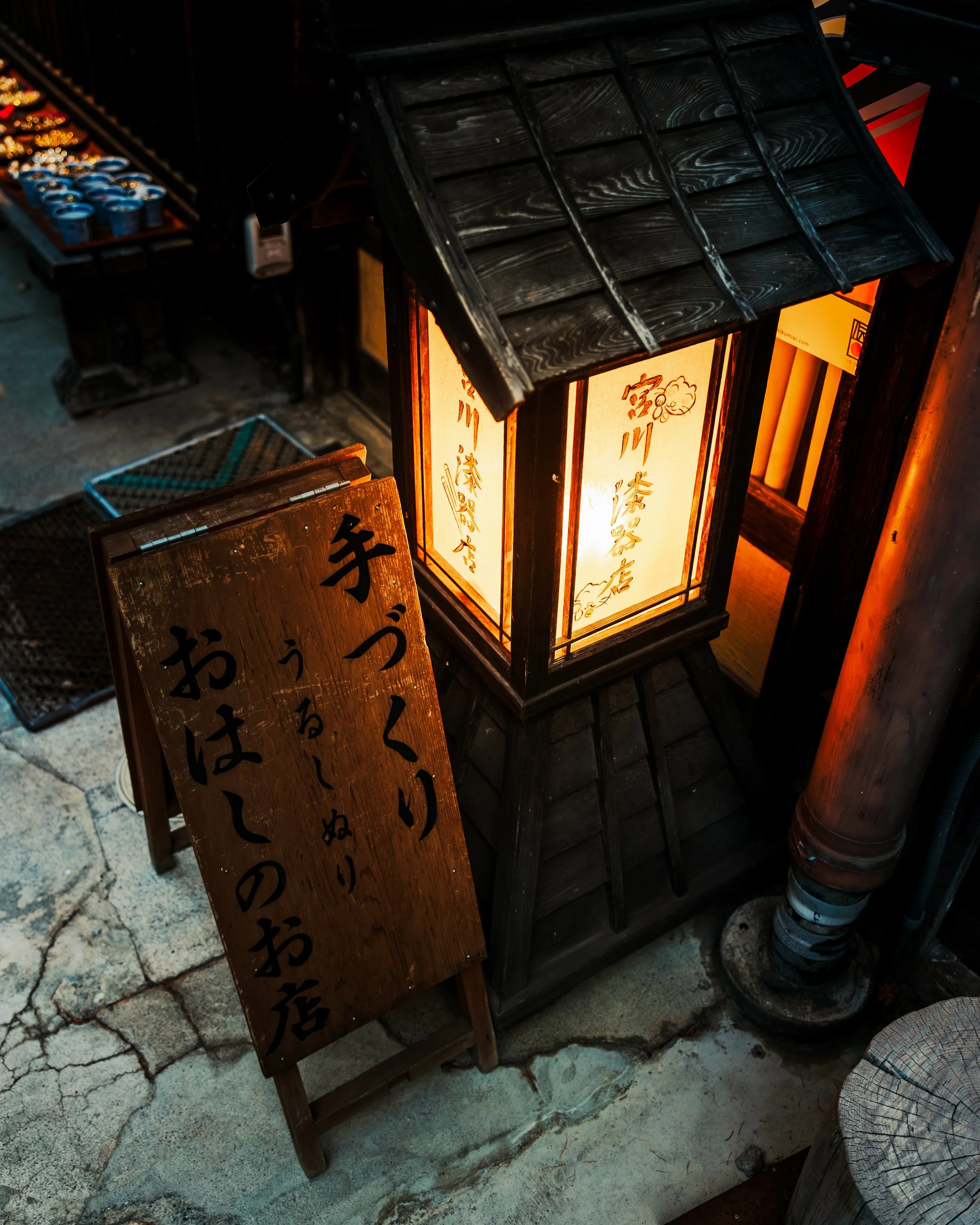
A lantern in the dark — small details that tell a story.
3. Taking Pictures in the Mountains of Gokayama
Location: Ainokura & Suganuma, Gokayama
When we went to the thatched villages of Ainokura and Suganuma, the weather was really cloudy and rainy.
This is actually really good for taking pictures because the clouds act like a softbox and make the light soft and even. The moisture in the air also makes the old wooden houses look really rich and the green trees look incredibly vibrant.
Don't fear the rain — embrace it.
4. Showing How Big the Villages Are
Location: Ainokura, Gokayama
The farmhouses in Ainokura and Suganuma are really big and have steep roofs to deal with the heavy snow. When you are standing next to them, it's hard to tell how big they are.
Try to find a place to take your pictures from, like a hill or a mountain. If you take a picture of a path or a person walking between the big houses, you can see how massive the houses are and how isolated the villages feel.
Showing scale — the massive farmhouses of Ainokura.
The mountain setting — isolated villages in a dramatic landscape.
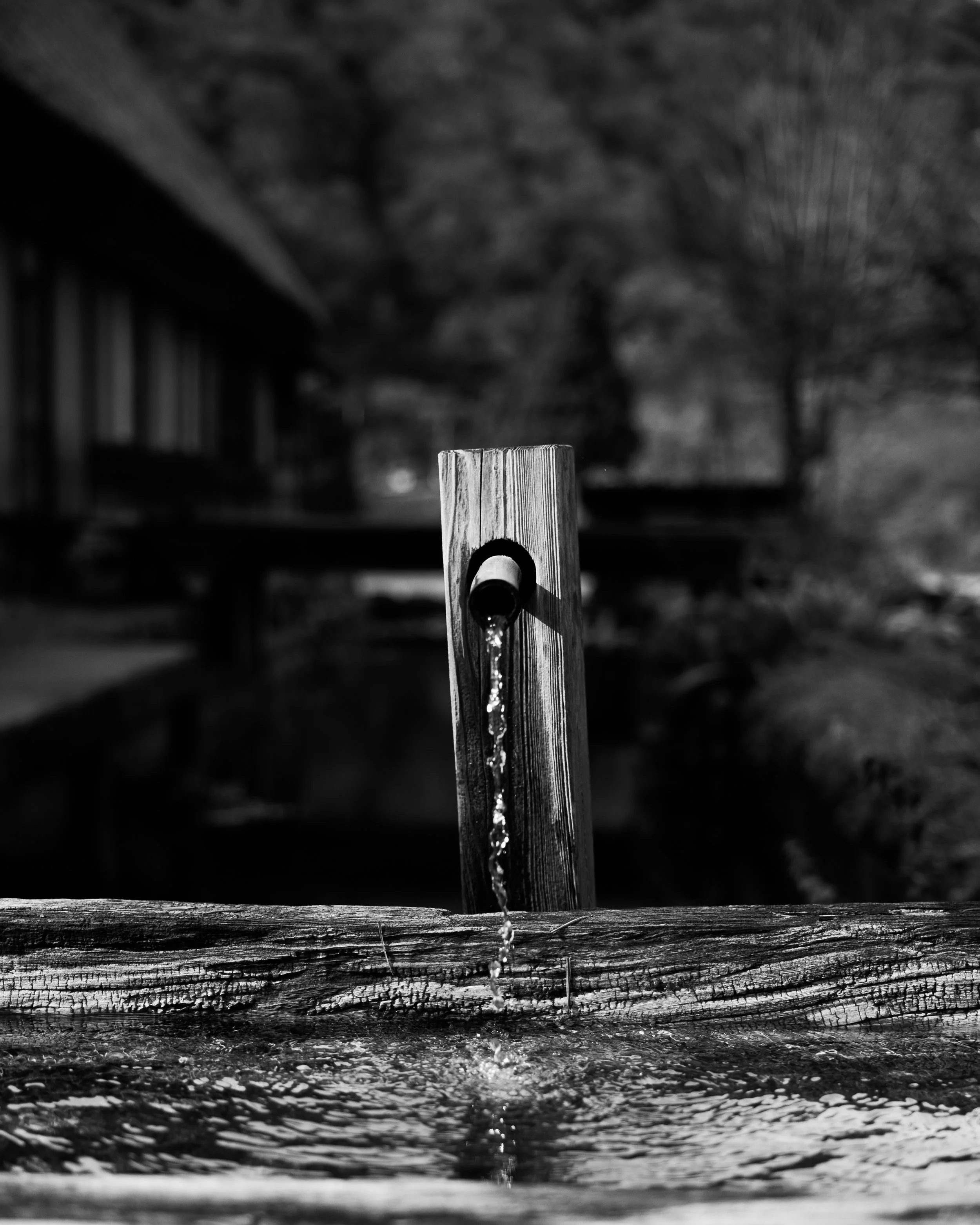
A stream running through the village — finding the quiet moments.
5. Finding the Small Details
Location: Various locations
While it is great to take pictures of the views, don't forget to look for the small details that make these places special.
Look for things like the texture of the thatch, a lantern shining in the dark, or a small stream running through the village. These small things can tell a personal story about the place and give your portfolio a deeper sense of connection.
Quick Summary
- Use a telephoto lens to compress Narai-juku's street
- Be patient and wait for modern distractions to clear
- Embrace cloudy weather — it's a natural softbox
- Find high vantage points to show the scale of the farmhouses
- Don't forget the small details — thatch, lanterns, streams
Walking through places like Narai-juku and Gokayama is like walking through a history book. It's more fun with a small group of people who love photography.
If you want to see more than the usual tourist spots, learn how to take better pictures, and follow a special plan designed entirely around the best light, I would love for you to come with me on my next trip to Japan.
Planning your own trip? Before you go, make sure you have comprehensive travel insurance for peace of mind. I use EKTA Travel Insurance for all my adventures — it's reliable, affordable, and covers the unexpected.
Join Me on My Next Trip to Japan
I'm really excited to be going back to Japan after our successful trip last year. Walking through places like Narai-juku and Gokayama is like walking through a history book — and it's even better with a small group of photographers who share the same passion.
Explore Japan Workshops →