Photographing Kolmanskop in Black & White
The Art of Restriction — Photographing Kolmanskop in Black & White
A Study in Contrast, Shadow, and the Ghostly Beauty of Namibia's Abandoned Diamond Mine
After several visits to Kolmanskop, I needed a new way to see this incredible place. So I set myself a challenge: shoot entirely in black and white, use only two lenses, and leave the tripod behind. This is the story of how creative restriction unlocked a new way of seeing Namibia's famous ghost town — and how you can do the same.
Hello there folks and how is it going? Welcome back to another blog post. And welcome to the absolutely always wonderful location that is Kolmanskop.
I've been fortunate enough to visit this place a handful of times now. And I'm more than happy with the photographs I've captured in the past. But here's the thing about returning to a familiar location — you risk falling into the same patterns. You go to the same spots, you take the same shots, and you leave with the same images.
So this time, I decided to set myself a challenge. And it changed everything.
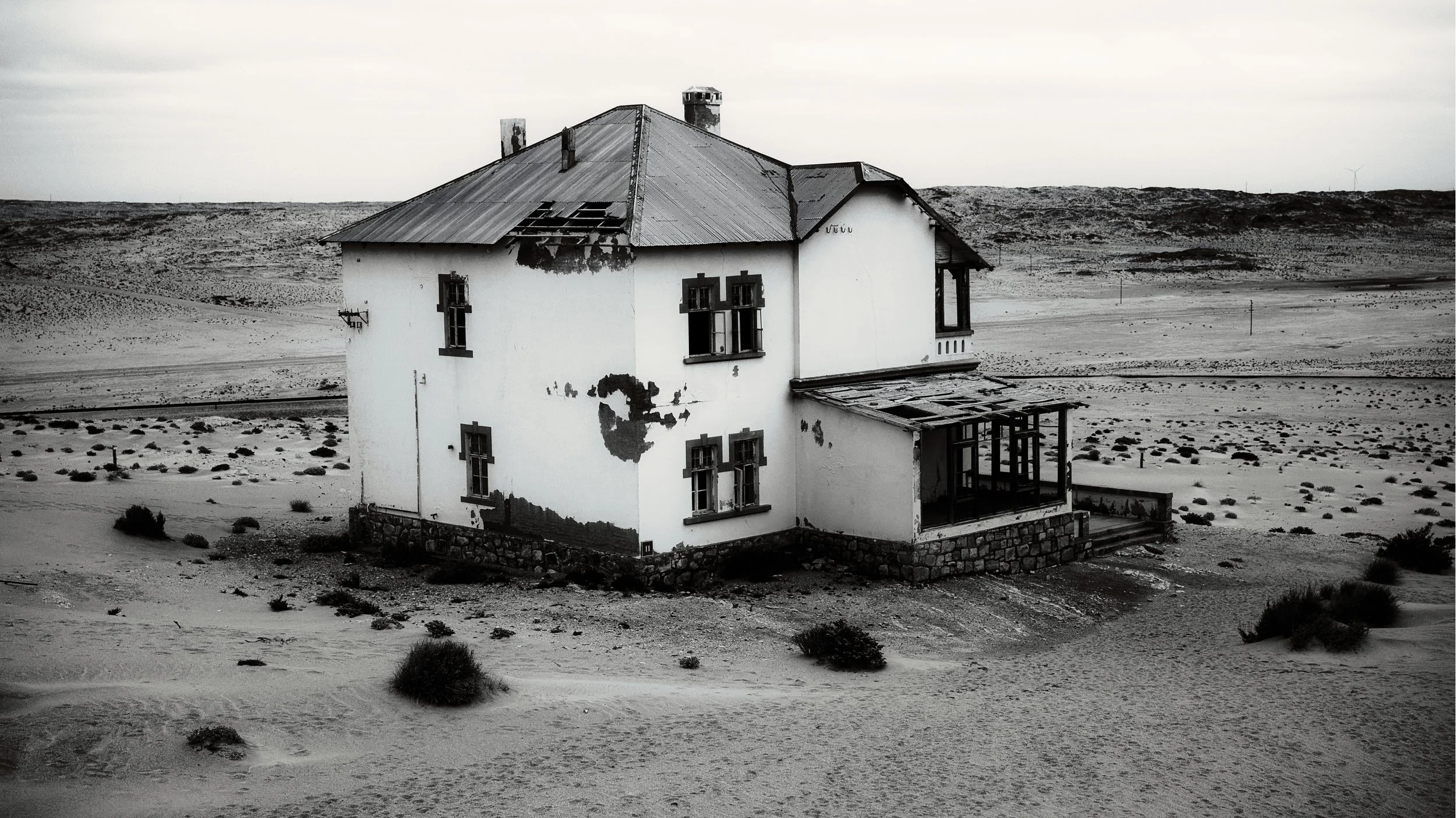
Kolmanskop — a place that rewards those who slow down and see differently.
The Challenge: Restrict to Create
The plan was simple:
- Shoot entirely in black and white — set the camera display to monochrome and commit to it
- Sunset: 14-35mm lens only — wide for the dramatic interiors
- Sunrise: 24-70mm lens only — mid-range for details and isolation
- No tripod — forced to move, explore, and find new angles
Why do this? Because limitations are the mother of creativity. When you strip away the options, you're forced to see what's actually there — not just what you expect to find.

Setting the display to monochrome changes how you see the scene.
1. The Monochrome Display: Retraining the Brain
I feel like I'm discovering photography again for the first time. I've been shooting for years, and I don't know why I've never done this before.
Setting the camera to display in monochrome is a beautiful exercise in learning how to see. When you strip away the colour — the ochre sand, the blue sky, the vibrant walls — you're left with the essentials: contrast, light, shadow, and form.
What you start to notice is the "spooky ghostness" of the architecture. The way light doesn't just enter a room but haunts it. The way shadows carve shapes out of the walls. The way the desert consumes everything, slowly but surely.
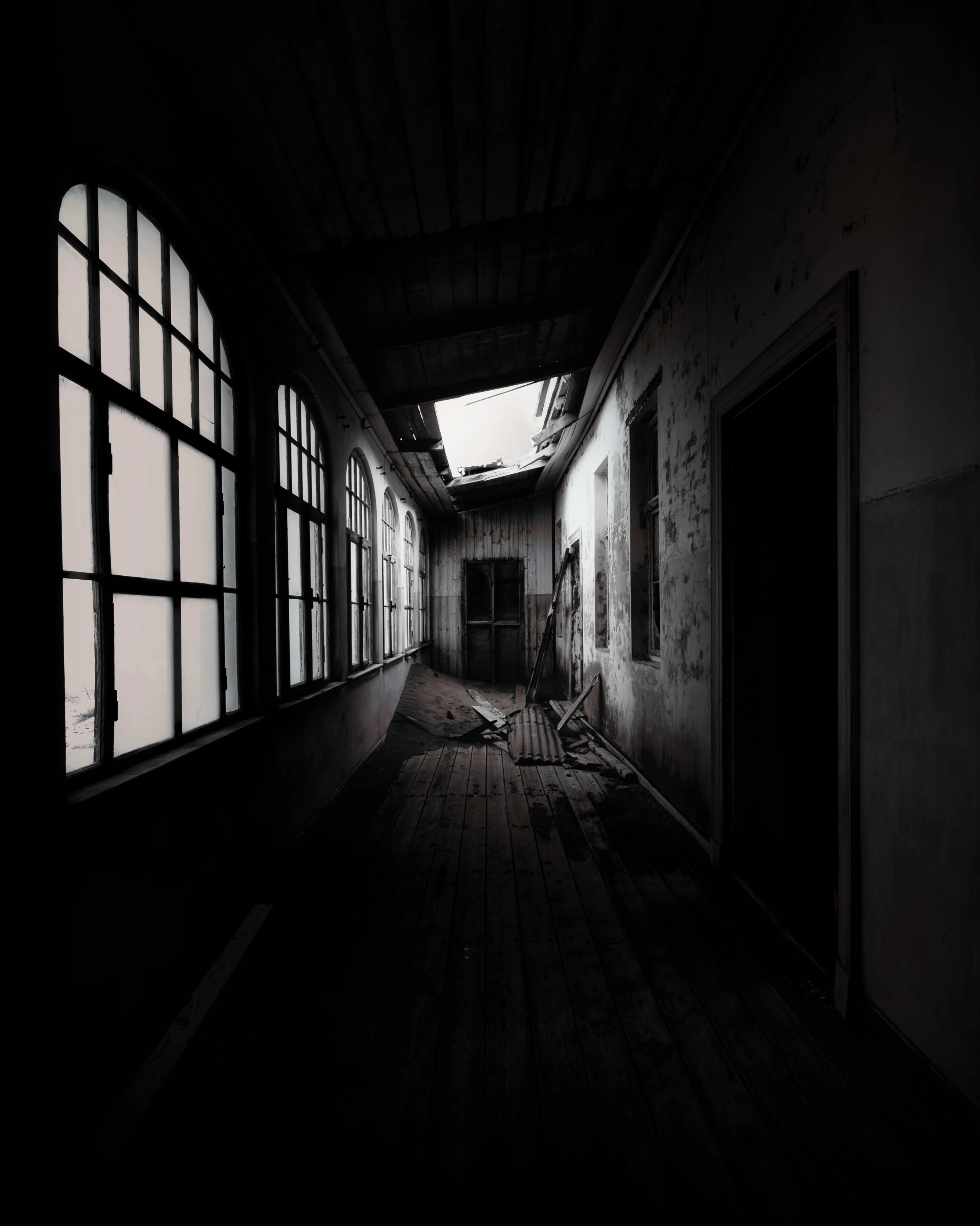
Light and shadow — the essence of monochrome photography.
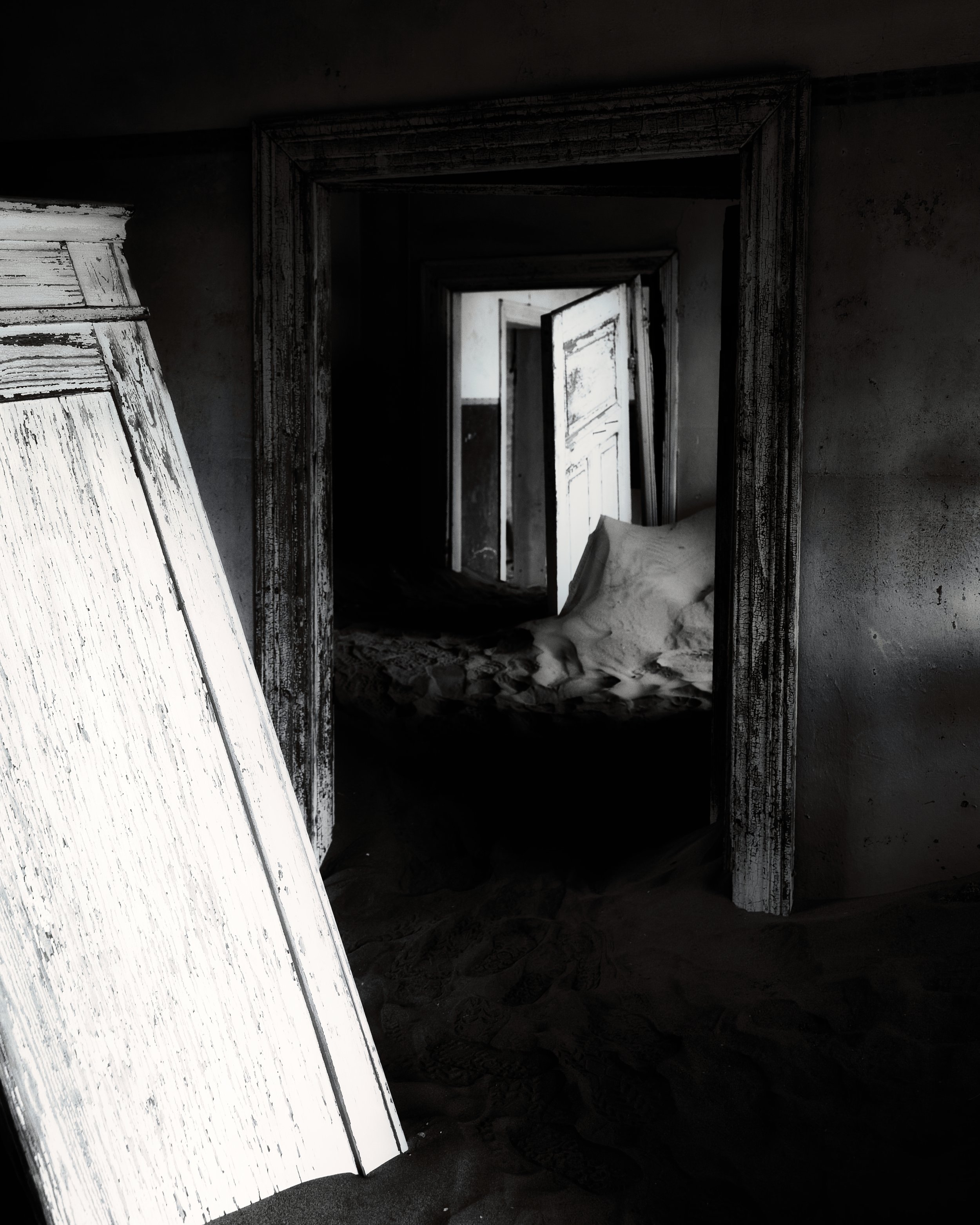
A doorway consumed by sand — stripped of colour, it becomes timeless.
I'm trying my best to photograph more detail shots. In the past, I've always rushed to the big compositions — the ones everyone comes here for. But this time, I wanted to focus in on the things I usually overlook. The texture of peeling paint. The pattern of broken glass. The way the light falls on a random door.
It's just light, shadow, and contrast. And it's captivating.
2. Lens Restrictions: Focal Length as a Creative Tool
For the sunset shoot, I used the 14-35mm lens. It's wide, it's immersive, and it's perfect for the kind of sweeping interior shots that Kolmanskop is famous for. But without a tripod, I had to move — to find natural stability, to get low, to work the scene.
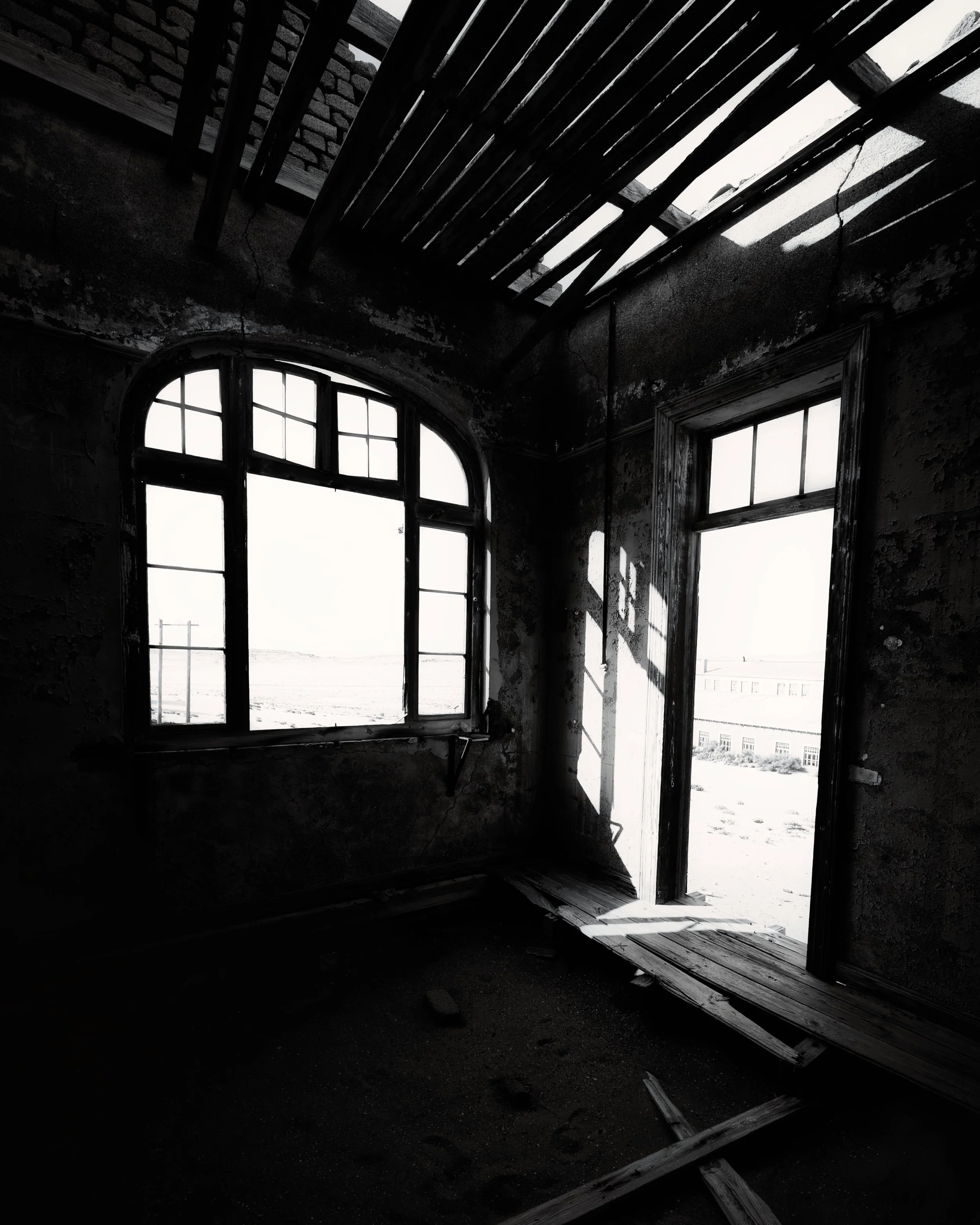
The 14-35mm lens — wide, immersive, and perfect for Kolmanskop's interiors.
For the sunrise shoot, I switched to the 24-70mm. A mid-range lens that forced me to be more selective. I couldn't just capture everything — I had to isolate, to choose, to refine. The tighter focal length encouraged me to look for details, patterns, and frames within frames.
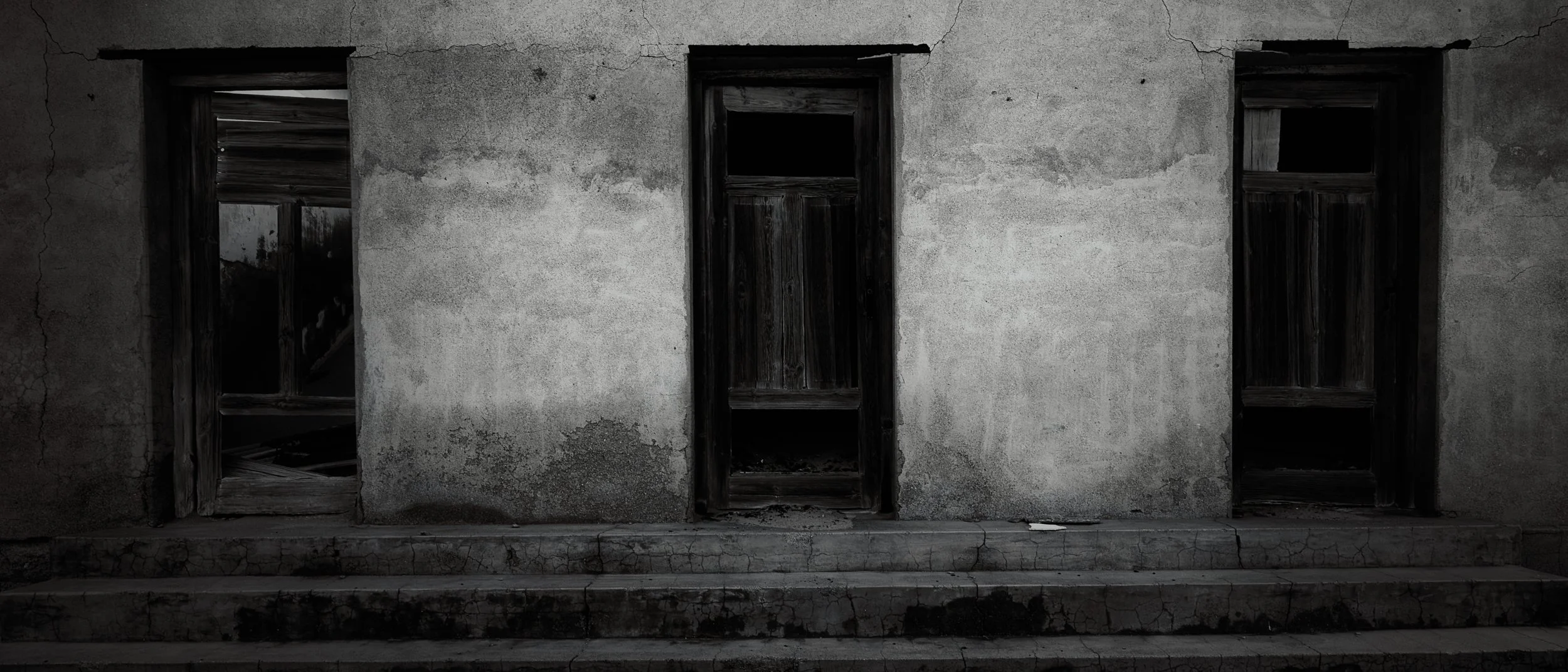
The 24-70mm lens — tighter, more selective, more intimate.
The difference between the two shoots was striking. The wide lens gave me the grand scenes. The mid-range gave me the intimate story. Both were valuable. Both were different. And both were possible because I'd committed to the restriction.
3. No Tripod: The Freedom to Move
When you shoot handheld, you move differently. You're lighter, faster, more responsive. You can climb stairs, squeeze into corners, and explore rooms you'd normally avoid because they're "too tight" for a tripod.
This time, I explored the mansions I'd never bothered with before. I wandered into the loft, photographed the basement, and found frames that I'd walked past on every previous visit.
Is the sharpness perfect? No. But the authenticity of the experience is something you can't fake. There's a spontaneity to handheld work that tripods just can't replicate.
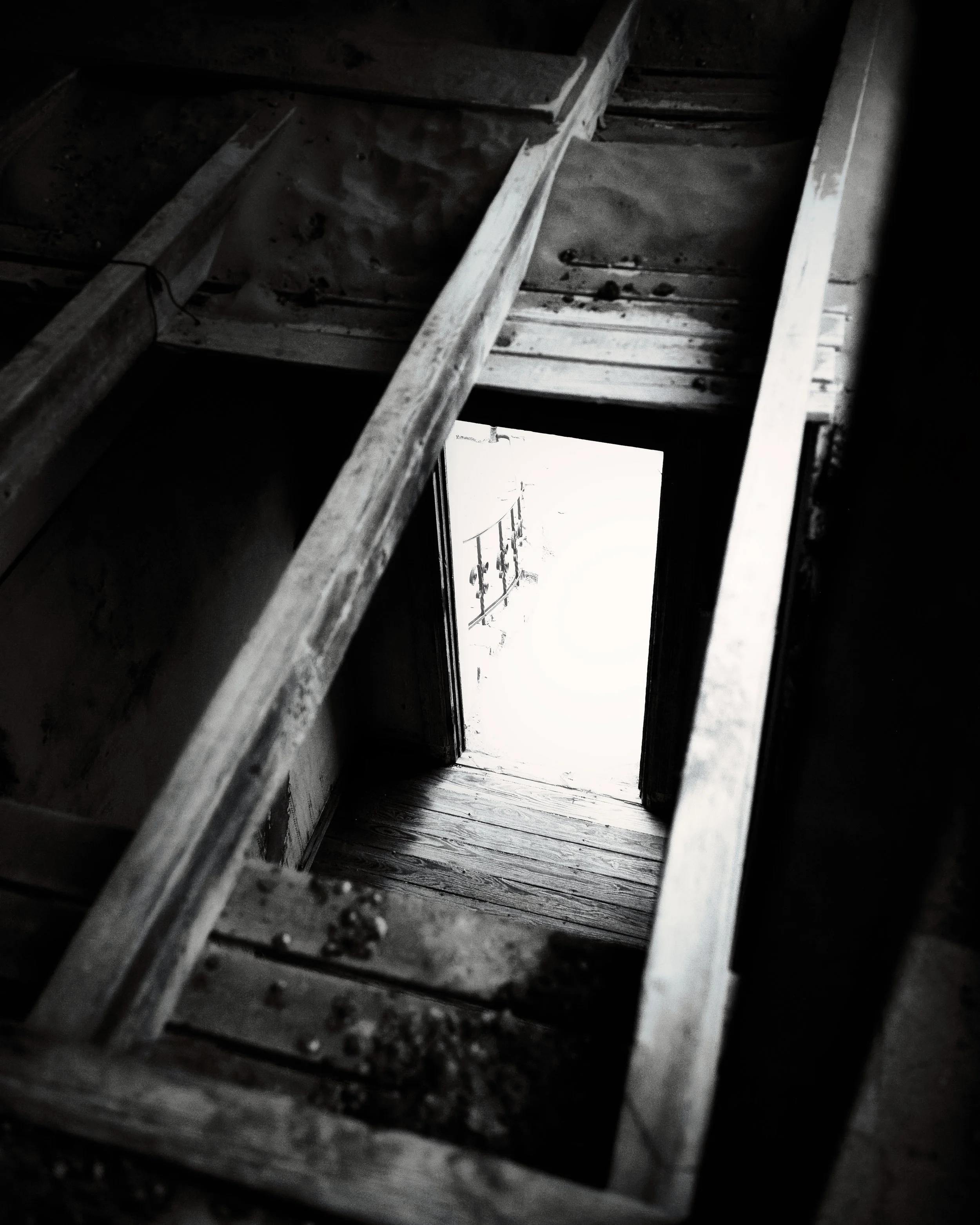
Handheld means you can explore anywhere — even the spooky basements.
4. The Ripley Aesthetic: Cinematic Black and White
One of the things that really influenced this shoot was the recent series 'Ripley', which was shot entirely in black and white. I love that rich, dark, moody contrast — the deep, velvety blacks and the piercing, high-key highlights.
I wanted to bring that aesthetic to Kolmanskop. The ghostly atmosphere of this place leans perfectly into that kind of treatment. It's not just about making images black and white — it's about using luminance values to tell a story. The weight of the silence. The depth of the shadows. The ghostness of the whole place.
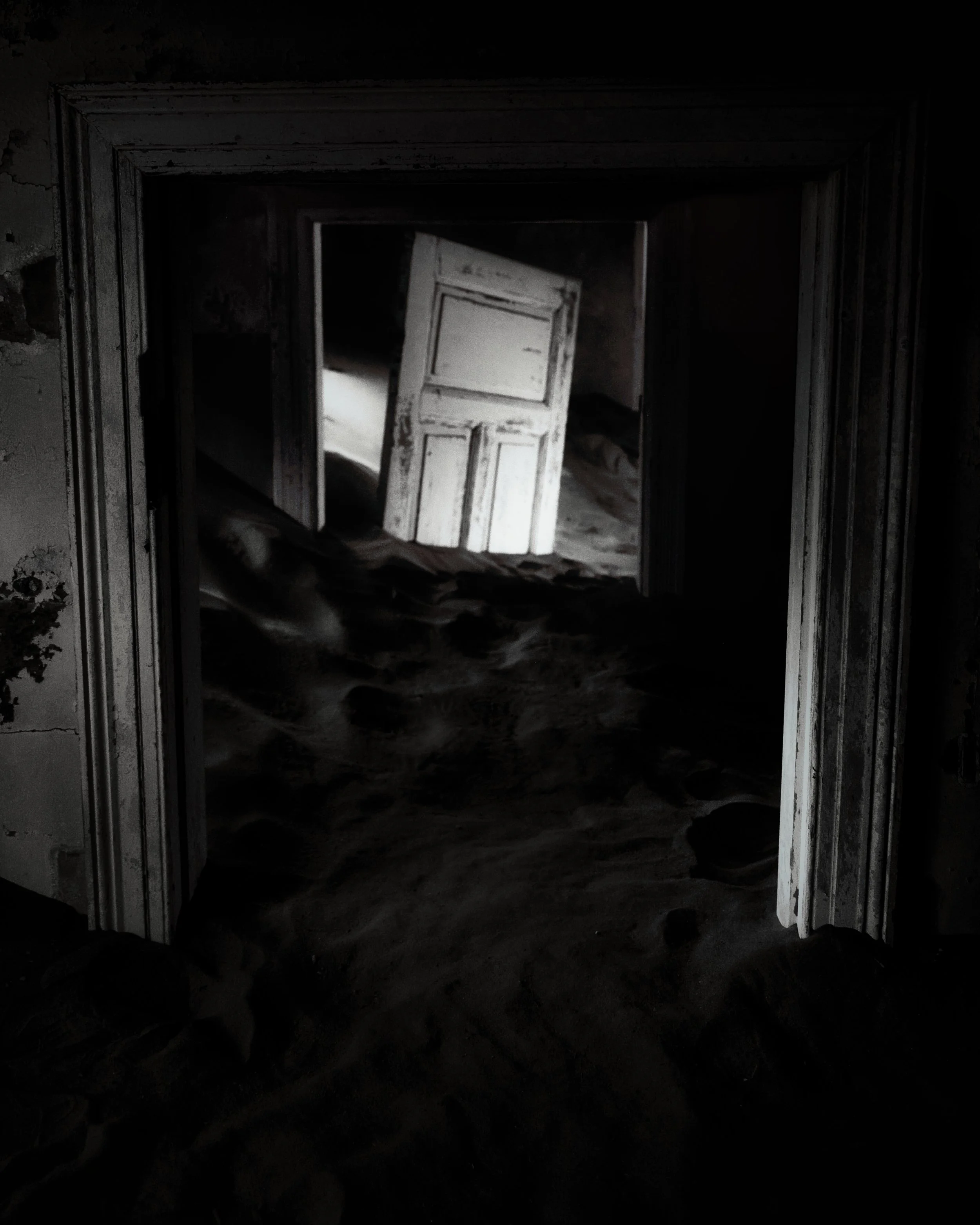
Deep blacks and high-key highlights — the Ripley influence.
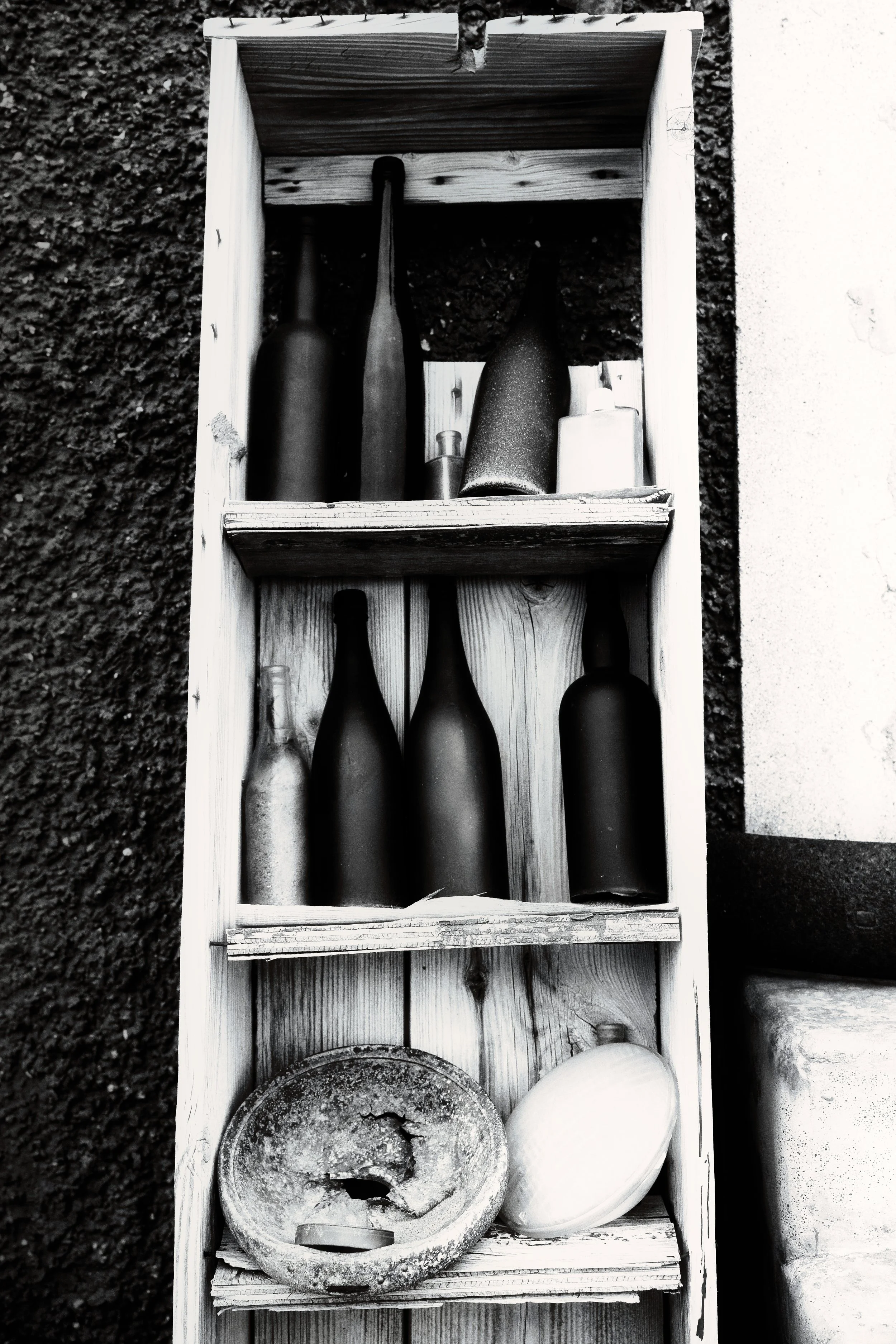
Ghostly, atmospheric, and timeless — exactly what I was after.
5. Kolmanskop in Colour: The Older Visit
While the monochrome challenge was the focus of my recent visit, I've also photographed Kolmanskop in colour. The vibrant walls, the warm sand, the blue sky — they tell a different story, but an equally valid one.
On my earlier visit in 2023, I captured some of the classic Kolmanskop compositions in full colour. The layered doors, the colourful walls, the way the light painted the scene with warmth. It's a different experience — more immediate, more vibrant, more "real" in a way.
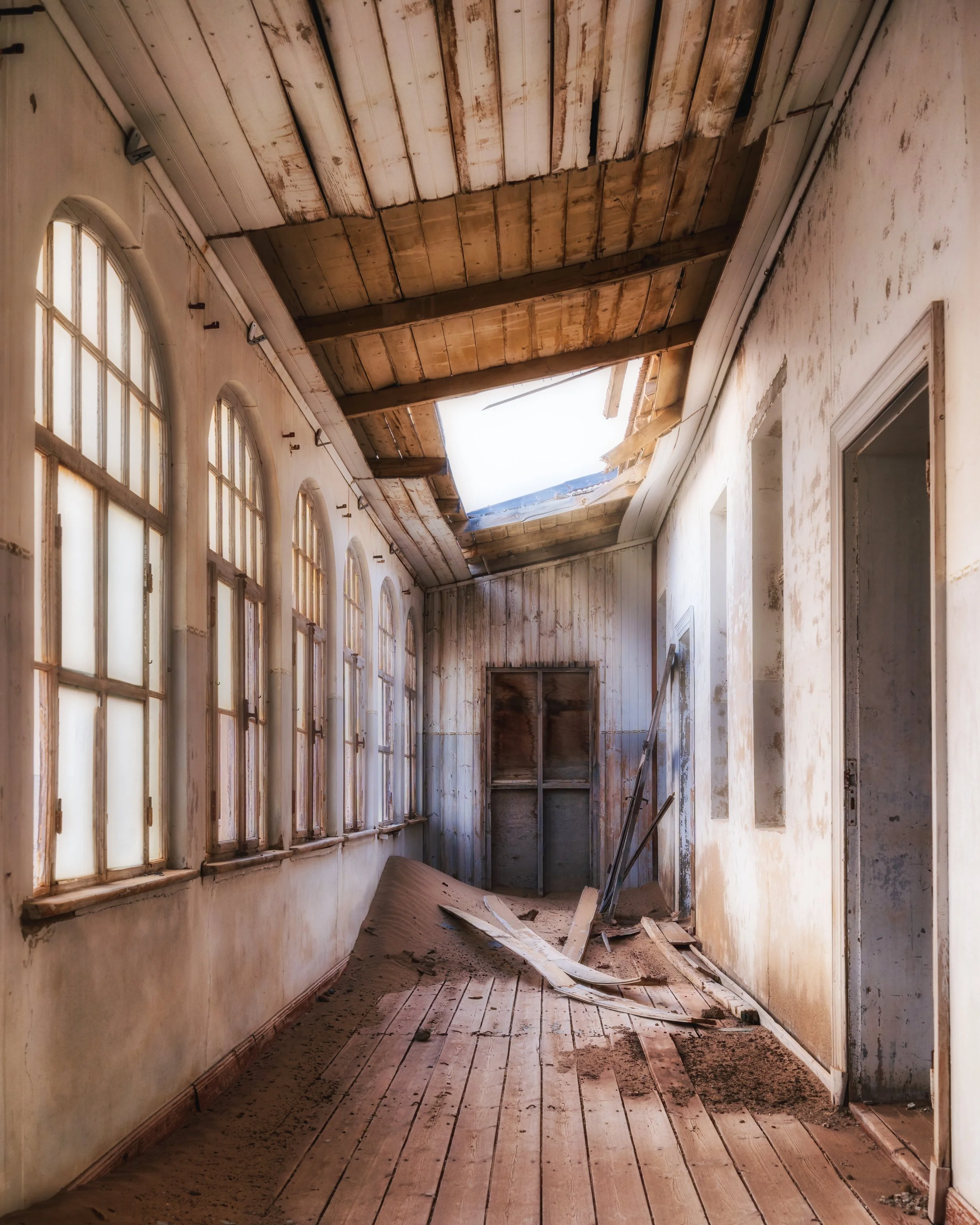
Colour tells a different story — warm, vibrant, and immediate.
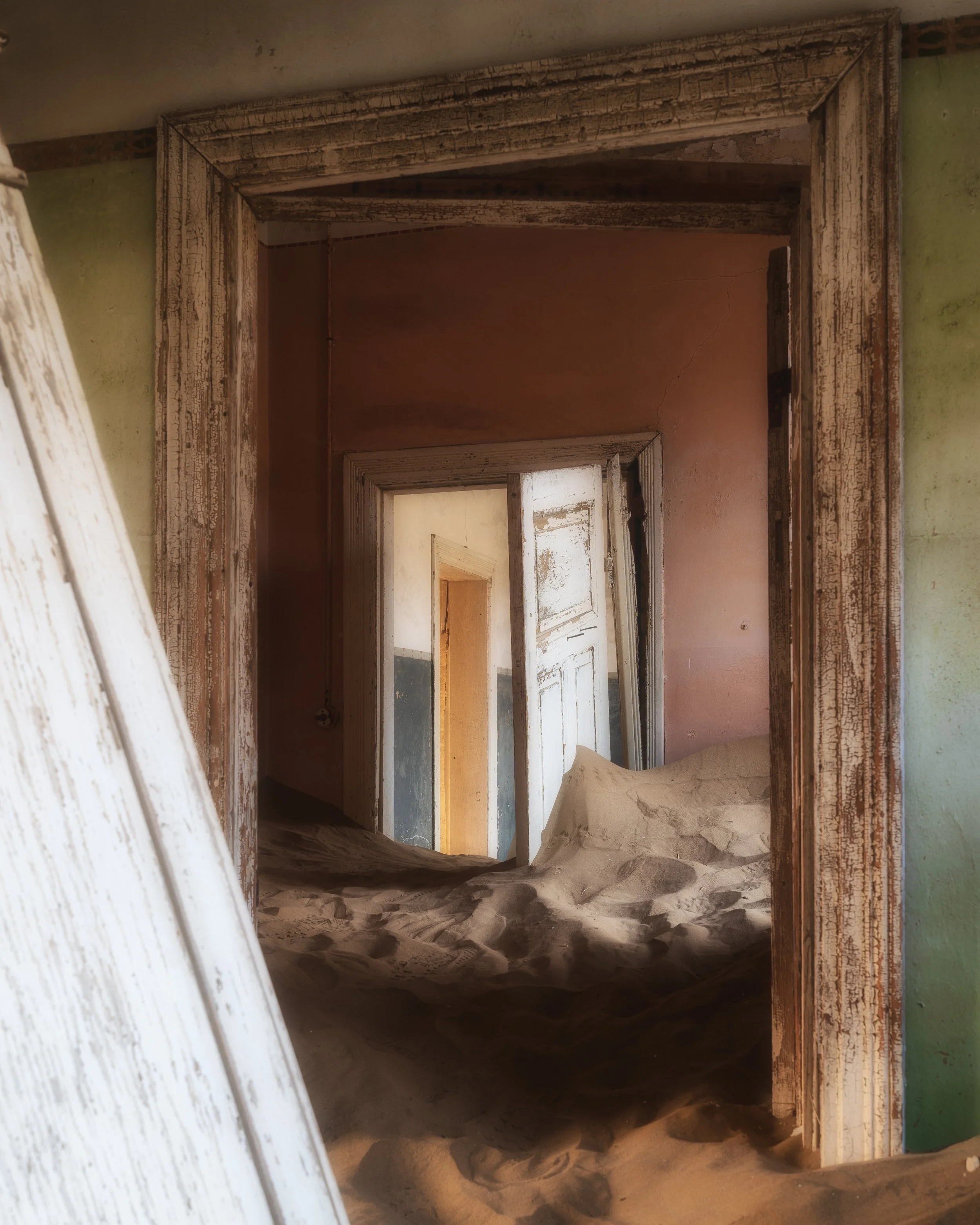
The vibrant walls of Kolmanskop — a reminder of what was once there.
Both approaches have their merit. Colour captures the life that was. Monochrome captures the ghost that remains. And together, they tell the full story of this incredible place.
6. Practical Tips for Photographing Kolmanskop
If you're planning a visit to Kolmanskop, here are a few things I've learned across multiple visits:
- Bracket your exposures — the dynamic range in these interiors is huge. You'll want to capture the highlights and the shadows separately.
- Watch your horizontal lines — if your camera has a spirit level, use it. The symmetry of these scenes depends on straight lines.
- Mind the footprints — Kolmanskop gets busy, and footprints can ruin a composition. Be mindful of where you walk, and try to shoot early in the morning.
- Watch out for nails — there's broken glass and exposed nails everywhere. Be careful, and watch your bag.
- Try shooting in monochrome — even if you prefer colour, setting your camera to monochrome for a while will change how you see the scene.
- Don't rush — the classic compositions are classic for a reason, but the real magic is in the corners, the nooks, and the details.
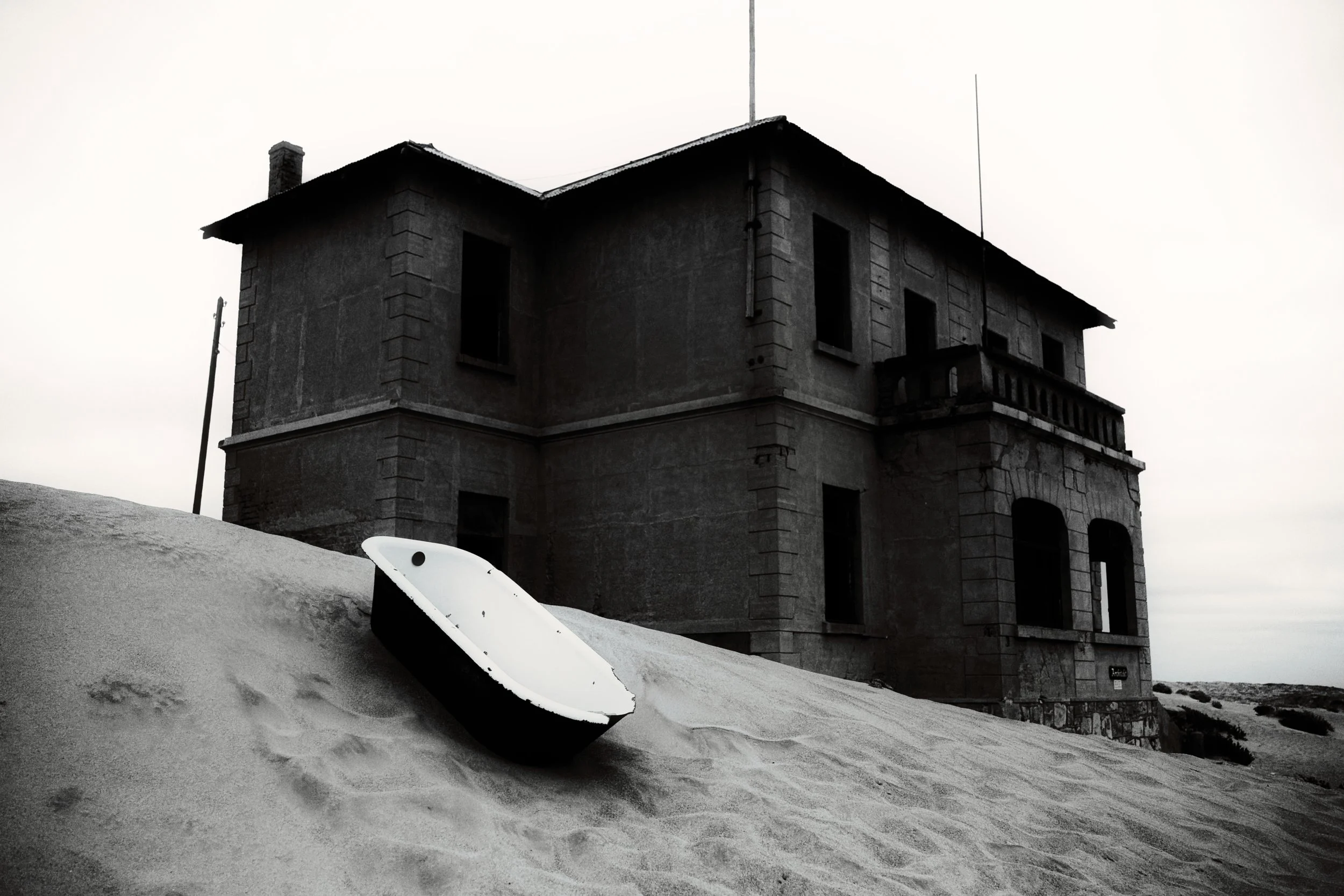
Footprints are the enemy — shoot early and be mindful of where you walk.
7. The Value of Creative Restriction
This whole experience reminded me of something important: limitations invite us to pause and think. When you have every lens, every filter, every option — it's easy to become lazy. But when you restrict yourself, you have to be intentional.
I'm telling myself this more than anybody else. It's something I have to remind myself to do every so often. Because the results — the images, the experience, the rediscovery — are always worth it.
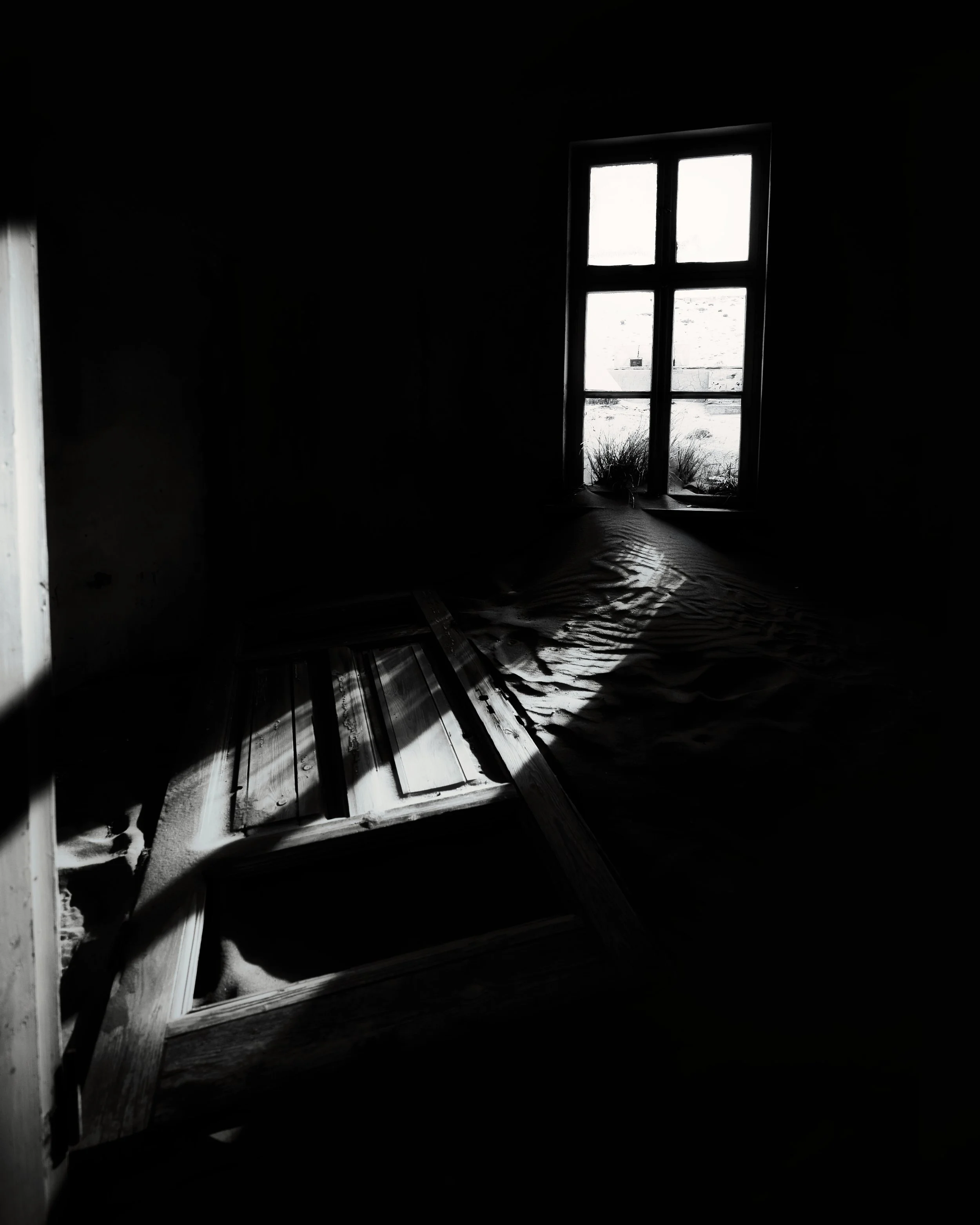
The final results — a study in contrast and shadow.
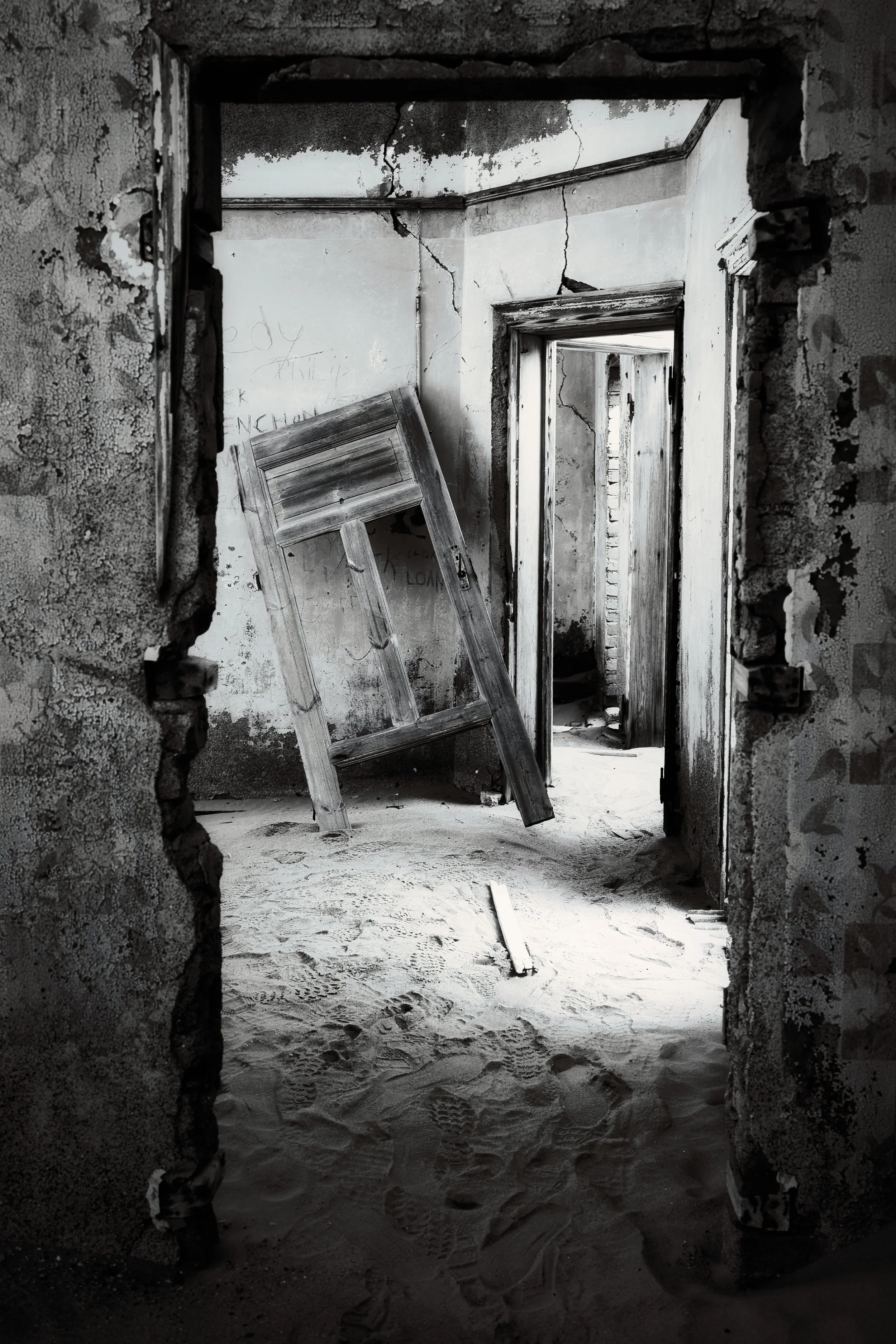
Geometry, texture, and the ghostness of time.
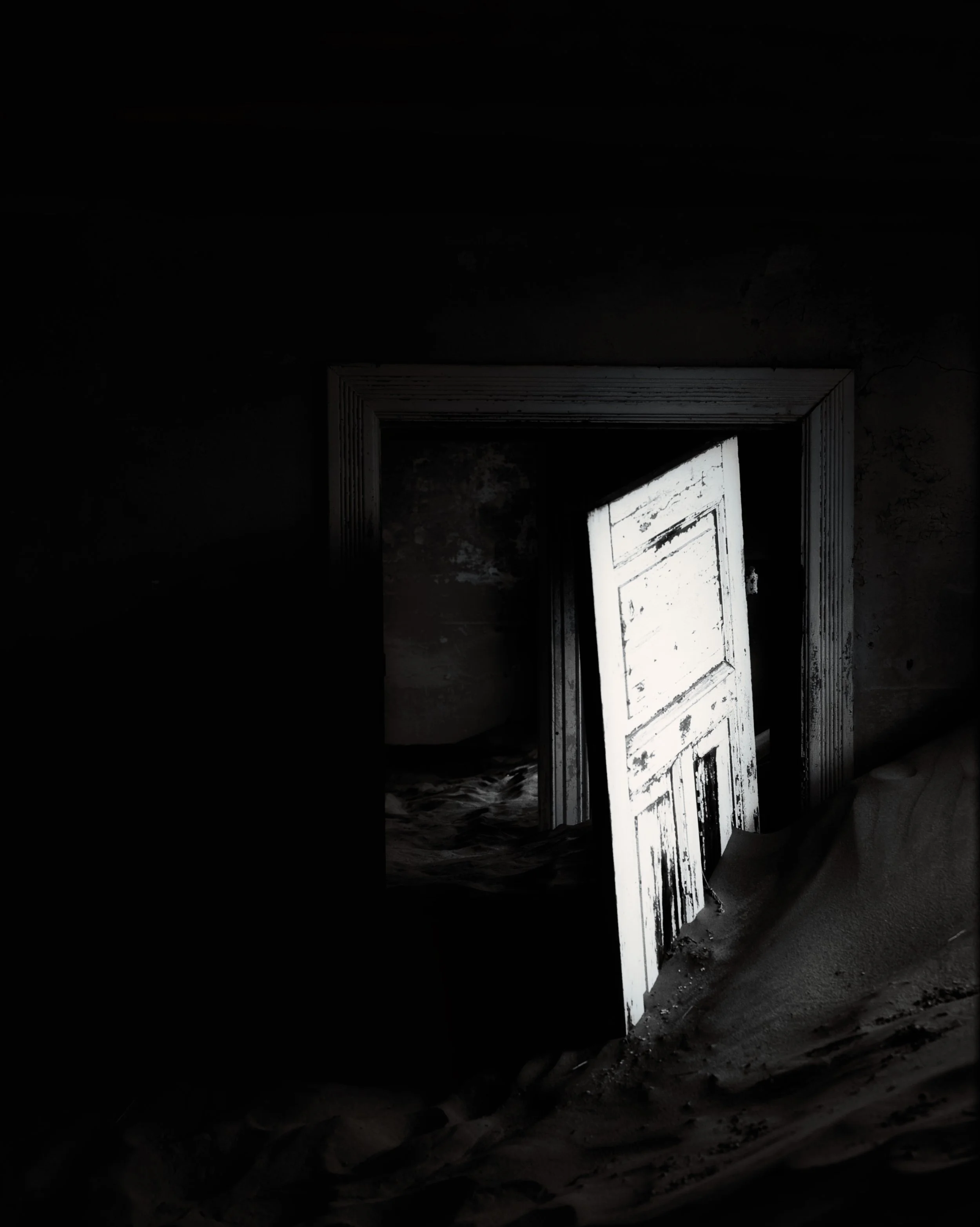
A doorway consumed — a reminder of what the desert reclaims.
Have you photographed Kolmanskop?
I'd love to hear about your experience — the shots you got, the challenges you faced, and whether you prefer colour or monochrome for this incredible place. Drop a comment below, and I'll reply personally.
Ready to Photograph Kolmanskop?
Namibia is a photographer's dream — and Kolmanskop is one of its most unique locations. If you'd like to experience this ghost town with a small group of like-minded photographers, I'd love to have you along. Small groups, real locations, and a focus on the art of seeing.
Explore Namibia Workshops →