Nikko National Park Photography
Photographing Waterfalls in Nikko
A photographer's guide to Nikko National Park
Nikko National Park is a photographer's dream — even when the autumn leaves have fallen. This guide shares practical tips for photographing waterfalls in Nikko, from the misty cascades of Yudaki to the thundering power of Kegon Falls. Field-tested advice from my Japan photography workshop. If you're travelling to Japan, consider getting an eSIM from Airalo to stay connected without expensive roaming charges.
There is something about photographing waterfalls that I find deeply satisfying. Maybe it's the way they force you to slow down — to set up your tripod, dial in your exposure, and wait for the light to do something interesting.
On Day 10 of our Japan photography workshop, we dedicated a full day to chasing waterfalls in Nikko National Park. It was a day that didn't go entirely to plan — the autumn leaves had fallen, the weather was cold and windy, and the roads were snowy and tricky. But we made the best of it, and I came away with some images I'm genuinely proud of.
Here's what I learned from a day spent chasing waterfalls in Nikko.
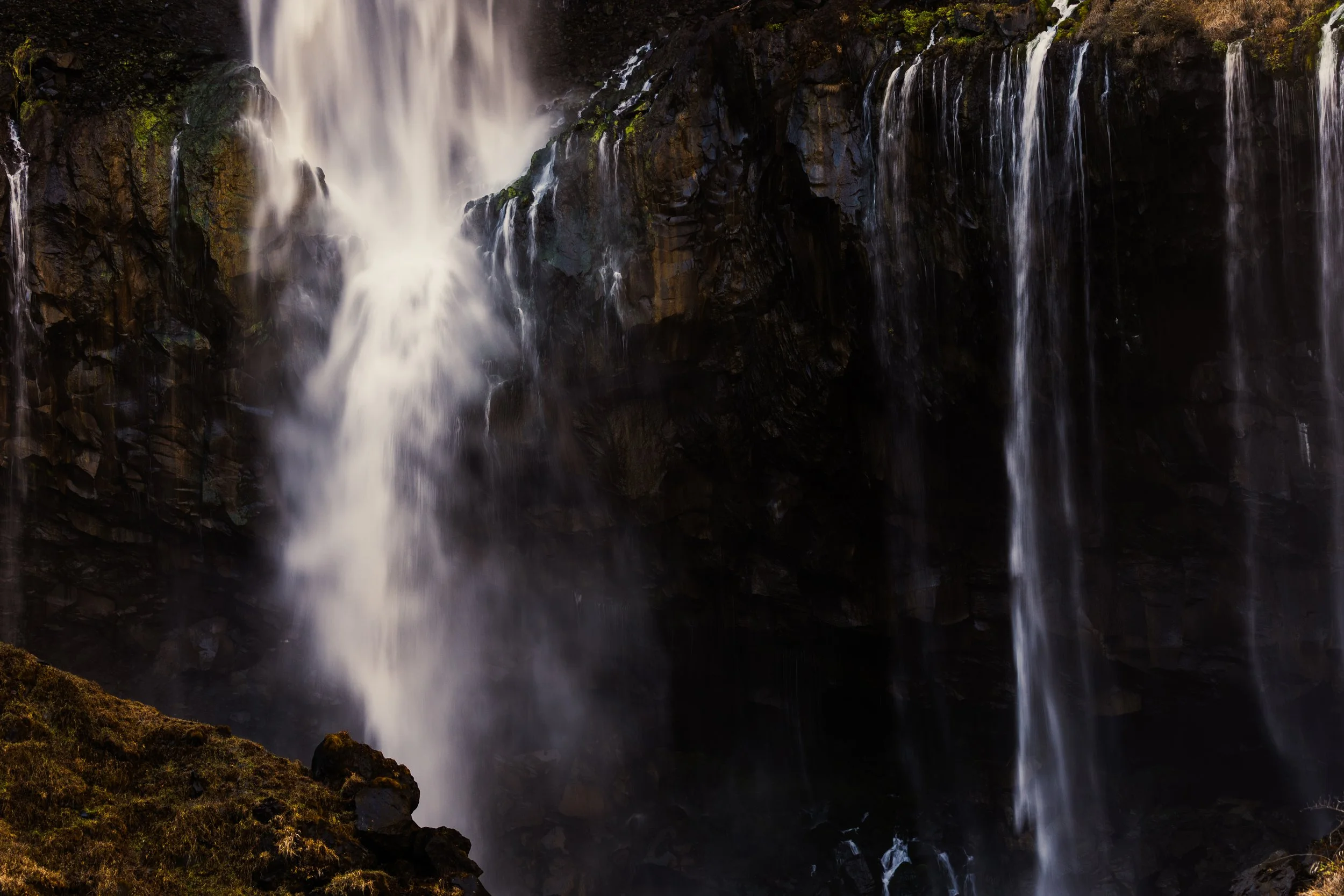
Nikko's waterfalls are spectacular — even without the autumn colours.
1. The Reality of Autumn in Nikko
We woke up to a very snowy, frosty scene in the mountains. The roads were icy, we had a rear-wheel drive van, and there were steep sections ahead. But the group was on the same page — safety first. If we needed to turn around, we'd turn around.
Thankfully, the drive was manageable. The car kicked out once, but we took it slow and steady. It just took three times as long as Google Maps said it would.
The unfortunate thing, though, was that there was no colour left on the trees. Up in the mountains, the autumn leaves had all blown off in the wind. This particular location probably needed to be visited a week earlier. But such is the way of things. We made the best of it, and the waterfalls were still spectacular.
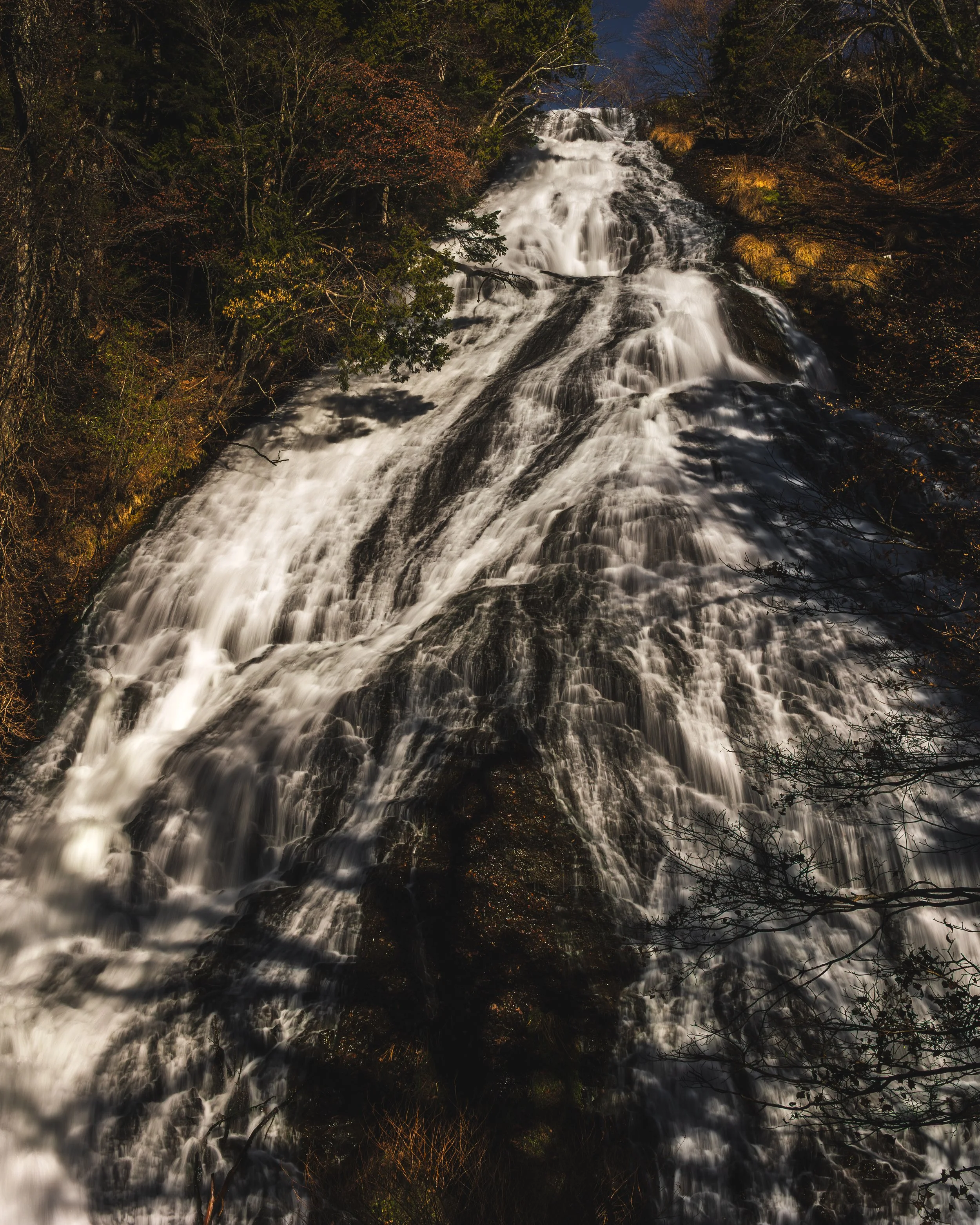
The Yudaki Cascades — a beautiful trail and a quiet spot to compose.
2. The Yudaki Cascades
Our first stop of the day was the Yudaki Cascades. The trail was beautiful, running alongside a big lake. The walk itself was lovely — even if the autumn colours had gone, the landscape had its own stark beauty.
We took the wrong trail initially, but that's all part of the adventure. We backtracked, descended some stairs to a viewing platform, and finally got our first look at the cascade. It was a beautiful spot — but, as I said in the vlog, it was a bit lacklustre without the colours. It really needed to be visited a week earlier.
That said, I still managed to get some nice detail shots. The water was still flowing powerfully, and the composition worked. It's a place you could spend a couple of days hiking and exploring.
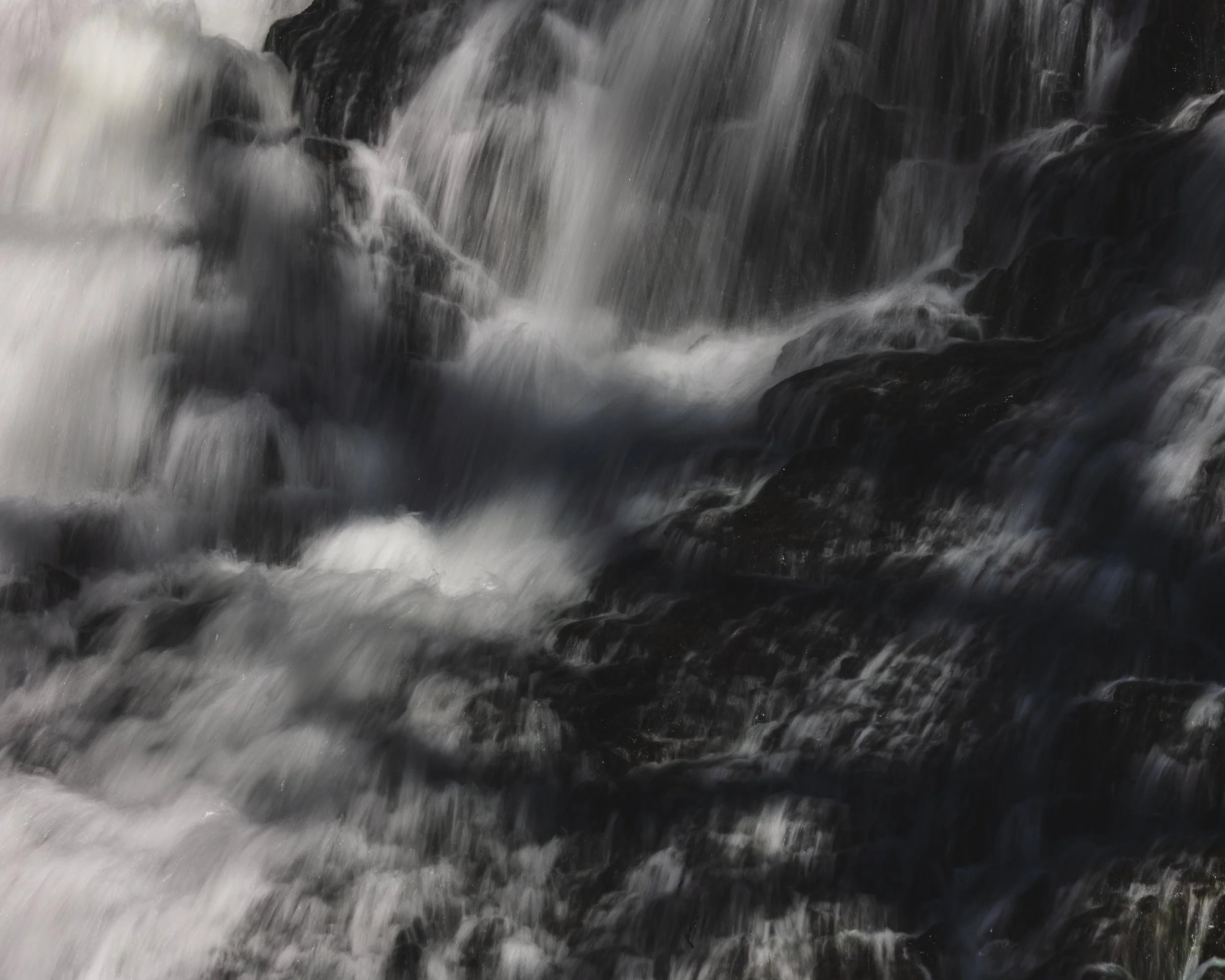
Sometimes the detail shots tell the best story — texture and motion in the water.
3. The Confined Space of the Second Waterfall
Our next stop was a waterfall tucked away behind a souvenir shop. It was a super easy spot to get to, but the space was confined. I went back to the van, swapped to the 24-70mm lens, grabbed my filters, and headed back.
It was a lovely waterfall — but again, no colour. Without the autumn leaves, it kind of could have been anywhere. The lighting was tricky, too. One side was quite dark and the other was quite bright, making it difficult to balance the exposure. In situations like this, you really need to blend exposures or use graduated ND filters.
I opted to just shoot one side. Sometimes, you have to work with what you've got and not overcomplicate things.
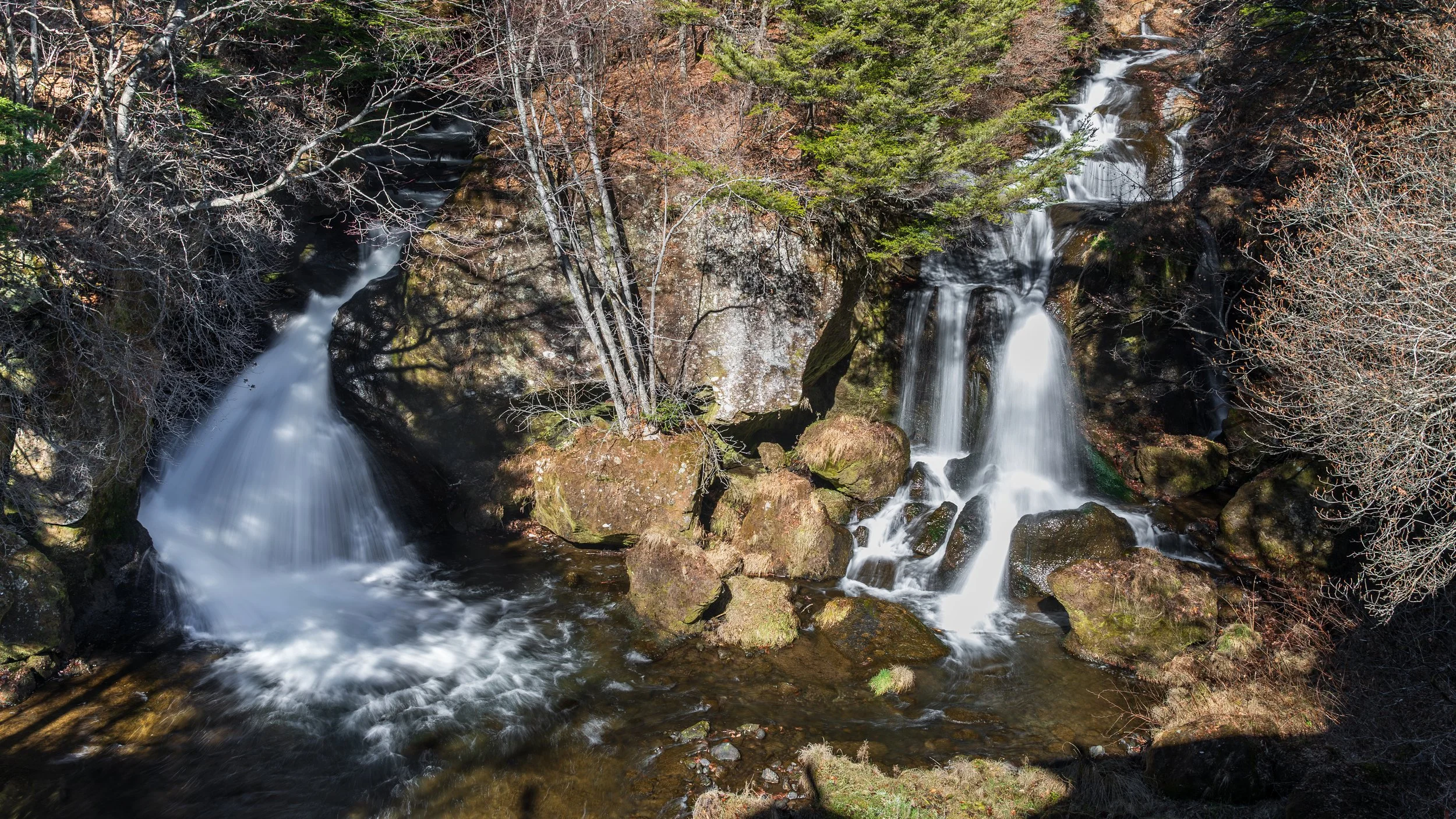
This waterfall was tucked away — a confined space but a lovely subject.
4. The Spectacular Kegon Falls
Our final stop of the day was the big one — Kegon Falls. It's one of Japan's most famous waterfalls, and for good reason. It's tall, powerful, and absolutely spectacular.
We only brought one tripod to share amongst the group, which proved to be a wise choice. Space was limited, and sharing meant we could move more efficiently.
I started shooting from the top viewing platform, but I wanted to get down to the lower section to look up at the waterfall from a different perspective. The lower viewpoint offered a more dramatic angle, with the full height of the falls stretching above you.
There were three layers to view the waterfall, and each offered something different. I played around with different focal lengths and shutter speeds, experimenting with the motion of the water. If the autumn colours had still been there, it would have been absolutely popping. But even without them, the waterfall itself was so clean and minimal that it was a joy to photograph.
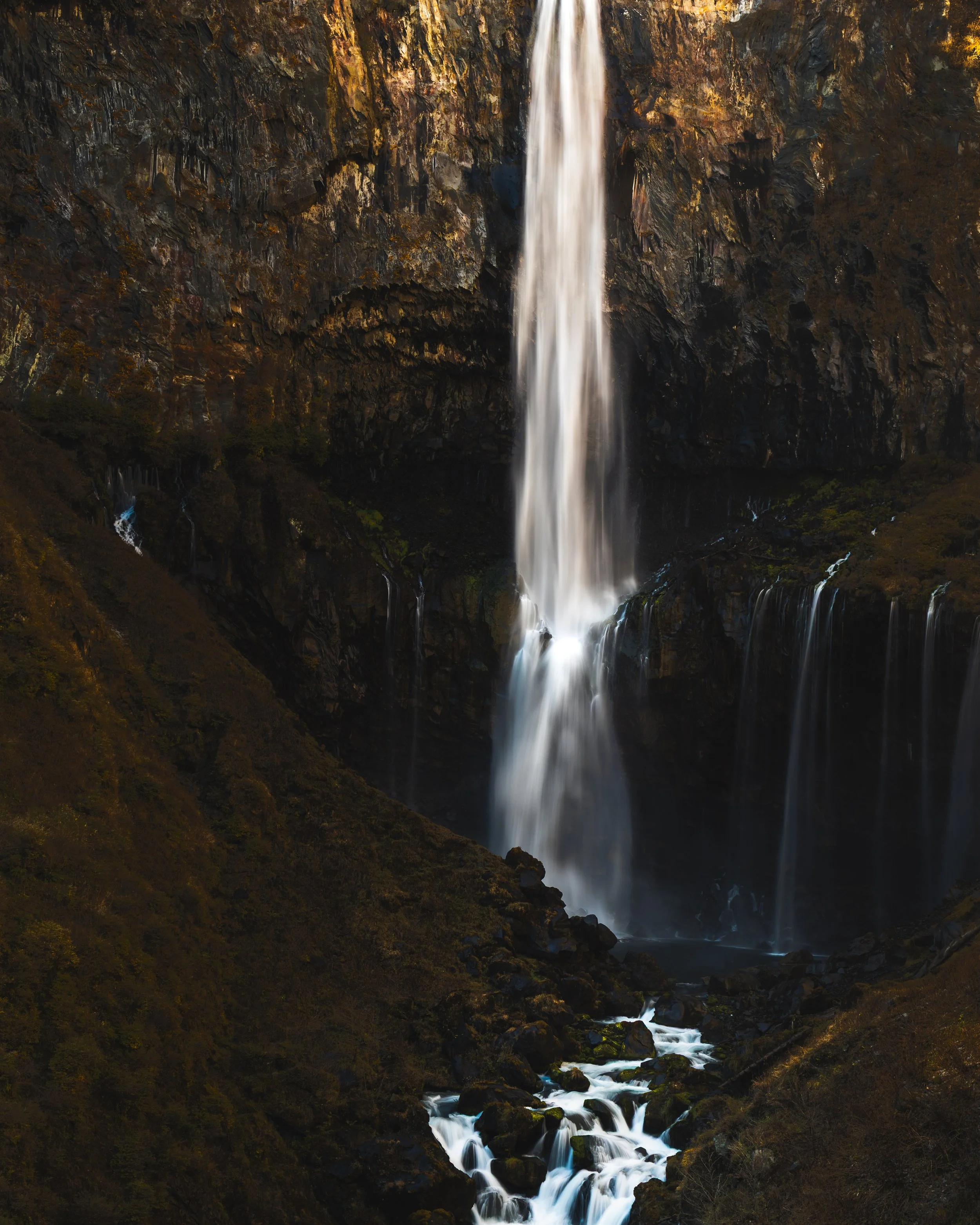
Kegon Falls — one of Japan's most spectacular waterfalls.
5. When the Colours Have Gone
One of the key lessons from this day was that you don't always get the conditions you hope for. The autumn colours were gone, the weather was cold and windy, and the roads were tricky. But that didn't mean the photography was a failure.
Without the distraction of colour, I found myself focusing more on the textures — the movement of the water, the mist rising from the falls, the contrast between the dark rocks and the bright spray. The images were cleaner, more minimal, and more about the waterfall itself.
Sometimes, the lack of colour forces you to see the subject in a new way. That's not a bad thing.
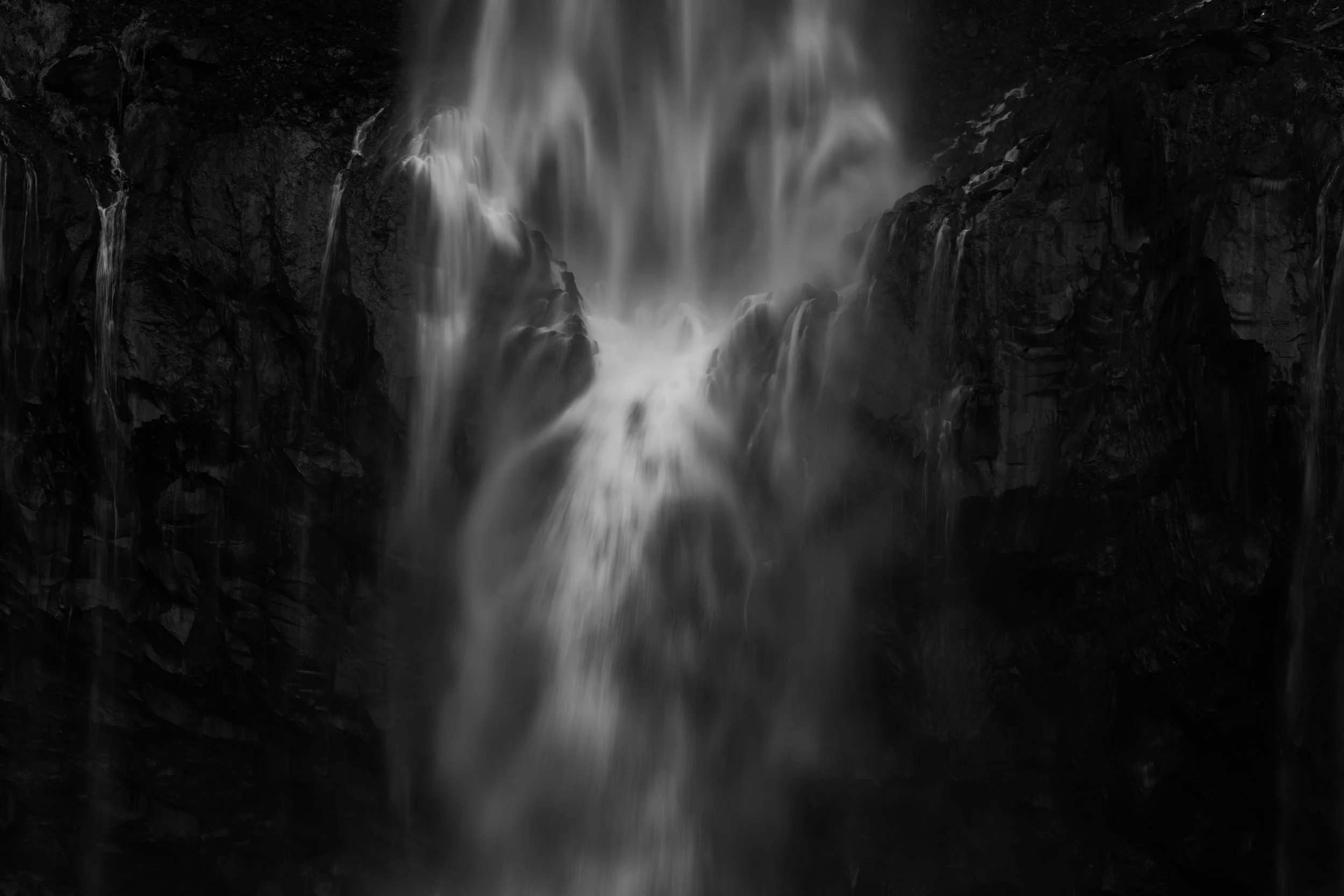
Without the autumn colours, the waterfall itself becomes the focus — clean, minimal, powerful.
6. Practical Tips for Photographing Waterfalls
Bring a tripod. You'll need it for long exposures. Even if you're sharing with the group, having a tripod is essential for capturing the motion of the water.
Use a polarizer. A circular polarizer is crucial for cutting glare and revealing the texture of the water. I had mine on for most of the day.
Experiment with shutter speeds. Try different shutter speeds to see how the water looks. Fast speeds freeze the motion; slow speeds turn the water into mist. Both can work depending on the mood you want. On this day, I shot most of my images at 1/4 to 1/2 second — just enough to blur the water without losing all the texture.
Think about composition. Look for leading lines, framing elements, and interesting angles. At Kegon Falls, the lower viewing platform offered a completely different perspective to the top.
Be prepared to blend exposures. When the lighting is tricky — one side bright, one side dark — you may need to blend exposures or use graduated ND filters.
Don't chase the perfect conditions. Sometimes you have to work with what you've got. The waterfalls in Nikko are beautiful in any season.
📌 Quick Summary
- Be prepared for variable conditions — autumn colours don't last
- Bring a tripod for long exposures
- Use a polarizer to cut glare and reveal texture
- Experiment with different shutter speeds (1/4 to 1/2 sec works well)
- Find different perspectives — high and low
- Be prepared to blend exposures in tricky light
If you want to experience the power and beauty of Nikko's waterfalls — even when the autumn colours have fallen — I would love to have you along on my next Japan workshop.
Planning your own trip? Before you go, make sure you have comprehensive travel insurance for peace of mind. I use EKTA Travel Insurance for all my adventures — it's reliable, affordable, and covers the unexpected.
Join Me in Japan
We'll chase waterfalls, explore mountain roads, and make the most of whatever conditions nature gives us. The analog ritual is waiting.
Explore Japan Workshops →