Namibia Safari Lessons
What I Learned Photographing Wildlife in Etosha
Lessons from Two Visits to Namibia's Premier National Park
Etosha National Park is a photographer's dream — but it's also a place that will humble you. From missed cheetah shots to night waterhole encounters with rhinos, here are the lessons I learned across two visits to Namibia's most iconic wildlife destination. Spoiler: patience is everything.
Hello there folks and how is it going? Welcome back to another blog post. If you've been following my Namibia adventures, you'll know I've now visited Etosha National Park twice — once with my own gear (which was basically held together with hope and tape) and once with Brendan's borrowed Canon kit.
Two visits. Two very different experiences. And a whole lot of lessons learned.
Here's what I've discovered about photographing wildlife in one of Africa's most incredible parks.
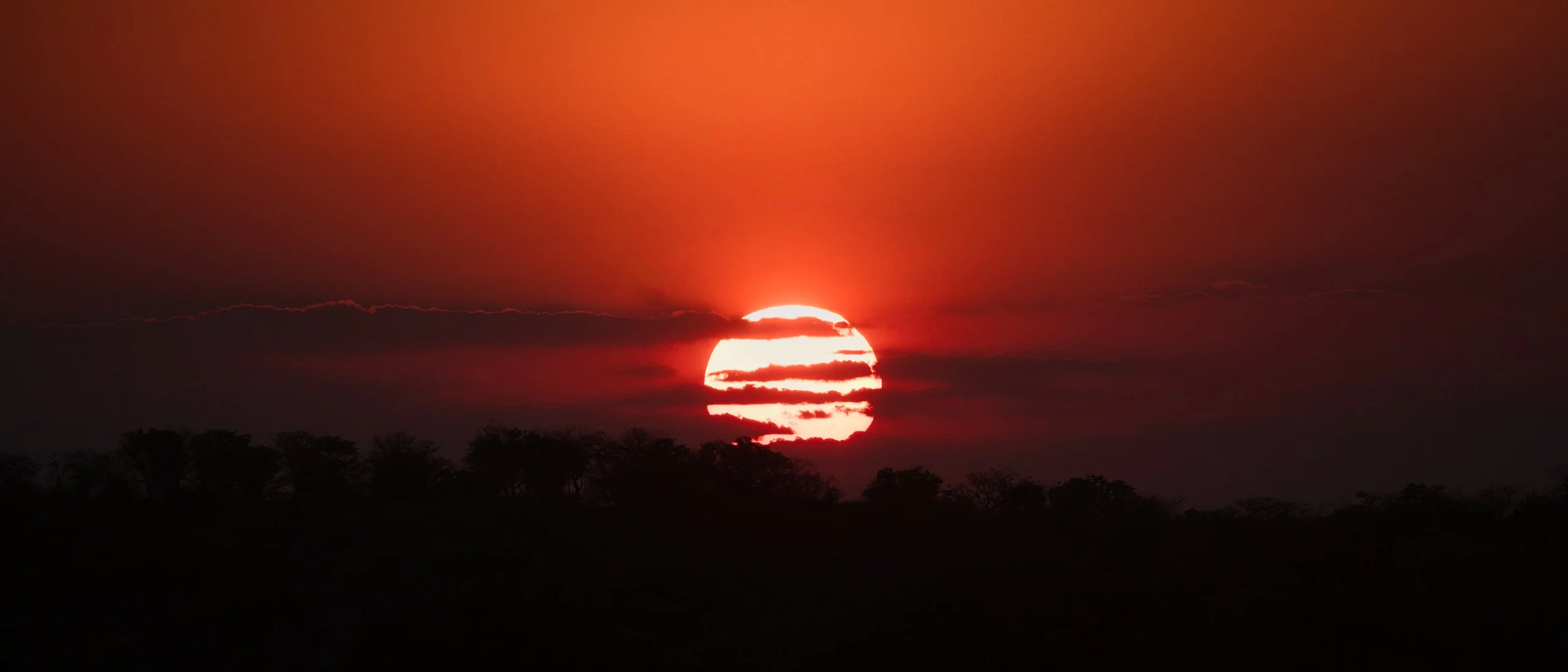
Etosha — vast, beautiful, and full of surprises.
Lesson 1: Etosha is Vast — And That's the Point
The first thing that hits you about Etosha is the scale. It's 22,300 square kilometres of salt pan, savannah, and acacia woodland. It's easy to feel small here — and you are. But that's what makes it so special.
The white salt pan stretches to the horizon, shimmering in the heat. The acacia trees dot the landscape like punctuation marks. And the animals — they're out there, but you have to look for them.
What I learned: slow down. You can't rush Etosha. The animals move at their own pace, and if you're in a hurry, you'll miss everything. The best moments came when I was just sitting at a waterhole, waiting, and watching.
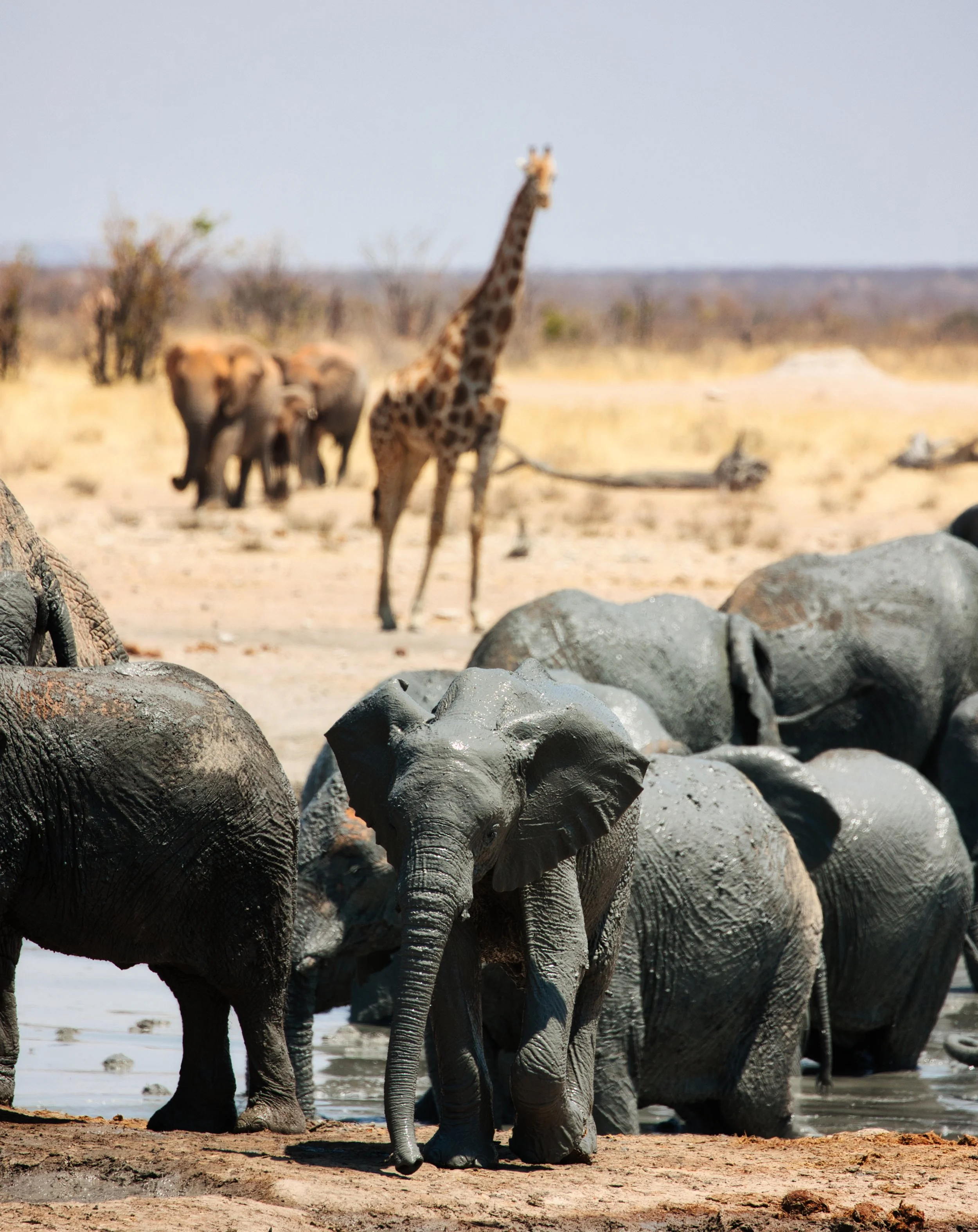
The waterholes are where the magic happens — patience is everything.
Lesson 2: The Waterholes Are Where the Magic Happens
If you're photographing wildlife in Etosha, the waterholes are your best friend. During the dry season, animals gather at these water sources, and the concentration of wildlife is incredible.
On my first visit, I didn't spend enough time at the waterholes. I was too busy driving, looking for action. On my second visit, I parked myself at a waterhole for hours — and that's when I saw the elephants, the rhinos, the lions, and the giraffes.
My tip: pick a waterhole and commit. Okondeka, Goas, and King Nehale are all fantastic. Sit, wait, and let the wildlife come to you. You'll see more than you ever would driving around.
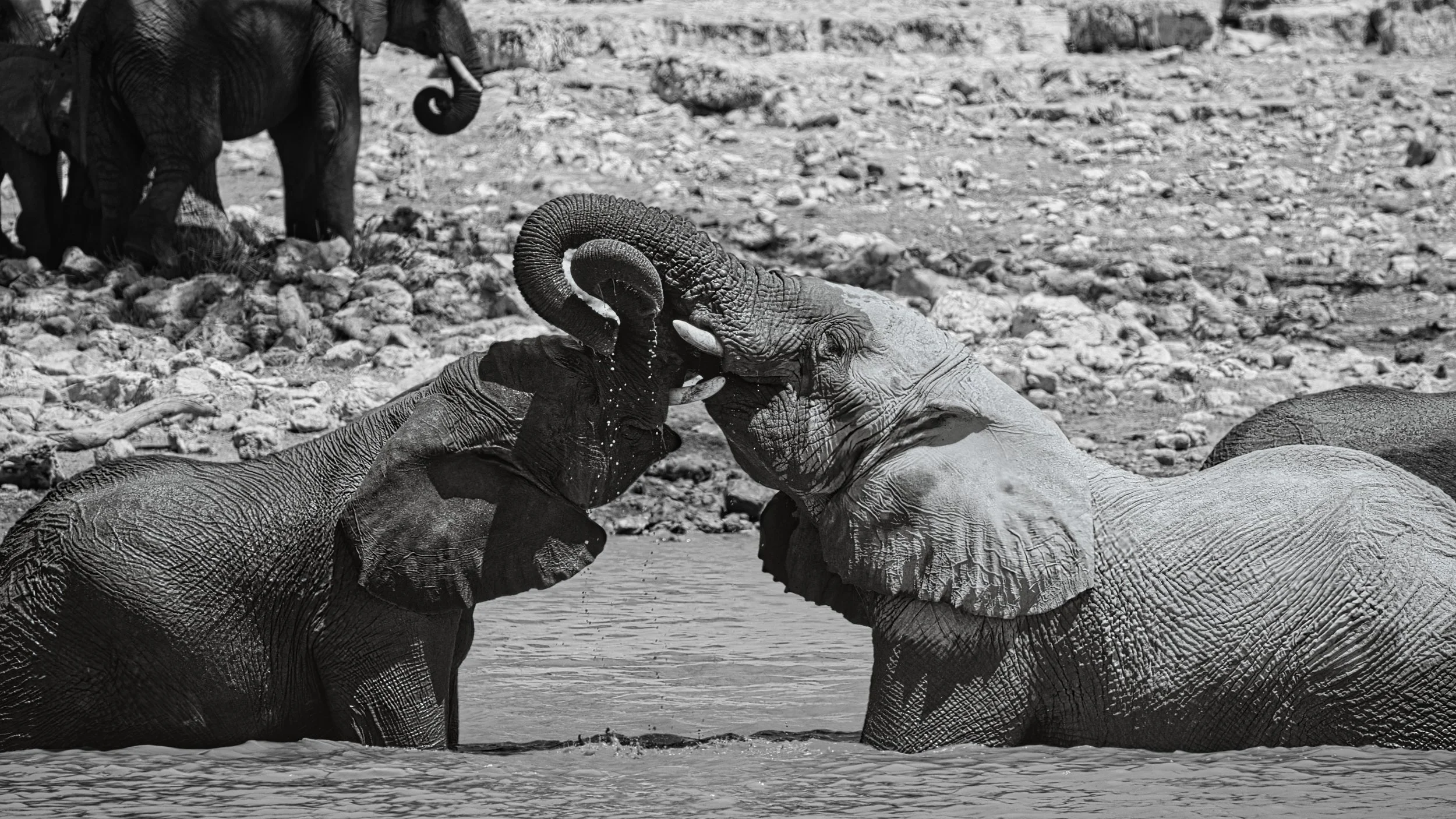
Elephants at the waterhole — you'll see them at dusk.
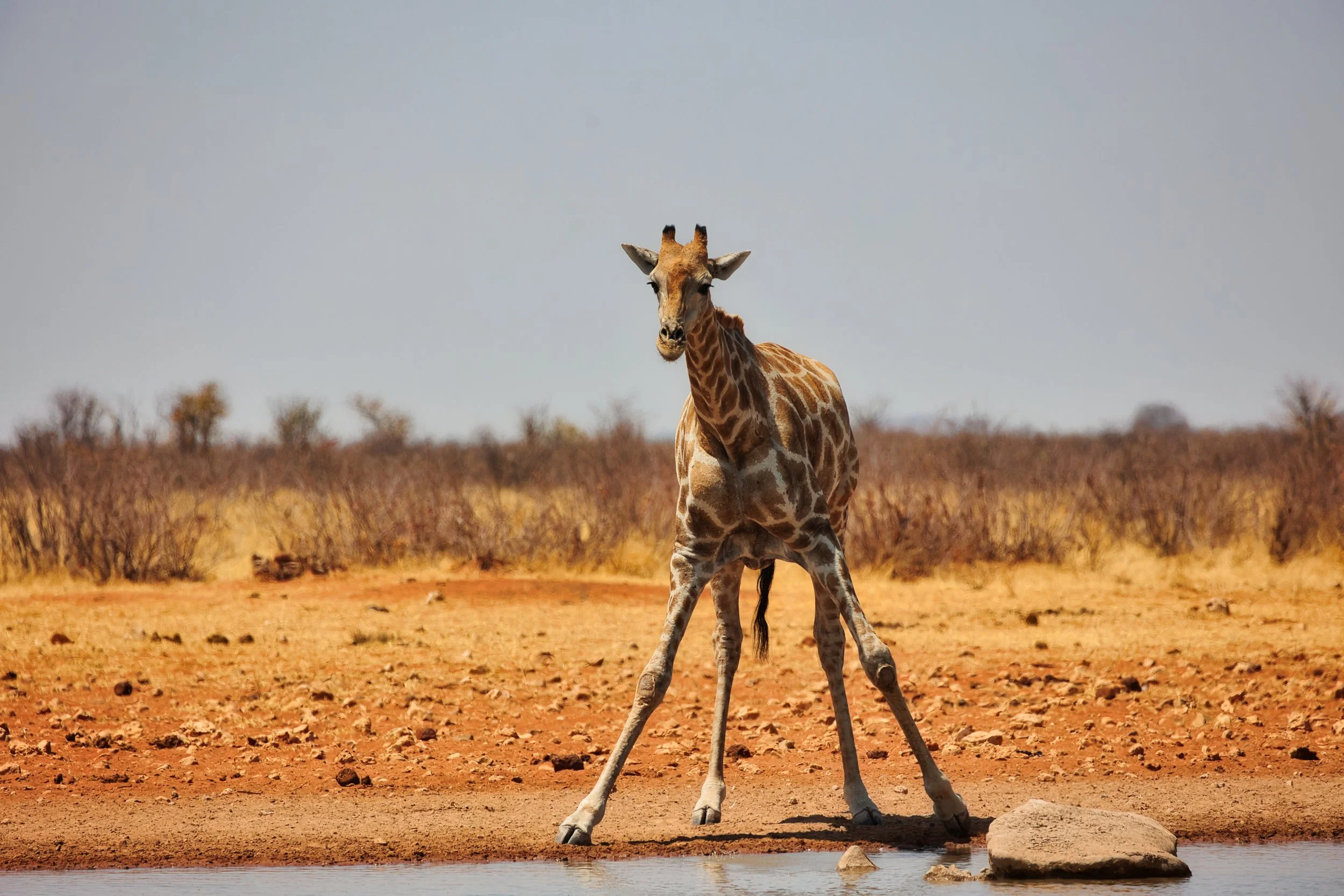
Giraffes — elegant, tall, and always watching.
Lesson 3: The Golden Hours Are Everything
Wildlife photography in Etosha is all about the light. The midday sun is harsh and flat — you're not going to get anything special. But the golden hours?
Early morning and late afternoon are when Etosha comes alive. The light is warm, the shadows are long, and the animals are active. I shot most of my favourite images between 6:00 AM and 9:00 AM, and again from 4:00 PM until sunset.
On my second visit, I made a point of being at the waterholes before sunrise. That's when the Kudu come in, backlit by the rising sun, kicking up dust. It's pure magic.
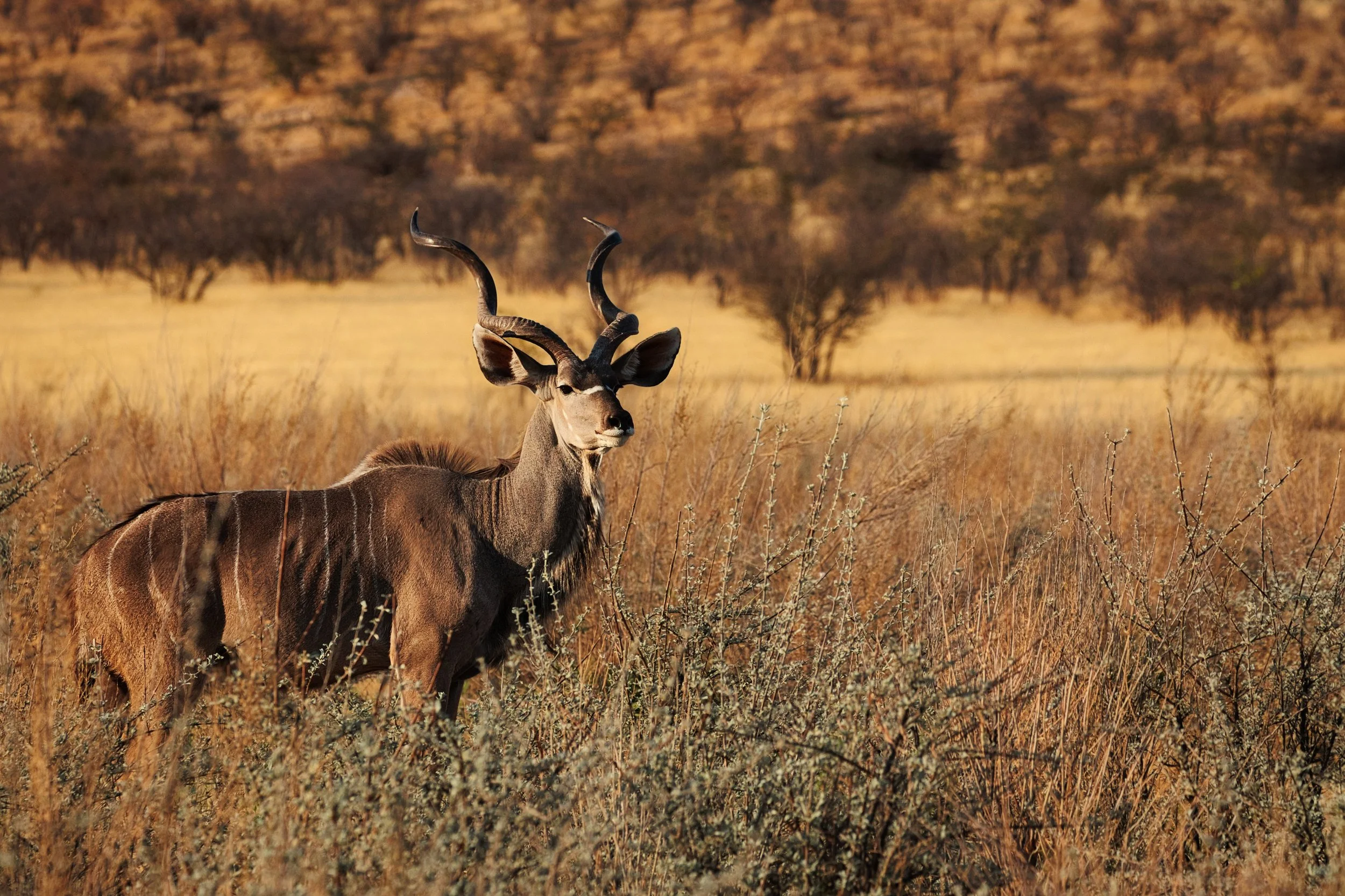
Backlit Kudu at sunrise — this is what you came for.
Lesson 4: Cheetahs Will Humble You
On my first visit, I saw a cheetah. Briefly. It was far away, and by the time I'd raised my camera, it was gone.
On my second visit, I saw another cheetah. It was closer. I got my camera up. I fired off a few shots. And then it was gone — vanished into the grass like it had never been there.
Cheetahs are fast. They're also incredibly well-camouflaged. Photographing them is a lesson in readiness and anticipation. You need to be constantly scanning, constantly ready. The moment you relax, they'll appear — and disappear before you can react.
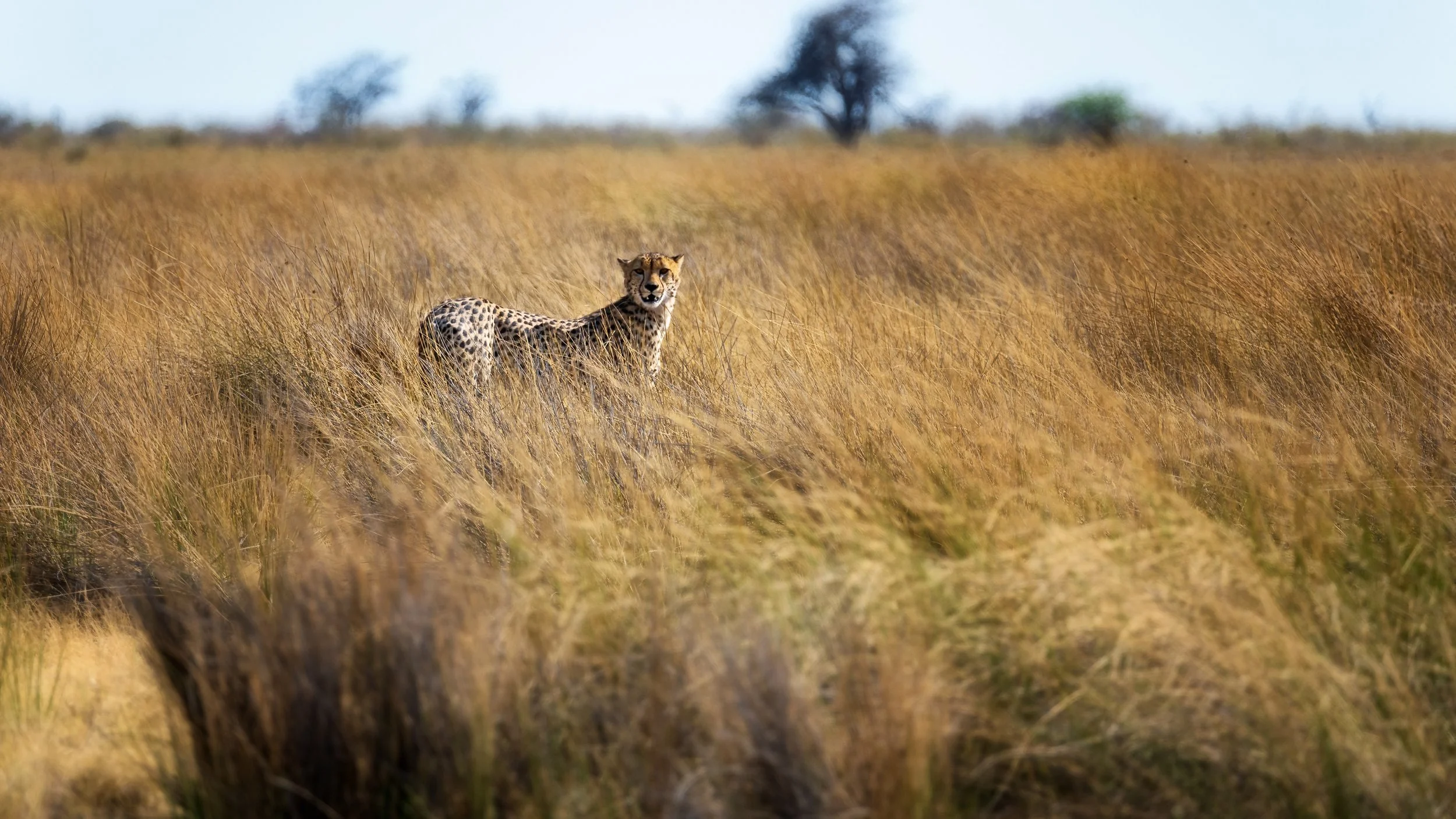
Cheetahs — fast, beautiful, and humbling.
Lesson 5: Night Photography at the Waterholes is a Whole Different World
Etosha has floodlit waterholes, and night photography is a completely different experience from shooting during the day. Rhinos, elephants, and lions at night — it's magical.
On my second visit, I spent an evening at a floodlit waterhole, and I saw rhinos — black rhinos, a critically endangered species — just metres away. The lighting is tricky, and you need fast glass and a steady hand, but the results are worth it.
What I learned: bring a fast wide-angle lens (16mm f/2.8 or similar), a sturdy tripod, and a lot of patience. The night sessions are slower, but the rewards are unforgettable.
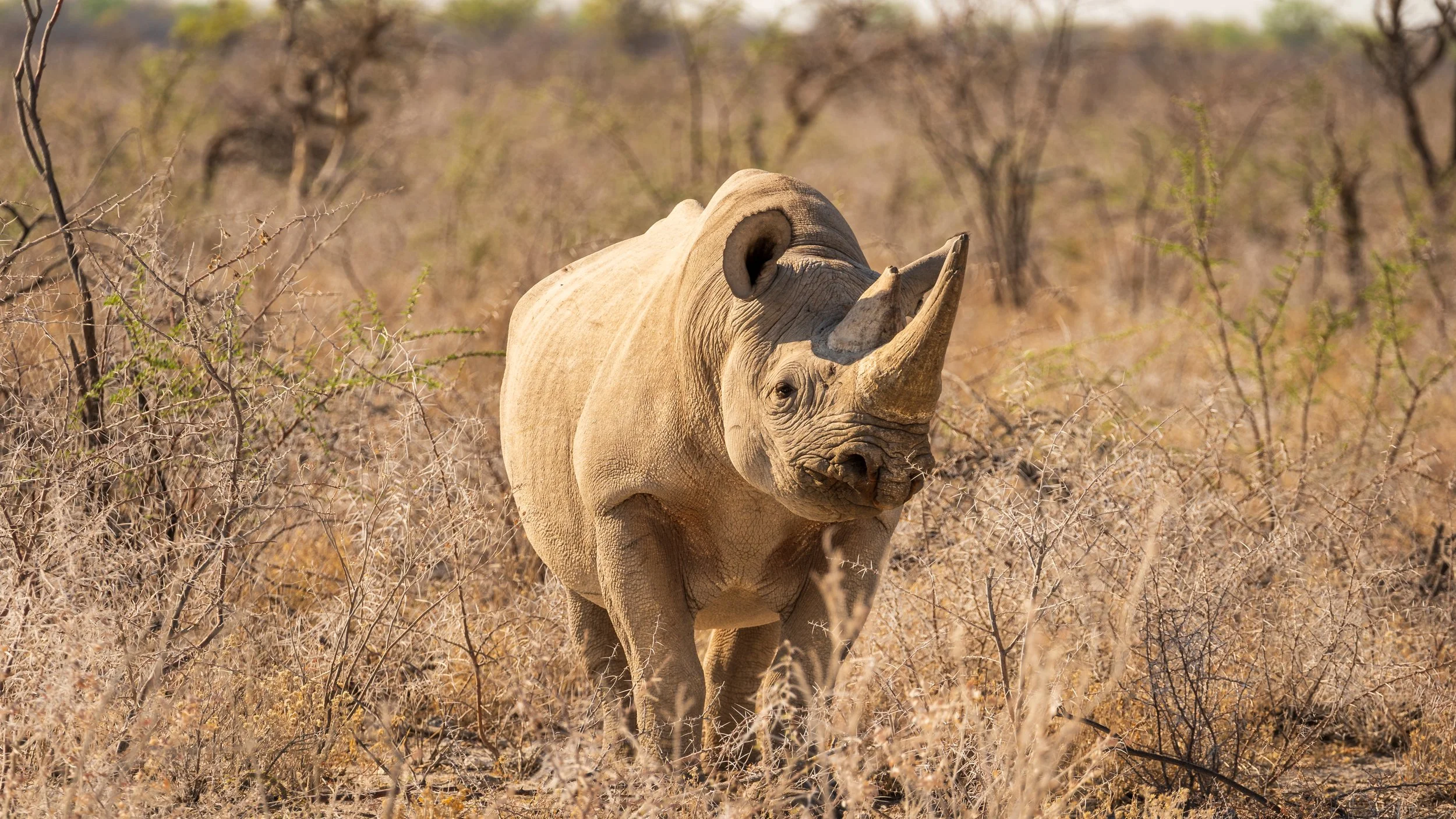
Wandering rhinos at the waterhole — unforgettable.
Lesson 6: Lions Are Masters of Camouflage
On both visits, I saw lions — but only because someone else spotted them first. They're masters of camouflage, blending perfectly into the golden grass.
When you do spot a lion, take your time. They're not going anywhere. Wait for them to lift their head, to yawn, to look in your direction. Those are the moments.
I learned to look for the tail first. Lions don't always move their heads, but their tails twitch. It's a little detail that makes all the difference.
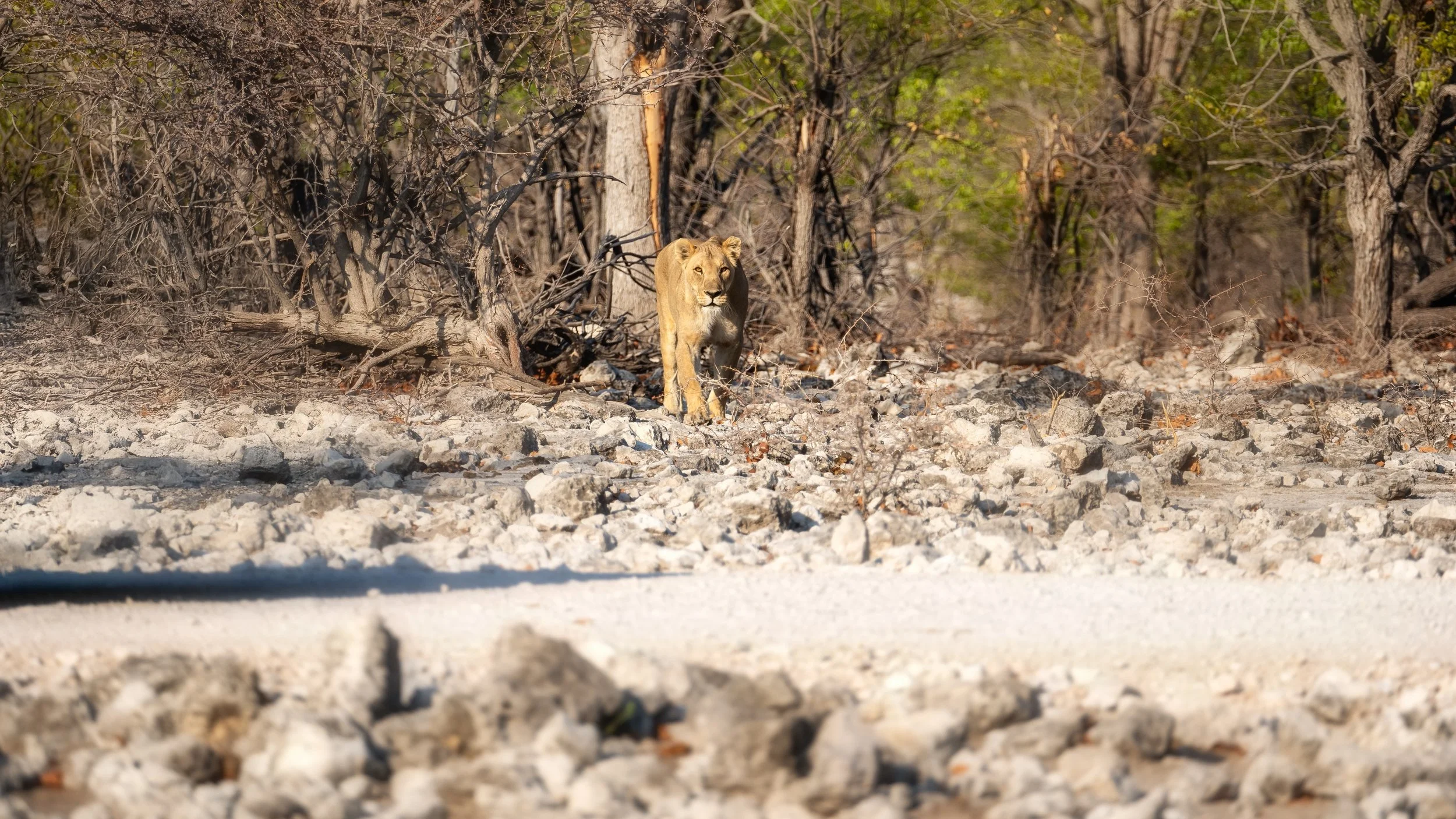
Lions — masters of camouflage. Look for the tail.
Lesson 7: Dust Is the Enemy
I mentioned this in the gear guide, but it's worth repeating: Etosha is dusty. The roads are unpaved, the wind picks up, and your gear will get dirty. On my first visit, I didn't take dust seriously enough, and by day three, my camera was squeaking.
On my second visit, I was prepared with a blower, a sensor brush, and a dust-proof bag. I cleaned my gear every day, and it made a world of difference.
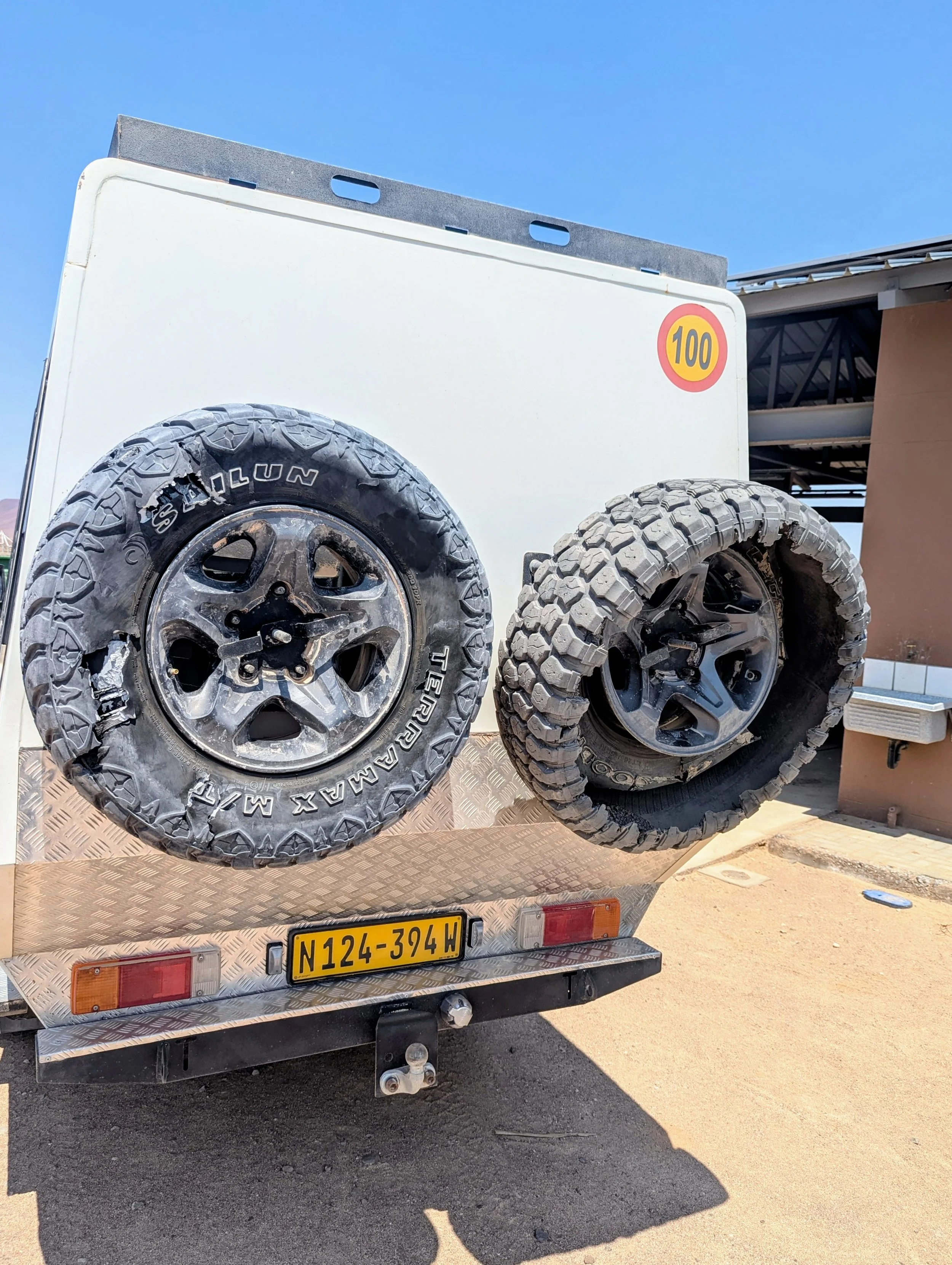
The roads are dusty — clean your gear every day.
Lesson 8: The Birds Are Worth Your Time
It's easy to focus on the big stuff — elephants, rhinos, lions. But Etosha has an incredible variety of birds, and they're just as photogenic.
Secretary birds with their long legs, lilac-breasted rollers with their electric colours, and the ever-present Cape glossy starlings — they're everywhere. And because they're smaller, you need to be more intentional with your composition. It's a different kind of challenge, but a rewarding one.
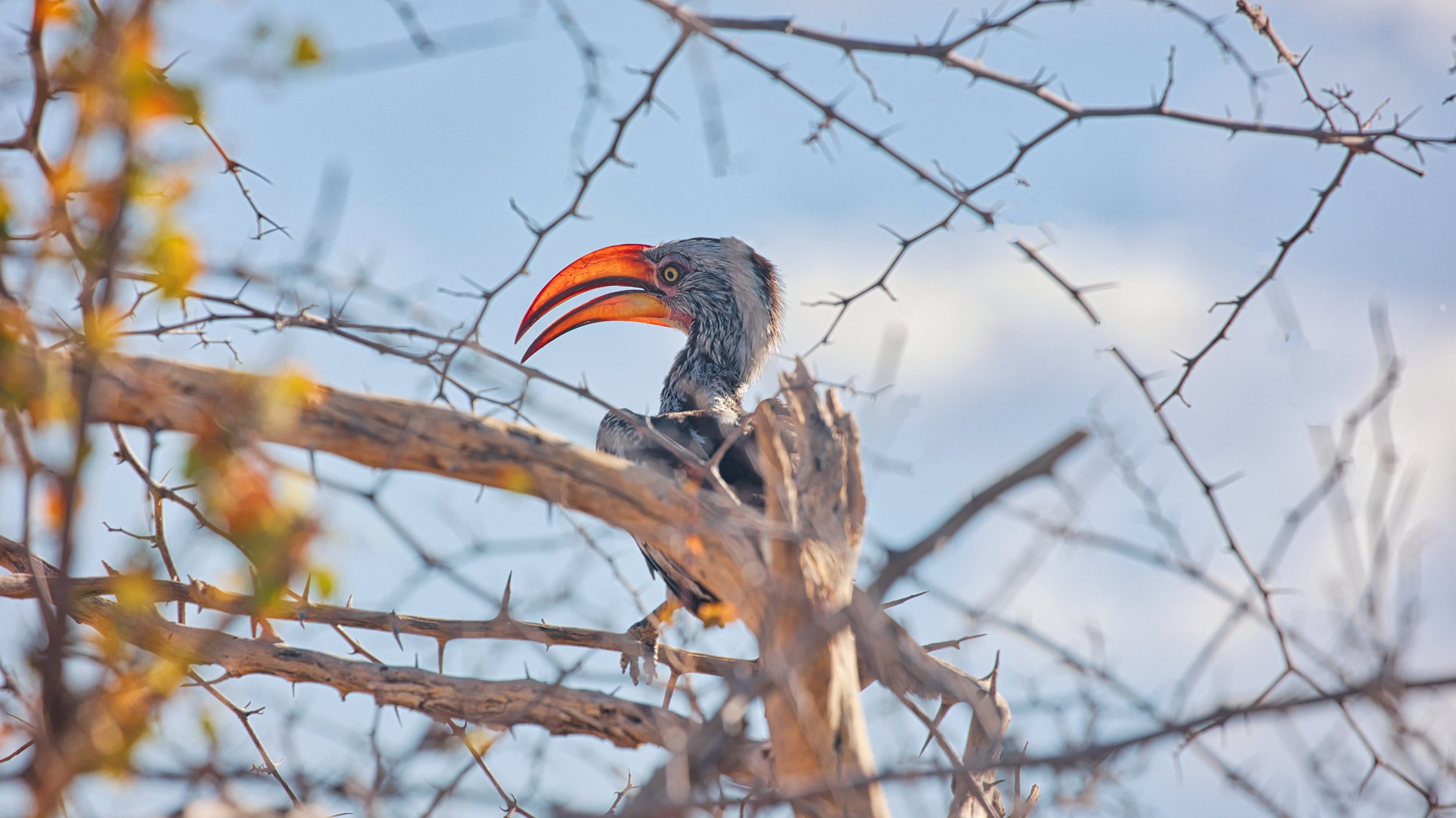
The birds are worth your time — secretary birds, rollers, and starlings.
Lesson 9: Two Visits, Two Very Different Experiences
My first visit to Etosha was a learning experience. I made mistakes. I missed shots. I got frustrated. But I learned.
My second visit was when everything clicked. I knew where to go, what to expect, and what gear to use. The result? I came home with the images I'd dreamed of.
The key difference? Patience and preparation. On the second visit, I slowed down. I sat at waterholes. I waited for the light. And it paid off.
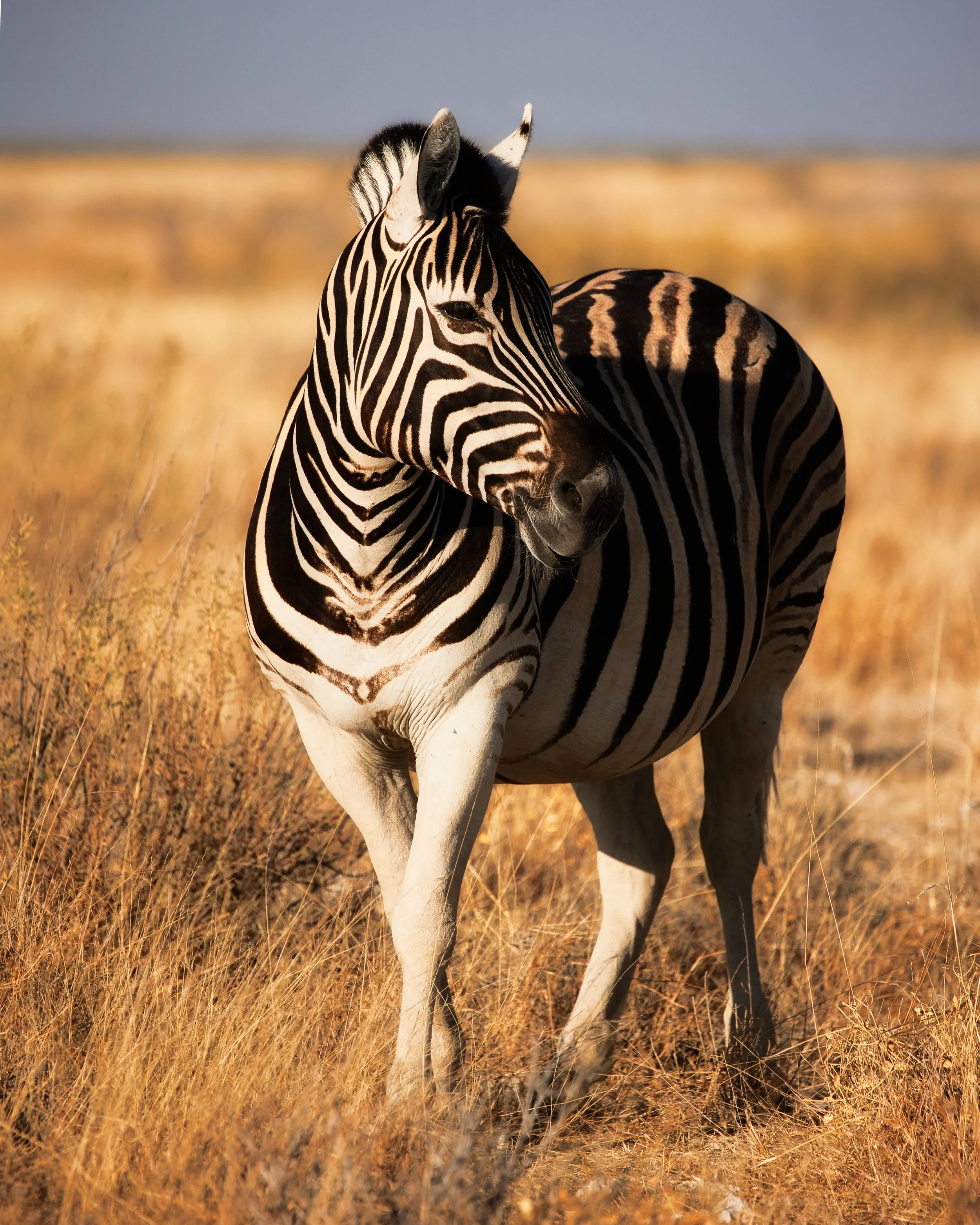
Zebras — beautiful and abundant.
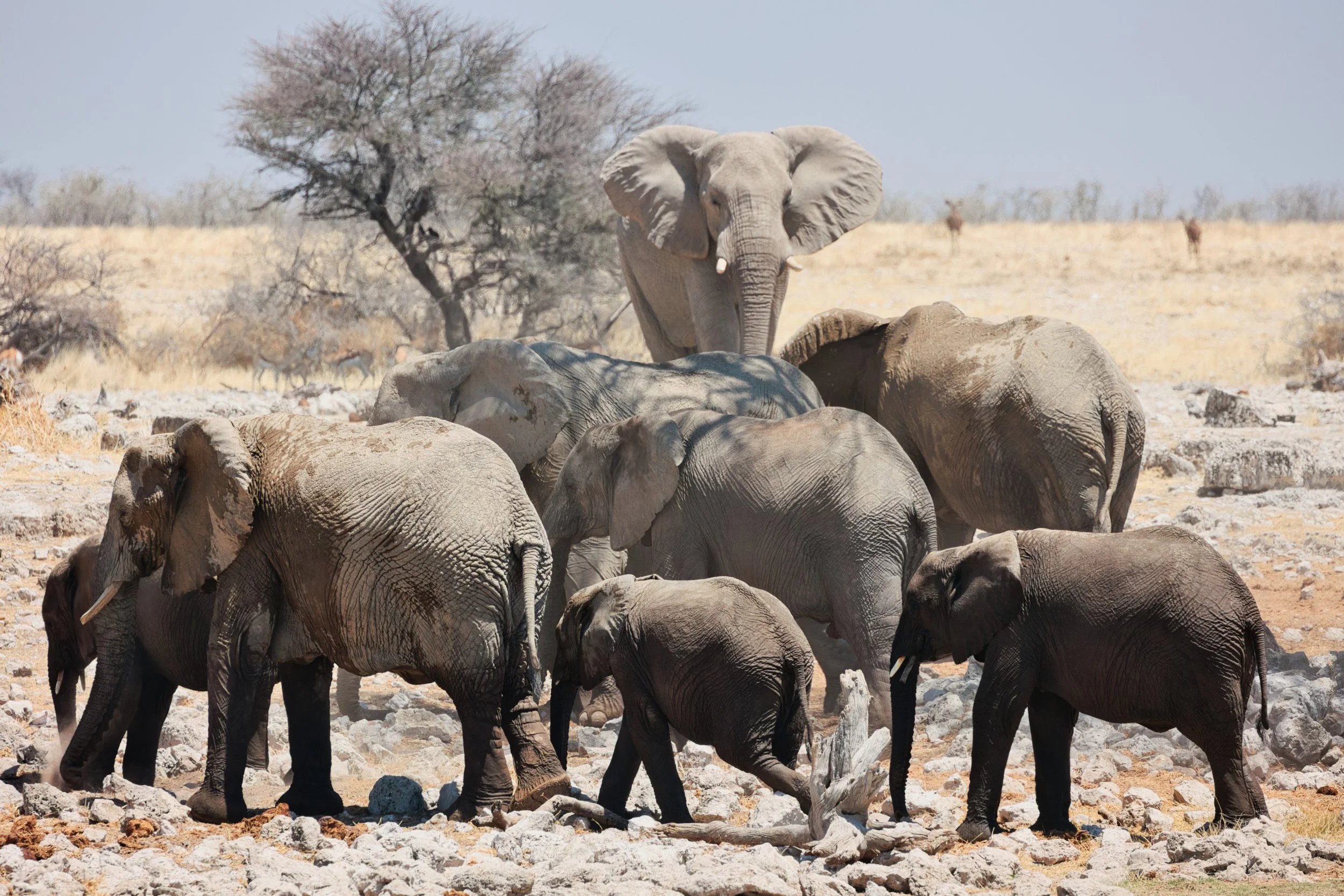
Elephant kicking up dust — pure Etosha.
Final Thoughts
Etosha National Park is a special place. It's vast, it's wild, and it's humbling. It will test your patience, your gear, and your skills. But if you stick with it, it will reward you with images you'll treasure forever.
If you're planning a trip, my advice is simple: prepare, be patient, and enjoy the process. The shots will come.
Have you photographed wildlife in Etosha?
I'd love to hear about your experiences — the animals you saw, the shots you got, and the lessons you learned. Drop a comment below, and I'll reply personally.
Ready to Experience Etosha?
Namibia is a wildlife photographer's dream. If you'd like to experience Etosha National Park with a small group of like-minded photographers, I'd love to have you along. Small groups, real locations, and a focus on the art of seeing.
Explore Namibia Workshops →